Those browned bits stuck to the bottom of your frying pan aren’t something to scrub away. They’re the beginning of a wonderful sauce. Learn how to deglaze a pan with wine, stock, or even plain water, and turn simple pan juices into something truly delicious.
There are certain things you learn in a kitchen that completely change the way you cook.
For me, one of those things was discovering that a frying pan doesn’t have to look clean when you’ve finished cooking.
In fact, sometimes the messier it looks, the better.
I remember watching my French mother prepare dinner when I was growing up in America. She had just finished cooking some chicken in a heavy frying pan.
The chicken was beautifully golden, but the bottom of the pan was covered in brown, sticky-looking patches.
Naturally, I assumed it needed washing.
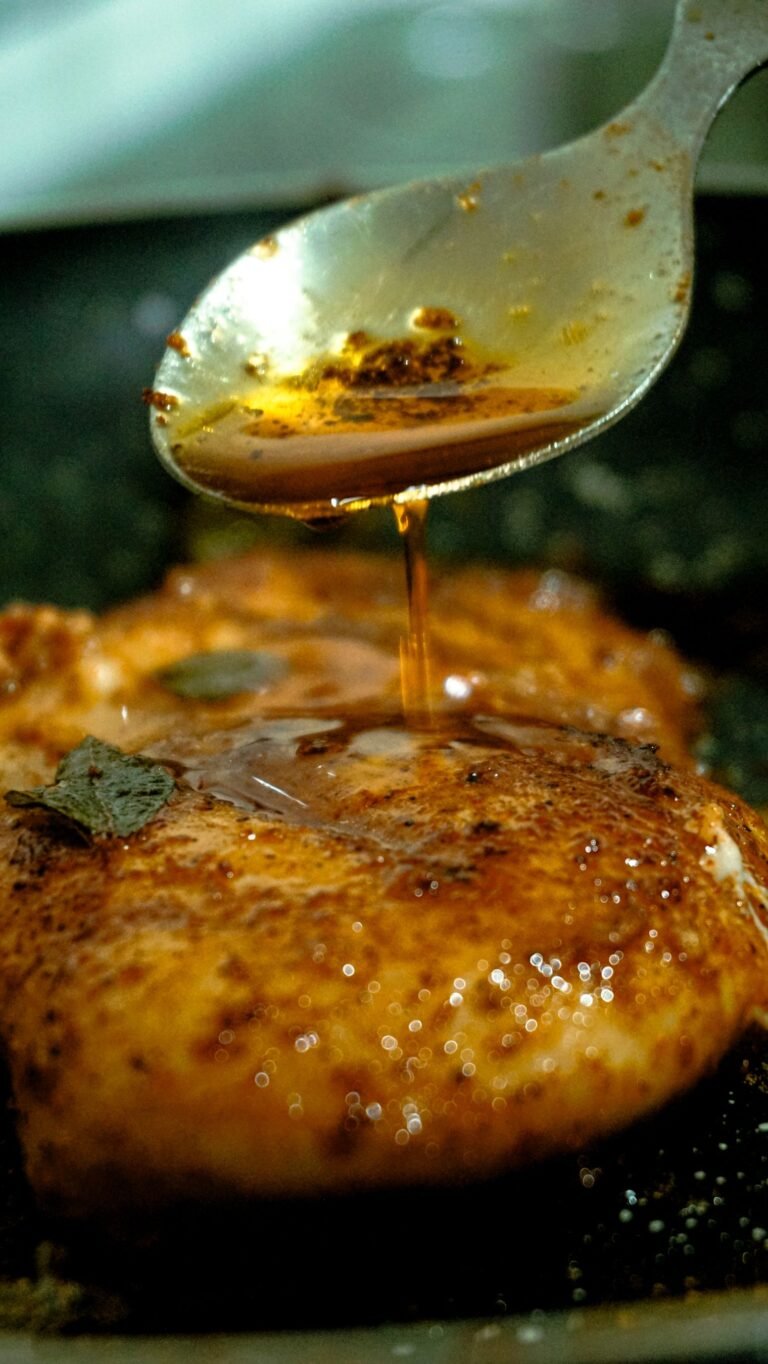
Instead, she removed the chicken, poured a little white wine into the pan, and started scraping the bottom with a wooden spoon.
Within seconds, those dark patches began disappearing into the bubbling wine.
A few minutes later, she added a little butter.
And suddenly, there was a beautiful, glossy sauce.
I thought it was some elaborate French cooking secret.
It wasn’t.
She was simply deglazing the pan.
And it’s one of the most useful cooking techniques you can learn.
What Does It Mean to Deglaze a Pan?
Deglazing is the process of adding liquid to a hot pan after cooking meat, poultry, fish, or vegetables, then stirring or scraping to release the flavorful browned deposits stuck to the bottom.
The liquid might be wine, stock, broth, or even plain water.
As it simmers, the browned residue dissolves into the liquid, creating a flavorful base for a sauce, gravy, soup, or stew.
The French call this technique déglacer.
It’s particularly important in classical French cooking, but the principle is useful in cuisines around the world.
And despite the fancy-sounding name, the technique itself is remarkably simple.
What Is Fond, and Why Is It So Important?
The little browned patches left behind in your pan are called fond in classical culinary terminology.
They form when proteins and other compounds in food undergo browning reactions during cooking, particularly the Maillard reaction.
The Maillard reaction occurs when amino acids and certain sugars react under heat, creating the complex flavors and aromas associated with browned meat, toasted bread, and roasted vegetables.
Not all the flavor stays in the food itself.
Some of those flavorful compounds remain attached to the pan.
That’s your fond.
And if you immediately fill the pan with soapy water, you’re washing away something that could have made your dinner considerably more delicious.
Brown Is Good. Black Is Not.
There’s one important distinction.
Good fond should be golden brown, chestnut brown, or deep brown, with a pleasant roasted aroma.
Burnt residue is different.
If the bottom of your pan is covered in blackened particles that smell bitter or acrid, don’t attempt to turn them into a sauce.
Adding liquid won’t magically remove a burnt taste.
And reducing that liquid will only concentrate the bitterness.
In that situation, it’s better to wash the pan and make a fresh sauce using stock, herbs, and butter.
Learning to recognise the difference between beautifully browned and genuinely burnt food is an important part of becoming a better cook.
Which Pan Is Best for Deglazing?
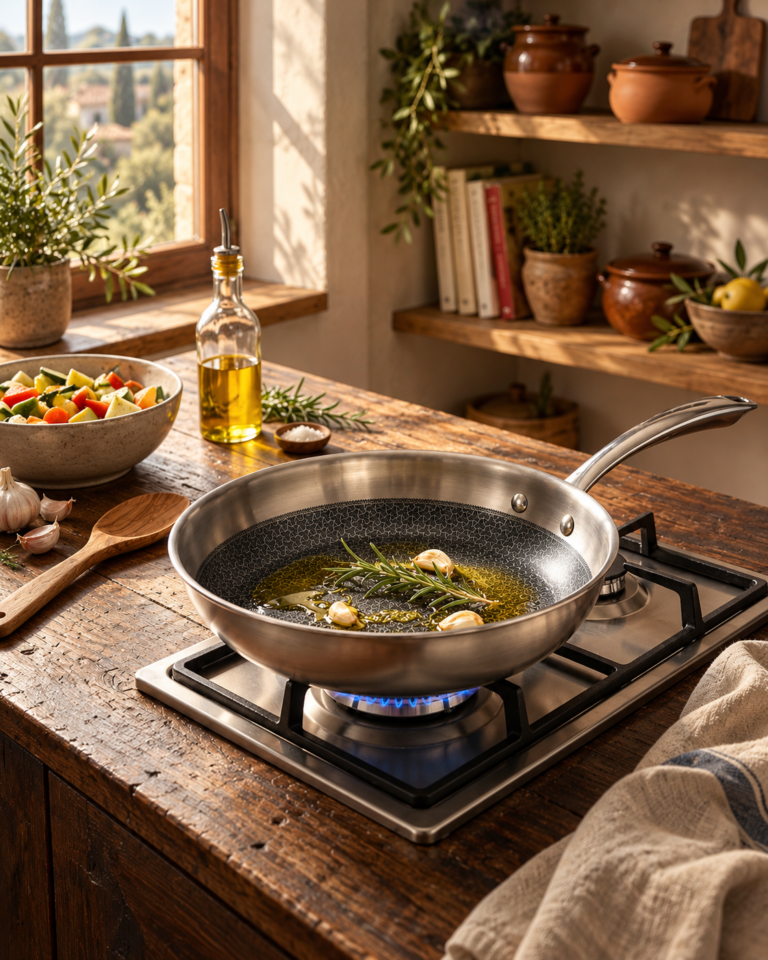
My first choice is a good stainless steel frying pan.
Stainless steel develops excellent fond when you’re searing meat or vegetables, and its uncoated surface allows you to release the browned residue easily with liquid and a wooden spoon.
Other pans work too.
Stainless steel: Excellent for developing fond, especially when searing chicken, steak, and pork. It’s my preferred choice for quick pan sauces.
Cast iron: Also develops beautiful browning. However, avoid leaving acidic sauces, such as wine reductions, in bare cast iron for extended periods because they can affect the seasoning and sometimes develop a metallic taste.
Carbon steel: Another good option, especially for browning meat. Like cast iron, it needs some care with prolonged acidic cooking.
Enameled cast iron: Very useful for braises and stews. Use moderate heat and avoid sudden, extreme temperature changes that could damage the enamel or pan.
Nonstick pans: You can add liquid to a nonstick pan, but they generally produce far less fond. They aren’t the best choice when your main goal is to make a deeply flavored pan sauce.
You don’t need an expensive pan to master deglazing.
A sturdy stainless steel skillet will do the job beautifully.
How to Deglaze a Pan: Step by Step
Let’s imagine you’ve just cooked two chicken breasts in a stainless steel frying pan.
They’re golden on the outside and properly cooked through.
You remove them to a warm plate.
And you’re left with a pan covered in delicious brown bits.
Here’s what happens next.
Step 1: Remove the Meat and Check the Pan
Transfer the cooked chicken, steak, or other food to a plate.
Look carefully at the bottom of your pan.
You want brown, flavorful deposits, not blackened residue.
If there’s a large amount of fat remaining, carefully pour or spoon off the excess, leaving approximately 1 teaspoon to 1 tablespoon in the pan.
You don’t need a pool of oil to make a good sauce.
Step 2: Adjust the Heat
Place the pan over medium heat.
If it is smoking heavily or extremely hot from searing, remove it from the burner briefly and allow it to cool a little.
You want the liquid to bubble when it touches the pan, but you don’t want a violent eruption of steam and splattering fat.
This is especially important when using wine.
Step 3: Add Your Deglazing Liquid
For a typical 10–12-inch (25–30 cm) skillet, start with approximately:
¼–½ cup (60–120 ml) wine, stock, broth, or water.
The exact amount depends on the size of the pan and how much fond has developed.
You only need enough liquid to cover the bottom and begin dissolving the browned deposits.
If using wine, take the pan off the heat while pouring, particularly on a gas stove, and never pour alcohol directly from the bottle into a hot pan.
Return the pan to moderate heat once the liquid has been added.
You’ll hear a wonderful sizzling sound.
That’s exactly what you want.
Step 4: Scrape Up the Browned Bits
As the liquid begins to simmer, gently scrape the bottom of the pan using a wooden spoon or heat-safe silicone spatula.
Pay particular attention to the corners and edges.
You’ll see the browned deposits loosen and dissolve into the liquid.
What started as pale wine or clear stock will gradually become darker and richer.
Keep stirring until the flavorful residue has been released.
Step 5: Let the Liquid Reduce
Allow the liquid to simmer uncovered.
For a simple wine reduction, you might reduce the original quantity by approximately half.
For example, if you started with ½ cup (120 ml) of white wine, simmer it until roughly ¼ cup (60 ml) remains.
This concentrates the flavor and helps soften the sharp taste of the wine.
It isn’t necessary to boil every deglazing liquid down by half.
If you’re preparing a soup or stew, you can simply loosen the fond and continue adding the other ingredients.
But when you’re making a pan sauce, reducing the liquid is an important step.
Step 6: Turn the Deglazed Liquid Into a Sauce
At this point, you’ve successfully deglazed your pan.
You could add the flavorful liquid directly to a stew or braise.
But if you want a glossy restaurant-style sauce, there’s one more technique worth learning.
Turn off the heat.
Add a few small pieces of cold, unsalted butter.
Swirl or whisk the pan gently until the butter melts into the sauce.
This French technique is known as monter au beurre.
The butter helps give the sauce a smoother, richer texture and attractive sheen.
Taste before adding salt, especially if you’ve used salted stock.
And there you have it.
A beautiful pan sauce made from ingredients that might otherwise have disappeared down the kitchen sink.
Which Liquid Should You Use to Deglaze?
One of the lovely things about deglazing is that you can change the character of a dish simply by choosing a different liquid.
| Liquid | Best for | Flavor |
|---|---|---|
| Dry white wine | Chicken, fish, mushrooms | Bright and lightly acidic |
| Dry red wine | Beef, lamb, duck | Rich and robust |
| Chicken or vegetable stock | Poultry, vegetables, everyday sauces | Savory and balanced |
| Beef stock | Steak, beef stews | Deep and meaty |
| Water | Almost anything | Neutral; highlights the existing fond |
| Dry vermouth | Chicken, fish, mushrooms | Herbal and aromatic |
| Dry sherry | Mushrooms, chicken, pork | Nutty and complex |
| Lemon juice or vinegar | Finishing and brightening sauces | Sharp and acidic |
A little note about wine: you don’t need an expensive bottle, but use something you would be happy to drink.
And don’t assume that all the alcohol disappears during cooking. Some can remain, particularly in sauces that are cooked only briefly. For a dish that must contain no alcohol, choose stock or water instead.
My Everyday White Wine Pan Sauce
This is the sauce I make when I’ve cooked chicken or pork in a stainless steel skillet and want something delicious without spending another half hour in the kitchen.
It serves approximately two people and takes about 5–8 minutes once the meat is cooked.
Ingredients
- ½ cup (120 ml) dry white wine
- ¼ cup (60 ml) unsalted or low-sodium chicken stock
- 1 small shallot, finely minced, approximately 25 g
- 1 tsp (5 ml) olive oil, if needed
- 1 tbsp (14 g) cold unsalted butter, cut into small cubes
- 1 tsp (5 ml) fresh lemon juice, optional
- Freshly ground black pepper
- Salt, to taste
- The browned fond left in the pan after cooking chicken or pork
Method
1. Prepare the pan. Remove the cooked meat and transfer it to a plate. Pour off excess fat, leaving about 1 teaspoon in the pan. If there’s almost no fat, add the olive oil.
2. Cook the shallot. Lower the heat to medium and add the minced shallot. Stir for approximately 45–60 seconds, until softened but not browned. If the fond begins to darken too quickly, proceed immediately to the next step.
3. Deglaze with wine. Remove the pan from the burner, add the white wine, then return it to medium heat. Use a wooden spoon to scrape up all the browned bits.
4. Reduce. Simmer for approximately 2–4 minutes, or until the wine has reduced to roughly half its original volume.
5. Add the stock. Pour in the chicken stock and simmer for another 1–3 minutes, until the sauce has reduced slightly and tastes concentrated but balanced.
6. Finish with butter. Turn off the heat. Add the cold butter a few cubes at a time, swirling the pan until the sauce becomes glossy. Add the optional lemon juice, then taste and adjust the seasoning.
7. Serve. Spoon the sauce over the chicken or pork. If any juices have collected on the resting plate, stir them into the sauce before serving.
The result should be savory, slightly tangy, buttery, and full of the rich flavor developed while cooking the meat.
If your pan contains very little fond, the sauce will be lighter, which is perfectly normal.
How to Make a Pan Sauce Without Wine
You absolutely don’t need wine to make a good sauce.
Use ½ cup (120 ml) low-sodium chicken or vegetable stock instead.
Deglaze the pan, scraping up the browned bits, and simmer until the liquid has reduced slightly.
Add a little butter and, if you like, a few drops of lemon juice at the end.
For extra depth, you can soften some finely chopped shallot or mushrooms in the pan before adding the stock.
This is one of my favorite alternatives for a simple weekday dinner.
Five Common Deglazing Mistakes
1. Using Burnt Fond
If the residue is black and bitter, it will make the sauce bitter too.
Good deglazing begins with good browning.
2. Adding Too Much Liquid
A large quantity of liquid in a small pan takes longer to reduce and can dilute the flavor.
Start with just enough to release the fond. You can always add more.
3. Letting the Pan Get Too Hot
An excessively hot pan can cause the liquid to splatter violently.
Lower the heat before adding liquid, especially when using wine.
4. Adding Butter While the Sauce Is Boiling Hard
Butter is best added off the heat or over very gentle heat.
Boiling vigorously after adding butter can cause the sauce to separate and become greasy.
5. Forgetting to Taste Before Adding Salt
The fond, stock, and reduced liquid may already contain plenty of salt.
Always taste the finished sauce before seasoning.
Why Is My Pan Sauce Too Thin?
If your sauce is watery, the liquid probably hasn’t reduced enough.
Return it to a gentle simmer and allow some of the moisture to evaporate.
Remember that not every pan sauce becomes thick like gravy.
A classic French butter-finished pan sauce is often relatively light, with just enough body to coat the food beautifully.
If you prefer a thicker gravy, that’s a different technique, usually involving starch or another thickening ingredient.
Why Did My Sauce Turn Greasy?
This usually happens when there’s too much fat in the pan or when the butter separates from the liquid.
Before deglazing, remove excessive cooking fat.
When finishing, turn off the heat and add cold butter gradually.
If the sauce begins to separate, try whisking in a teaspoon or two of warm water to bring it back together.
Can You Deglaze a Roasting Pan?
Absolutely.
In fact, roasting pans often contain some of the most flavorful fond of all.
After roasting chicken, lamb, or beef, remove the meat and spoon away the excess fat.
If the roasting pan is suitable for direct stovetop heat, place it over a burner at moderate heat, add stock or wine, and scrape up the browned roasting juices.
If your roasting pan isn’t designed for stovetop use, transfer its juices and any safely loosened browned bits to a saucepan instead.
The resulting liquid can become the foundation of a wonderful gravy.
The Little French Technique I Use Almost Every Week
These days, I deglaze pans almost without thinking about it.
A little white wine after cooking chicken.
Some stock after searing mushrooms.
A splash of red wine when preparing a beef stew.
Sometimes even a few tablespoons of plain water when I want to capture the flavor left in the pan without adding anything else.
Sam still finds it amusing that I get so excited about what looks like the beginning of the washing-up.
But I know better.
I remember my mother standing in our kitchen in America, turning a brown, sticky-looking frying pan into something that tasted as though it had taken hours to prepare.
And I love that such a small technique can make such a noticeable difference.
Good cooking isn’t always about complicated ingredients or expensive equipment.
Sometimes it’s about understanding what has already happened in the pan.
And knowing exactly what to do with it.