There’s an old Catalan legend about a bishop, a group of nuns, and a dessert that didn’t quite go according to plan.
The story goes that the nuns had prepared a custard for a visiting bishop, only to discover that it hadn’t set properly. With no time to make another dessert, they covered it with sugar and caramelized the top.
Unfortunately, the bishop took a spoonful before it had cooled and cried out, “Crema!” — “It’s burning!”
Whether it actually happened is anyone’s guess, but it’s a rather good story.
Crema Catalana or Crème Brûlée?
They may look similar, but traditional crema catalana is made with milk, cinnamon, and citrus peel, then thickened on the stove. French crème brûlée usually contains cream and is baked in the oven.
I particularly love the combination of cinnamon and citrus in crema catalana. Sometimes I add a teaspoon of Cointreau to the finished custard for a little extra orange flavor. It’s not traditional, but it’s delicious.
The custard can be made the day before, which makes this a lovely dessert when friends come over.
A Little Crema Catalana Shop in Barcelona
And here’s something I absolutely love.
In Barcelona’s El Born neighborhood, there’s a little shop called Sucre Cremat, dedicated to crema catalana.
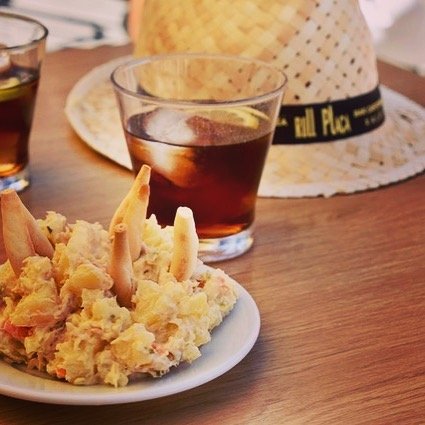
They serve it to go, caramelizing the sugar topping right before handing it over. You can even enjoy it with a traditional Catalan almond biscuit called a carquinyoli.
You’ll find the shop at Carrer dels Canvis Vells 2, close to the Basilica of Santa Maria del Mar.
An entire shop devoted to crema catalana. Isn’t that a wonderful idea?
A Dessert for Sant Josep
Traditionally, crema catalana is associated with March 19, the feast of Sant Josep, which is also Father’s Day in Spain.
But these days, you’ll find it on restaurant menus throughout the year.
And there’s no reason to save it for a special occasion.
Just make sure you caramelize the sugar at the very last moment. That first crack of the spoon against the crisp topping is half the pleasure.
And perhaps let it cool for a moment before taking a bite.
We wouldn’t want to repeat the bishop’s mistake.
Crema Catalana – Traditional Catalan Custard with Caramelized Sugar
Ingredients
- 1 liter 4¼ US cups whole milk
- 8 large egg yolks
- 160 g 5.6 oz granulated sugar, for the custard
- 40 g 1.4 oz granulated sugar, for the caramelized topping
- 40 g 1.4 oz cornstarch
- 2 wide strips lemon zest without the white pith
- 2 wide strips orange zest without the white pith
- 1 cinnamon stick
- 1 tsp Cointreau orange liqueur
Method
- Pour 850 ml of the milk into a heavy-bottomed saucepan. Add the cinnamon stick, lemon zest, and orange zest. Heat gently until the milk is steaming and just beginning to simmer. Remove from the heat, cover, and leave to infuse for 10 minutes.
- In a large bowl, whisk the egg yolks with 160 g of the sugar until smooth and slightly lighter in color.
- Mix the cornstarch with the remaining 150 ml of cold milk until completely smooth. Add this mixture to the egg yolks and whisk until combined.
- Remove the cinnamon stick and citrus peels from the warm milk. Gradually pour the infused milk into the egg mixture, whisking continuously so the eggs do not scramble.
- Pour the mixture back into the saucepan through a fine-mesh sieve.
- Place the saucepan over medium-low heat and stir continuously with a whisk or silicone spatula, scraping the bottom and corners of the pan. Heat until the custard begins to bubble gently and thickens noticeably, then cook for another 30–60 seconds while stirring constantly. Do not allow it to boil vigorously.
- Remove the saucepan from the heat. If using Cointreau, stir in 1 teaspoon now, mixing until evenly incorporated.
- Divide the custard between eight shallow ramekins or traditional Catalan earthenware dishes.
- Allow the custards to cool briefly, then refrigerate promptly for at least 3 hours, until completely chilled and set. Cover once they have stopped steaming.
- Just before serving, sprinkle the remaining 40 g of sugar evenly over the eight custards, using approximately 1 teaspoon per portion.
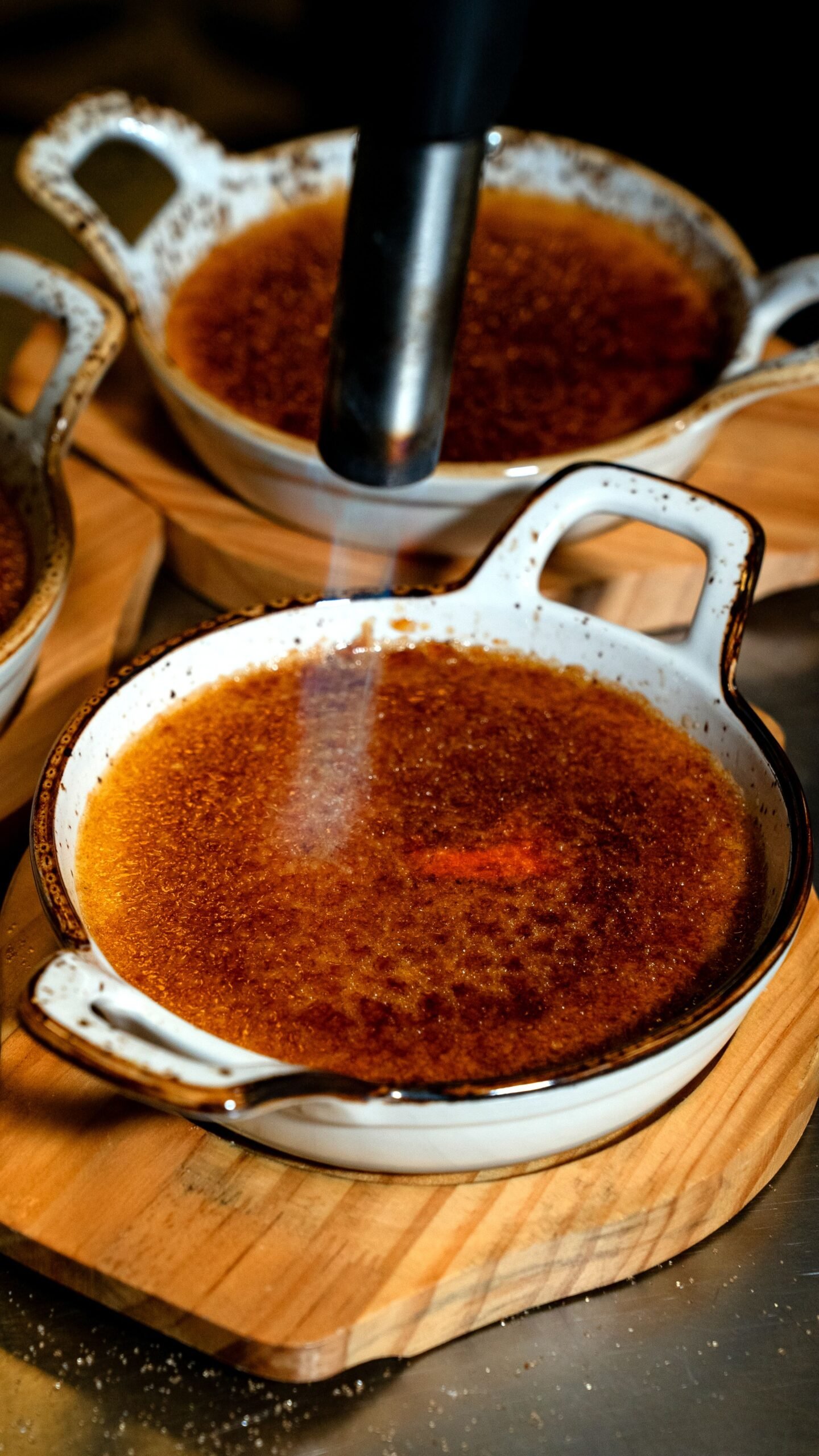
- Use a kitchen blowtorch to caramelize the sugar until it melts and turns a golden amber color. Keep the flame moving to avoid burning the sugar.
- Allow the caramelized topping to harden for 1–2 minutes before serving. Enjoy immediately while the sugar crust is crisp and the custard underneath is cold.