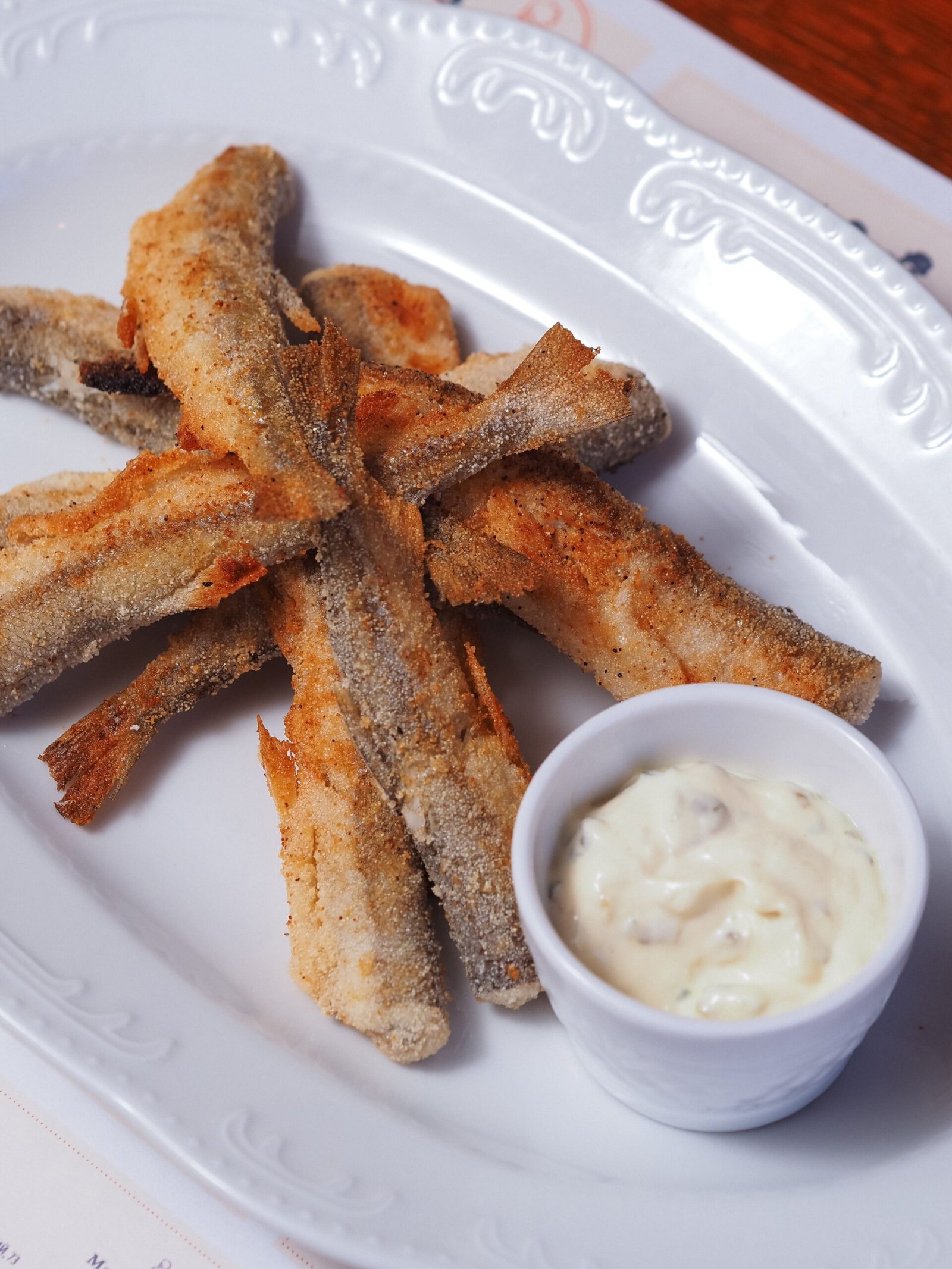
Boquerones Fritos
8kcal
Ingredients
- 600 g 1⅓ lb fresh whole anchovies (*boquerones*), cleaned, heads and innards removed
- 100 g ¾ cup + 1 tbsp all-purpose flour, or Spanish flour for frying fish (*harina para freír*)
- 1 tsp fine sea salt divided, or to taste
- 600 –750 ml 2½–3 cups mild olive oil or neutral frying oil, or enough for approximately 3 cm (1¼ inches) depth in the pan
- 1 lemon cut into wedges
- **Optional for serving**
- Fresh flat-leaf parsley
- Crusty Spanish bread
Method
- Ask your fishmonger to clean the fresh anchovies, removing the heads and innards while leaving the bodies and central bones intact. If cleaning them yourself, carefully remove the heads and innards, then rinse briefly under cold running water only if necessary.
- Drain the anchovies thoroughly and dry them carefully with paper towels. The drier the fish, the lighter and crispier the coating will become.
- Sprinkle the cleaned anchovies with approximately ½ teaspoon of the sea salt, turning them gently so they are evenly seasoned.
- Place the flour in a shallow dish or wide bowl. Add the remaining ½ teaspoon of salt and mix well.
- Pour the frying oil into a deep, heavy-bottomed frying pan to a depth of approximately 3 cm (1¼ inches). Heat over medium-high heat until the oil reaches 175–180°C (350–355°F). Do not fill the pan more than one-third full with oil.
- Working in small batches, coat the anchovies lightly in the seasoned flour. Shake off any excess flour so that only a thin coating remains.
- Carefully lower a small batch of anchovies into the hot oil, making sure they have enough space to fry without sticking together.
- Fry for approximately 2–3 minutes, turning once if necessary, until the coating is lightly golden and crisp and the fish is cooked through. The exact time will depend on the size of the anchovies.
- Remove the anchovies with a slotted spoon and place them on a wire rack set over a tray to drain. Check the oil temperature and allow it to return to 175–180°C (350–355°F) before adding the next batch.
- Continue frying the remaining anchovies in small batches, coating each batch with flour just before it goes into the oil.
- Transfer the hot boquerones to a serving plate and sprinkle with a little additional sea salt if needed. Serve immediately with fresh lemon wedges, crusty bread and, if desired, a few fresh parsley leaves.
Nutrition
Calories8kcalCarbohydrates3gProtein0.3gFat0.1gSaturated Fat0.01gPolyunsaturated Fat0.03gMonounsaturated Fat0.003gSodium582mgPotassium37mgFiber1gSugar1gVitamin A6IUVitamin C14mgCalcium7mgIron0.2mg
Notes
Choosing the fish: Use fresh European anchovies (Engraulis encrasicolus), sold as boquerones in Spain. Look for firm flesh, shiny skin and a fresh, mild smell.
Cleaning the anchovies: For traditional fried boquerones, the heads and innards are usually removed. Small anchovies can be fried with the central bones intact. You can remove the backbone before eating if preferred.
Flour: Spanish harina para freír is particularly suitable for frying fish. Regular all-purpose flour also works well. Use only a thin coating.
Keep the fish dry: Excess moisture causes the flour to become pasty and makes the oil splatter. Dry the anchovies thoroughly before coating them.
Oil temperature: Maintain a temperature of approximately 175–180°C (350–355°F). If the oil is too cool, the fish may absorb more oil and become greasy. If it's too hot, the coating may brown before the fish cooks properly.
Fry in small batches: Adding too many fish at once lowers the oil temperature. Give them enough space to fry evenly.
Don't flour too early: Coat each batch just before frying. Leaving floured fish sitting for a long time makes the coating damp.
Lemon: Serve lemon wedges on the side and squeeze over the fish just before eating. Adding lemon too early softens the crisp coating.
Food safety: Cook fish thoroughly, to an internal temperature of 63°C (145°F) where practical to measure. The flesh should be opaque and separate easily. Keep raw anchovies refrigerated until cooking.
Storage: Boquerones fritos are best eaten immediately. Refrigerate any leftovers promptly and use within 1–2 days, although the coating will lose its crispness.