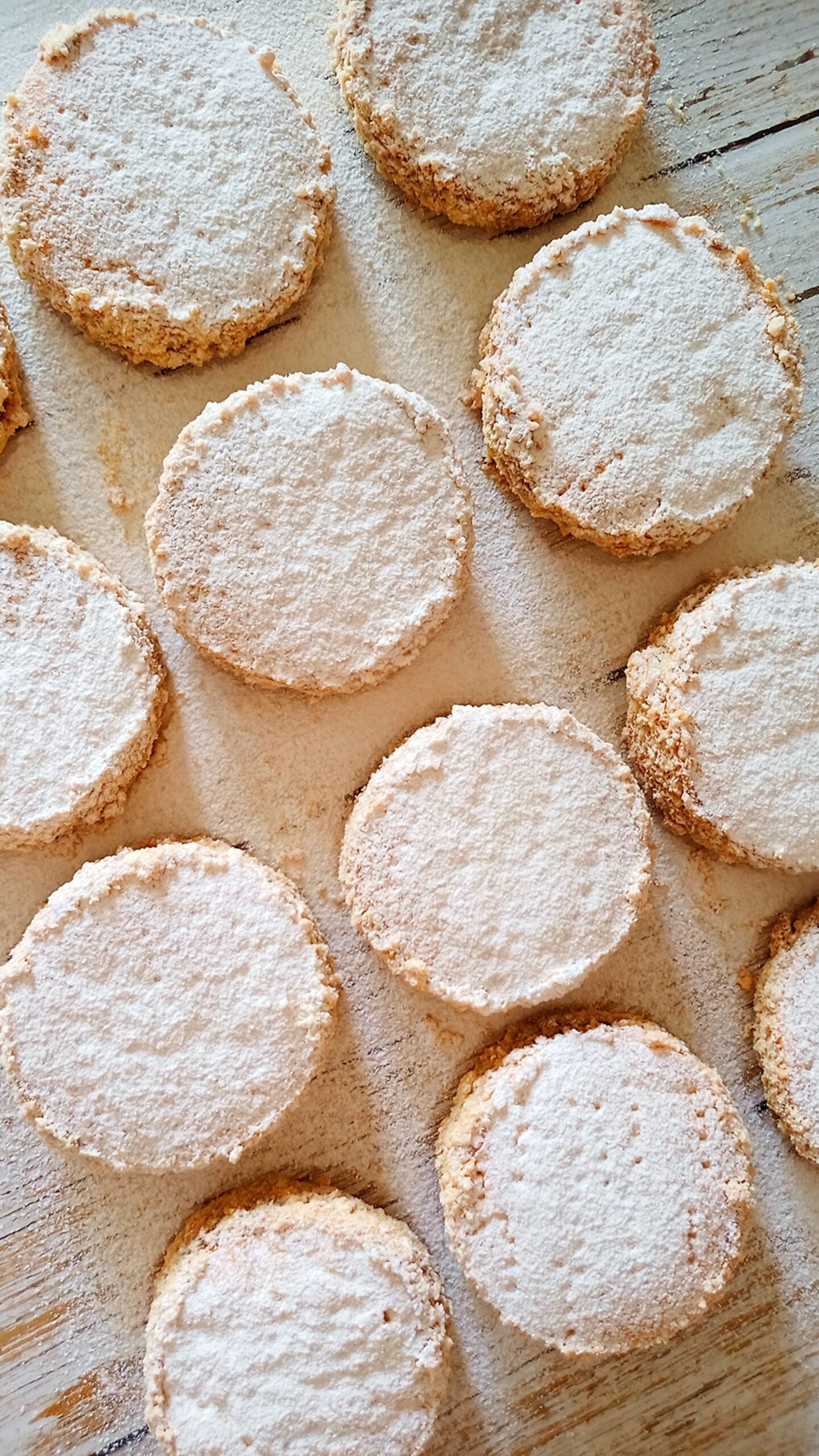
Coconut Mantecados (Spanish Christmas Cookies)
0.1kcal
Ingredients
- 3¼ cups all-purpose flour 400 g to be toasted
- 1 cup unsweetened shredded or desiccated coconut 100 g fine texture is best
- 1 cup plus 2 tablespoons lard 250 g room temperature (see notes for substitutes)
- 1½ cups powdered sugar 180 g sifted, plus extra for dusting
- ½ teaspoon ground cinnamon optional
- finely grated zest of ½ organic lemon optional
- 1 pinch salt
Method
- Toast the flour. Preheat the oven to 350°F (175°C). Spread the flour on a baking sheet and toast it for 10 to 15 minutes, stirring every 5 minutes, until it turns pale beige and smells nutty. Don't let it get dark. Let it cool completely.
- Toast the coconut. Spread the coconut on a baking sheet and toast for 3 to 5 minutes, just until it starts to turn golden. Watch closely, because it burns fast. Let it cool completely.
- Mix the dry ingredients. Sift the cooled flour into a large bowl. Add the coconut, powdered sugar, cinnamon, lemon zest and salt, and stir together.
- Add the lard. Add the lard in pieces and work it in with your hands until the dough comes together. It should hold when pressed, yet still feel sandy and crumbly. Don't knead.
- Chill the dough. Shape the dough into a ball, wrap it and refrigerate it for 30 minutes.
- Preheat and prepare. Preheat the oven to 350°F (175°C) and line two baking sheets with parchment paper.
- Shape the cookies. Press or gently roll the dough to about ½ inch (1.25 cm) thick. Cut out 2-inch (5 cm) rounds, and press the scraps together to cut more. Place them 1 inch apart on the sheets. If the dough is too crumbly to roll, press it into the cutter on the baking sheet.
- Bake. Bake for 12 to 15 minutes, until the cookies are set and barely golden at the edges. They should stay pale and soft inside.
- Cool completely. Let the cookies cool completely on the baking sheet. They are very fragile while warm. Dust with powdered sugar once cooled.
- Wrap. For the traditional look, wrap each cookie in a small square of tissue or wax paper, twisted at the ends.
Nutrition
Calories0.1kcalProtein0.03gFat0.001gCholesterol0.1mgSodium3mgPotassium1mgVitamin A0.1IUVitamin C0.002mgCalcium0.1mgIron0.001mg
Notes
What is lard, and where can I buy it? Traditional mantecados are made with pork lard (manteca de cerdo). It gives the cookies their tender, sandy texture. In Spain, it is sold in tubs in supermarkets. In the US and UK, look for lard in the baking aisle or at a butcher.
Can I use butter or olive oil instead? Many people do, but the texture changes, and we haven't tested it. Butter makes a firmer, more shortbread-like cookie, and olive oil needs a different ratio. Treat the lard version as the traditional one.
Why toast the flour? Toasting the flour gives mantecados their typical nutty flavor and sandy texture. It's the step that makes them taste like the ones in Spain, so don't skip it. Always cool it fully before mixing.
Why are my cookies hard? The usual cause is baking them too long or adding too much lard. Bake until just set and pale.
Why are my cookies falling apart? Mantecados are meant to be very crumbly. If they break while you move them, let them cool completely on the baking sheet first, and handle them gently.
How do I store them? Keep them wrapped in an airtight tin at room temperature for up to 2 weeks.
Not vegetarian: this version contains pork lard.