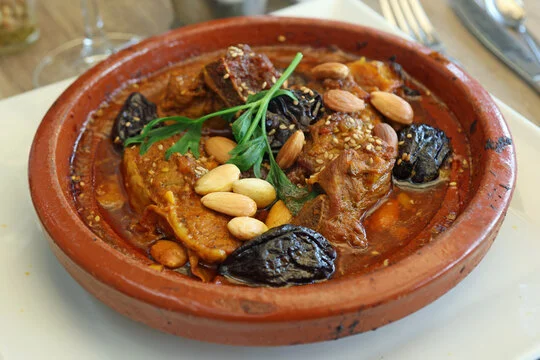
Honey Lamb with Prunes and Almonds
154kcal
Ingredients
- 1 kg 2.2 lb boneless lamb shoulder, cut into large 5 cm (2-inch) pieces
- 2 medium onions about 300 g / 10.5 oz, finely chopped
- 3 tbsp 45 ml extra virgin olive oil
- 3 garlic cloves finely chopped
- 1 cinnamon stick
- 1 tsp ground cinnamon
- 1½ tsp ground ginger
- 1 tsp ground turmeric
- 1 tsp ground cumin
- ½ tsp ground coriander
- ½ tsp freshly ground black pepper
- A generous pinch of saffron threads about 0.1 g
- 2 tbsp 30 ml warm water, for blooming the saffron
- 400 ml 1⅔ cups low-sodium lamb or chicken stock
- 200 g 7 oz pitted dried prunes
- 3 tbsp 45 ml honey
- 75 g 2.6 oz / about ½ cup blanched whole almonds
- 1 tsp toasted sesame seeds optional
- 1 tsp fine sea salt plus more to taste
- 2 tbsp chopped fresh cilantro or flat-leaf parsley for serving
Method
- Place the saffron threads in a small bowl with 2 tablespoons of warm water and leave to infuse for 10 minutes. Meanwhile, season the lamb with the salt and black pepper.
- Heat 2 tablespoons of the olive oil in a large, heavy-bottomed Dutch oven or deep casserole over medium-high heat. Add the lamb in batches and brown it on several sides, allowing approximately 6–8 minutes per batch. Transfer the browned meat to a plate. Add the remaining tablespoon of oil as needed.
- Reduce the heat to medium-low. Add the chopped onions to the same pan and cook for 10–12 minutes, stirring occasionally, until softened and lightly golden. Add the garlic and cook for another minute.
- Stir in the cinnamon stick, ground cinnamon, ginger, turmeric, cumin and ground coriander. Cook for approximately 30 seconds, stirring constantly, until fragrant. Do not allow the spices to burn.
- Return the lamb and any accumulated juices to the pan. Pour in the saffron together with its soaking liquid, followed by the stock. Stir well, scraping any browned bits from the bottom of the pan.
- Bring the liquid to a gentle simmer. Cover with a lid, reduce the heat to low and cook for approximately 1½–2 hours, stirring occasionally, until the lamb is nearly fork-tender. Add a small splash of water or stock if the sauce becomes too thick during cooking.
- While the lamb cooks, cover the prunes with warm water and let them soak for approximately 15 minutes. Drain well and set aside.
- Once the lamb is nearly tender, stir the honey into the cooking sauce and add the drained prunes. Cover and simmer gently for another 20 minutes, until the prunes are plump and soft and the lamb is completely tender.
- Remove the lid and continue simmering for approximately 5–10 minutes if necessary, allowing the sauce to reduce until thick and glossy. Stir carefully so the softened prunes retain their shape. Taste and adjust the salt and pepper. The sauce should have a balanced sweet and savory flavor.
- Meanwhile, heat a small dry frying pan over medium-low heat. Add the blanched almonds and toast for approximately 4–6 minutes, turning frequently, until lightly golden. Transfer them to a plate to prevent further browning.
- Transfer the lamb, prunes and sauce to a warm serving dish. Scatter the toasted almonds over the top, along with the sesame seeds if using. Finish with chopped cilantro or parsley.
- Serve immediately with couscous or warm crusty bread to soak up the fragrant sauce.
Nutrition
Calories154kcalCarbohydrates16gProtein0.5gFat11gSaturated Fat2gPolyunsaturated Fat1gMonounsaturated Fat8gSodium584mgPotassium58mgFiber1gSugar13gVitamin A11IUVitamin C1mgCalcium27mgIron1mg
Notes
Best cut of lamb: Boneless lamb shoulder is ideal for this dish because it becomes wonderfully tender during slow cooking. Bone-in shoulder also works, but you'll need to allow extra weight for the bones and possibly a little longer cooking time.
Cooking time: Let tenderness, rather than the clock, determine when the lamb is ready. If it still feels firm after two hours, continue simmering gently until a fork slides into the meat easily.
Stock: Use low-sodium lamb or chicken stock. Begin with 400 ml (1⅔ cups), but add a little more if the pan becomes dry. You want a rich braising sauce, not a soup.
Saffron: Soaking saffron in warm water before adding it to the pan helps distribute its flavor and color more evenly.
Why add the prunes toward the end? If prunes cook for the entire braising time, they may break down completely. Adding them during the last part of cooking keeps them soft and plump.
Honey: Three tablespoons provide a noticeable but balanced sweetness. Taste the finished sauce before adding any more, especially if your prunes are very sweet.
Almonds: Toast the blanched almonds shortly before serving for the best crunch. Traditionally, almonds may also be fried until golden.
Orange blossom water: For a delicate floral note, add ¼ teaspoon orange blossom water during the final few minutes of cooking. Use food-grade orange blossom water intended for culinary use.
A little heat: Add a small pinch of cayenne pepper or a little harissa if you prefer a spicy variation. This is optional rather than essential to the dish.
Make ahead: This stew can be prepared the day before. Refrigerate promptly and reheat gently until piping hot. Add the almonds just before serving so they stay crisp.
Storage: Store leftovers in a covered container in the refrigerator at 4°C (40°F) or below for up to 3–4 days, or freeze for longer storage.
Serving: Serve with couscous, bread or a simple salad. For a more traditional Moroccan-style presentation, use warm bread to enjoy the sauce.
Allergens: Contains almonds (tree nuts). Optional sesame seeds introduce an additional sesame allergen.