Go Back Email Link
–+ servings

Spanish Caramelized Peppers – Pimientos Confitados

32kcal
No ratings yet
Share Print
toppings
Prep 10 minutes
Cook 45 minutes
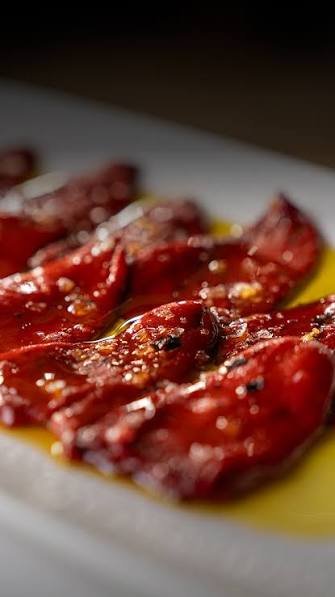
These Spanish caramelized peppers, or pimientos confitados, are slowly cooked with olive oil, apple cider vinegar and sugar until wonderfully soft, glossy and sweet-tangy. Delicious on crostini with goat cheese, alongside grilled meat or fish, or served with Spanish tortilla.
Servings 6 toppings
Course Appetizer, Side Dish, Tapas
Cuisine Mediterranean, Spanish
toppings
Start Cooking

Ingredients

**For the caramelized peppers**
  • 600 g 1⅓ lb bell peppers, preferably red or a mixture of red and yellow
  • 25 g approximately 1 tbsp + 2 tsp apple cider vinegar
  • 50 g ¼ cup granulated sugar
  • 100 ml about ⅓ cup + 1 tbsp water
  • Fine sea salt to taste
  • 2 tbsp 30 ml olive oil, for cooking
**Optional for serving**
  • Toasted baguette slices or sourdough
  • Soft goat cheese
  • Spanish tortilla
  • Grilled chicken pork or fish

Method

  1. Wash the bell peppers, cut them in half and remove the stems, seeds and white membranes. Slice the peppers into thin, even strips, approximately 5–7 mm (¼ inch) wide.
  2. Heat the olive oil in a wide, heavy-bottomed frying pan over medium heat.
  3. Add the sliced peppers and a small pinch of sea salt. Cook for approximately 8–10 minutes, stirring occasionally, until the peppers begin to soften and lose some of their moisture. They should become glossy but not deeply browned.
  4. Add the apple cider vinegar, sugar and water to the pan. Stir gently until the sugar has dissolved and the peppers are evenly coated.
  5. Bring the mixture to a gentle simmer, then reduce the heat to medium-low.
  6. Cook uncovered for approximately 25–35 minutes, stirring regularly, until the peppers are completely tender and most of the liquid has evaporated.
  7. As the liquid reduces, it will become slightly syrupy and coat the peppers with a glossy, sweet-and-sour glaze. Stir more frequently toward the end to prevent the sugar from catching on the bottom of the pan.
  8. If the liquid evaporates before the peppers have softened completely, add a tablespoon or two of water and continue cooking gently.
  9. Taste the peppers and adjust with a little additional salt if needed. The final flavor should be sweet and tangy, with the natural flavor of the peppers still coming through.
  10. Remove the pan from the heat and allow the peppers to cool slightly. The glaze will thicken a little more as it cools.
  11. Serve warm or at room temperature over toasted bread with goat cheese, alongside grilled meat or fish, or as part of a Spanish tapas spread.

Nutrition

Calories32kcalCarbohydrates8gFat0.03gSodium0.1mgPotassium0.2mgSugar8gCalcium0.1mgIron0.01mg

Notes

What Are Pimientos Confitados?

Pimientos confitados are Spanish peppers cooked gently until tender, often with a combination of olive oil, sugar and vinegar.
They're sometimes called pimientos caramelizados, or caramelized peppers.
There are different ways of preparing them. Some recipes use only peppers, olive oil and sugar, while others add vinegar for a more pronounced sweet-and-sour flavor.
My version uses apple cider vinegar, which gives the peppers a pleasant tanginess.
They're delicious as a condiment, appetizer topping or side dish.

Are Caramelized Peppers the Same as Roasted Peppers?

Not quite.
Roasted peppers are usually cooked in a hot oven or directly over a flame until their skins blister and the flesh softens.
Caramelized peppers are cooked more gently in a pan with a little liquid.
In this recipe, the peppers soften in olive oil before simmering with water, vinegar and sugar.
As the liquid reduces, it creates a glossy coating around the peppers.
The result is sweeter and more concentrated than ordinary sautéed peppers, with a slightly syrupy texture.

Why Add Apple Cider Vinegar?

The vinegar balances the sweetness of the peppers and sugar.
Without it, the finished dish can become quite sweet.
Apple cider vinegar has a fruity acidity that works particularly well with red bell peppers.
It's one of the ingredients that makes these peppers so delicious alongside rich foods such as cheese, grilled pork or chicken.

What to Serve with Spanish Caramelized Peppers

On Crostini with Goat Cheese

This is one of my favorite ways to serve them.
Toast slices of baguette or sourdough, spread with soft goat cheese and add a spoonful of caramelized peppers.
The combination of sweet peppers and tangy cheese is wonderful.

With Spanish Tortilla

Serve a little spoonful alongside a slice of Spanish potato tortilla.
The sweet-and-sour peppers add a lovely contrast to the eggs and potatoes.

With Grilled Meat or Fish

These peppers are delicious with grilled chicken, pork chops and roasted or grilled fish.
You only need a small spoonful to add flavor and color to the plate.

On a Cheese Board

I also love serving caramelized peppers alongside aged Manchego or creamy goat cheese.
Add a few olives, some good bread and perhaps a little Spanish ham, and you have the beginnings of a lovely tapas spread.

In Sandwiches

Try adding them to a sandwich with roasted chicken, Manchego or soft cheese.
They're particularly good on toasted bread because the slightly crisp texture contrasts with the soft peppers.

Can You Make Caramelized Peppers Ahead?

Yes, and they're particularly useful when preparing a meal for friends.
You can make the peppers earlier in the day or the day before serving.
Once cooked, cool them briefly and refrigerate in a covered container.
Take out only what you need and serve chilled, at room temperature after a short time out of the refrigerator, or gently warmed.
Because this recipe isn't designed for home canning, don't store the finished peppers in sealed jars at room temperature.

Can You Use These Peppers as a Pasta Sauce?

Absolutely.
For a quick lunch, toss a few spoonfuls of caramelized peppers through freshly cooked pasta with a splash of pasta cooking water.
Add some crumbled goat cheese or a little Parmigiano Reggiano.
The peppers bring sweetness and acidity, while the cheese makes the dish wonderfully savory.
It's also a lovely way to use a small leftover portion.