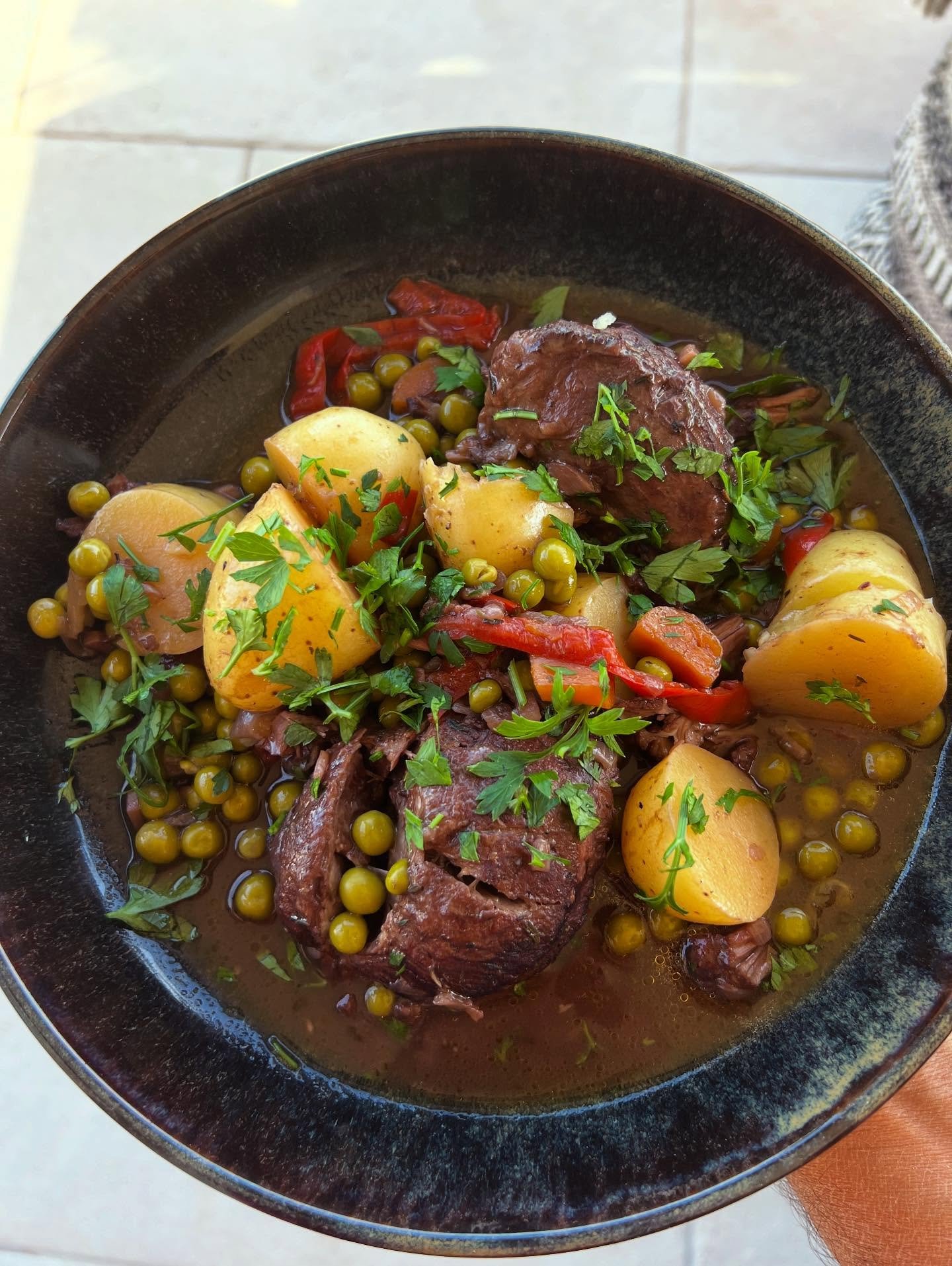
Spanish Pork Cheeks in Red Wine with Baby Potatoes | Carrilladas de Cerdo al Vino Tinto
Ingredients
- 500 g – pork cheeks
- ½ tbsp – all-purpose flour
- To taste – salt and black pepper
- As needed – olive oil
- 1 large – red onion
- ½ – red bell pepper
- 2 cloves – garlic
- 375 ml – dry Spanish red wine
- 250 ml – water
- 1 – chicken stock cube or ½ Maggi stock cube
- 2 – bay leaves
- 1 tsp – dried thyme
- 375 g – baby potatoes skin on
- 1 small can – Bonduelle carrots and peas drained
- A few sprigs – fresh parsley finely chopped
Method
- Trim the pork cheeks, removing any tough membranes. Pat the meat dry and season with the flour, salt, and black pepper.
- Cut the red onion and red bell pepper into small cubes. Finely chop the garlic.
- Heat a splash of olive oil in a Dutch oven or heavy-bottomed casserole. Brown the pork cheeks on all sides over medium-high heat. Remove them from the pan and set aside.
- Reduce the heat slightly. Add the onion, bell pepper, and garlic to the same pan and cook for approximately 10 minutes, until the vegetables begin to soften.
- Return the pork cheeks to the pan. Pour in the red wine and water, then add the chicken stock cube or half a Maggi stock cube.
- Add the bay leaves and dried thyme. Bring everything to a boil.
- Reduce the heat to low, cover the pan with a lid, and simmer the pork cheeks very gently for approximately 2½ hours.
- Rinse the baby potatoes and add them to the stew. Continue cooking uncovered for another 30–45 minutes, until both the potatoes and pork cheeks are completely tender.
- When the potatoes are almost cooked, add the drained can of carrots and peas. Heat through for approximately 5 minutes.
- Check the consistency of the sauce. If it is still too thin, remove the meat and potatoes from the pan and let the sauce reduce over higher heat for a few minutes until you have a lovely, rich gravy.
- Return the meat and potatoes to the sauce and sprinkle with finely chopped parsley just before serving.
Notes
Choose a dry Spanish red wine, preferably made from Tempranillo grapes. An inexpensive Rioja or Ribera del Duero works very well. The wine doesn't need to be expensive, but choose one you'd happily drink.
If you have homemade beef stock, you can replace the water and stock cube with 250 ml of beef stock.
Pork cheeks often have a firm membrane on the outside. Carefully remove it with a sharp knife before cooking if you prefer. Sometimes I remove it, sometimes I don't, and to be honest, I hardly notice the difference.
The exact braising time will depend on the size of the pork cheeks. They're ready when the meat falls apart easily.