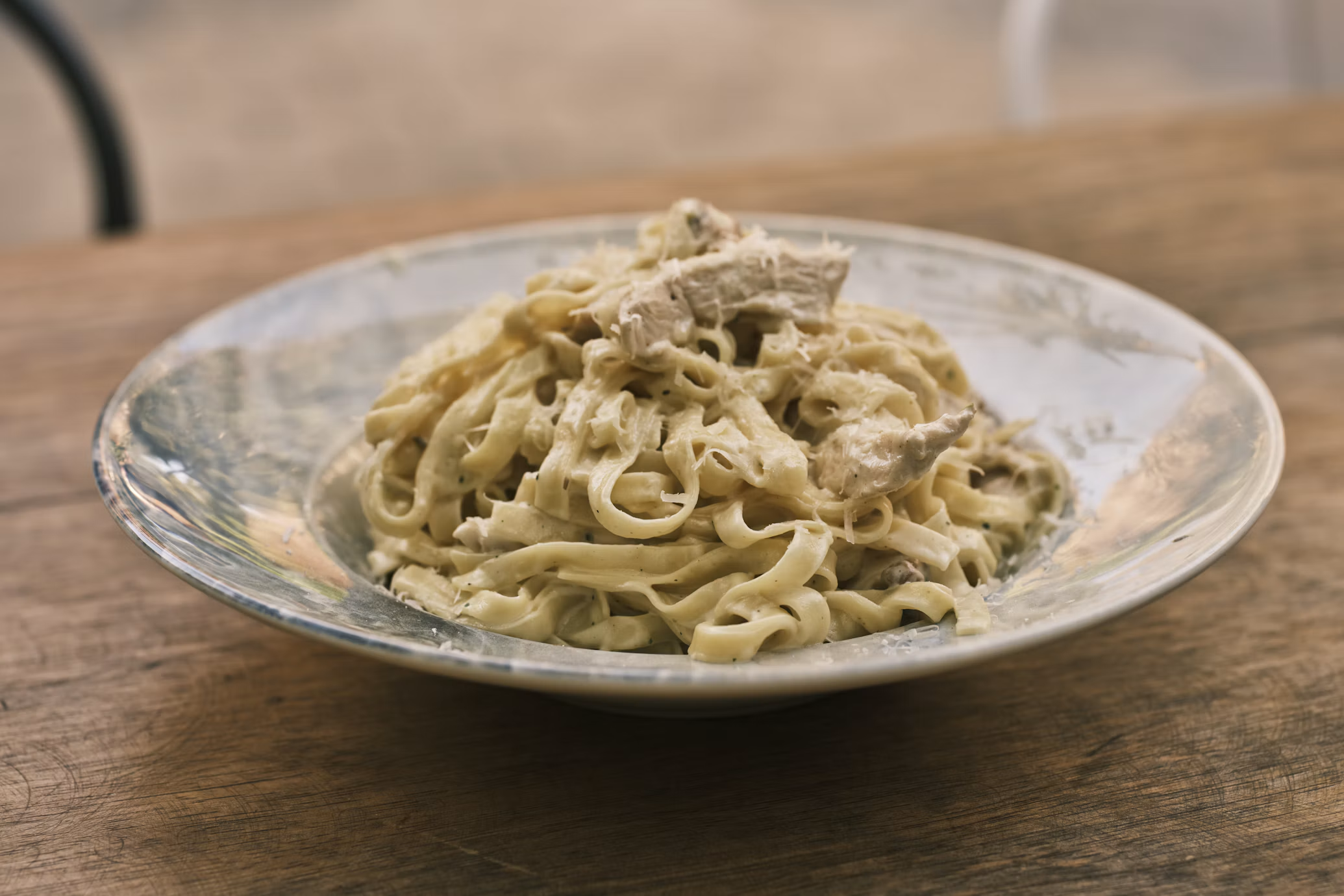
Authentic Fettuccine Alfredo – Original Italian Recipe Without Cream
Ingredients
- 400 g 14 oz very thin fresh egg fettuccine
- 160 g 5.6 oz / approximately 11 tbsp good-quality unsalted butter, softened to room temperature
- 280 g 9.9 oz Parmigiano Reggiano, preferably aged 24 months, very finely grated and sifted
- Fine salt for the pasta cooking water
- Hot starchy pasta cooking water as needed for emulsifying the sauce
Method
- Remove the butter from the refrigerator well before cooking so it becomes soft and spreadable, but not melted. Cut it into small pieces and distribute it across the bottom of a large, gently warmed serving platter or heatproof bowl.
- Finely grate the Parmigiano Reggiano using a very fine grater. For the smoothest possible sauce, pass the grated cheese through a fine sieve to remove larger pieces. Set aside.
- Bring a large saucepan of water to a boil. Season lightly with salt, remembering that Parmigiano Reggiano is already quite salty. Warm your serving platter if you haven't already done so, making sure it is comfortably warm rather than extremely hot.
- Add the fresh fettuccine to the boiling water. Cook until just tender, following the instructions for your particular pasta. Very thin, freshly made Roman-style fettuccine may take only 20–30 seconds, while thicker fresh pasta usually requires longer.
- Before removing the pasta, reserve approximately 250 ml (1 cup) of the hot cooking water. You may not need all of it.
- Lift the fettuccine directly from the water using a pasta fork or tongs, allowing some cooking water to accompany the noodles. Transfer immediately to the warm platter containing the softened butter.
- Gently lift and turn the hot fettuccine to begin melting the butter and coating the strands. Avoid breaking or crushing the delicate pasta.
- Sprinkle a portion of the finely grated Parmigiano Reggiano over the pasta. Add a small splash of the reserved hot pasta water and continue lifting and turning the noodles, allowing the cheese and butter to combine.
- Gradually add the remaining Parmigiano Reggiano in several additions, tossing continuously and adding small amounts of hot pasta water whenever the mixture becomes too thick.
- Continue the mantecatura until the butter, cheese and cooking water have formed a smooth, glossy sauce that coats every strand of fettuccine. The sauce should be creamy and fluid, without visible lumps of cheese or separated butter.
- If the sauce becomes too thick, add a little more warm pasta water and continue tossing. If it is too thin, continue mixing briefly until the sauce coats the pasta, taking care not to let it cool completely.
- Serve immediately on warmed plates. Authentic Fettuccine Alfredo needs no cream, garlic, chicken or additional garnish.
Notes
Use fresh egg fettuccine: The original Roman dish is made with exceptionally thin fresh egg pasta. Fresh fettuccine gives the most authentic result. Dried fettuccine can also work, but the cooking time and texture will be different.
Choose good butter: Butter is one of the main ingredients, so use fresh, high-quality unsalted butter. Allow it to soften naturally before cooking. It should be creamy and spreadable, not liquid.
Parmigiano Reggiano: Use genuine Parmigiano Reggiano, ideally aged approximately 24 months. Grate it as finely as possible and sift it for the smoothest sauce.
Don't use packaged shredded cheese: Coarsely shredded or pre-grated cheese may not incorporate as smoothly and can produce lumps.
Warm the serving platter: This helps keep the pasta hot enough to melt the butter and incorporate the cheese. The platter should be warm, not scorching hot.
Save the pasta water: The starch-containing cooking water helps the butter and cheese form a creamy emulsion. Add it gradually rather than pouring it all in at once.
Avoid excessive heat: Do not cook the cheese sauce over high heat. Overheating can cause the cheese to clump and the fat to separate. The heat of the freshly cooked pasta and warm water should be sufficient.
Keep the pasta moving: The traditional mantecatura involves repeatedly lifting and turning the noodles until the ingredients form a silky sauce.
Don't rinse the pasta: Rinsing removes surface starch and cools the noodles, making emulsification more difficult.
Work quickly: Have the butter, cheese and warm serving platter ready before cooking the pasta. Once the pasta is cooked, the sauce should come together immediately.
No heavy cream: The original Roman recipe contains no cream. Its creamy texture comes entirely from butter, Parmigiano Reggiano and cooking water.
Serve immediately: Fettuccine Alfredo is at its best straight after mixing. As it cools, the sauce thickens and can become less silky.
Leftovers: Refrigerate promptly and eat within 2 days for best quality. Reheat gently with a little water, although the texture won't be quite the same as freshly prepared Alfredo.