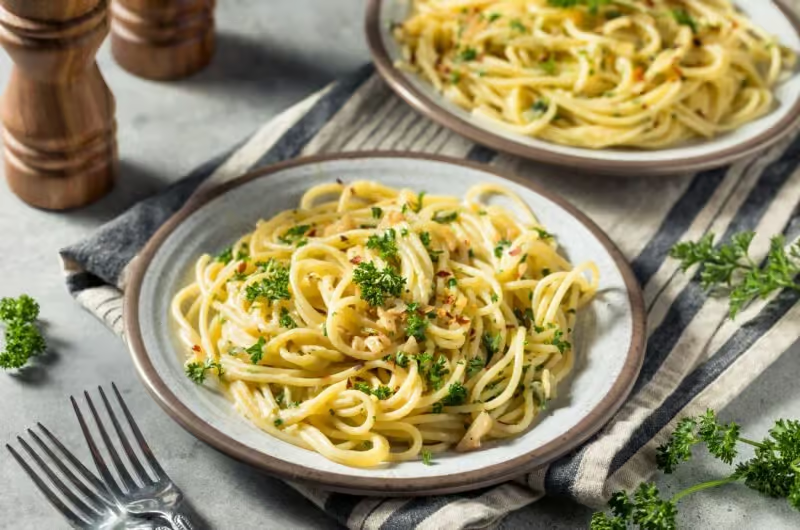
Creamy Linguine al Limone
95kcal
Ingredients
- 400 g 14 oz dried linguine, preferably a good-quality Italian brand such as Rummo
- 2 medium unwaxed lemons finely grated zest from both and juice from 1, added to taste
- 2 garlic cloves finely minced
- 3 tbsp 45 ml extra virgin olive oil
- 200 ml ¾ cup plus 1 tbsp heavy whipping cream, approximately 35% fat
- 100 g 3½ oz / approximately 1 cup finely grated Parmigiano-Reggiano, plus extra for serving
- 15 g approximately ¼ cup fresh flat-leaf parsley, finely chopped
- Fine sea salt for the pasta water and to taste
- Freshly ground black pepper to taste
- 240 ml 1 cup reserved starchy pasta cooking water, added as needed
Method
- Bring a large pot of water to a boil. Add enough salt to season the water well, then cook the linguine according to the package directions until al dente. Before draining, reserve at least 1 cup (240 ml) of the starchy pasta cooking water.
- While the pasta cooks, finely grate the zest from both lemons, taking care to remove only the yellow outer layer and not the bitter white pith. Juice one lemon and set the juice aside. Finely grate the Parmigiano-Reggiano and prepare the garlic and parsley.
- Heat the olive oil in a large, deep skillet over medium-low heat. Add the minced garlic and cook gently for approximately 30–60 seconds, stirring frequently, until fragrant but not browned.
- Add approximately three-quarters of the lemon zest and stir for another 15–20 seconds to release its fragrance into the warm oil.
- Pour in the heavy cream and stir gently. Allow it to warm and simmer very lightly for 2–3 minutes, just until slightly thickened. Avoid a vigorous boil.
- Add the drained linguine directly to the skillet, along with approximately 60 ml (¼ cup) of the reserved pasta water. Toss gently until the pasta is coated with the warm cream sauce.
- Remove the skillet from the heat and allow the vigorous bubbling to stop. Add the finely grated Parmigiano-Reggiano in several additions, tossing the pasta continuously so the cheese melts into the warm sauce. Add a little more pasta water as needed to create a smooth, glossy coating.
- Add 1 tablespoon (15 ml) of the freshly squeezed lemon juice and toss again. Taste before adding more lemon juice, a little at a time, until the acidity is balanced with the cream and cheese. Season with freshly ground black pepper and additional salt only if necessary.
- Fold in most of the chopped parsley and toss once more. The sauce should coat the linguine lightly rather than sit thickly at the bottom of the pan. Add another splash of pasta water if it has become too thick.
- Divide the linguine between four warmed plates or transfer to a large serving bowl. Finish with the remaining lemon zest, parsley and a little extra freshly grated Parmigiano-Reggiano.
- Serve immediately while the pasta is silky, creamy and beautifully fragrant.
Nutrition
Calories95kcalCarbohydrates0.5gProtein0.1gFat11gSaturated Fat1gPolyunsaturated Fat1gMonounsaturated Fat8gSodium0.5mgPotassium6mgFiber0.03gSugar0.01gVitamin A0.1IUVitamin C0.5mgCalcium3mgIron0.1mg
Notes
Choosing the pasta: Use good-quality dried linguine with a pleasant al dente texture. Rummo is one of my favorite brands for this kind of recipe. Spaghetti, fettuccine or tagliatelle are also suitable.
Why use two lemons? Most of the lemon fragrance comes from the zest, while the juice adds acidity. Using the zest of two lemons gives the sauce a pronounced citrus aroma without needing excessive juice.
Add lemon juice to taste: Begin with 1 tablespoon (15 ml). Depending on the size and acidity of your lemons, you may need a little more. You don't necessarily need all the juice from one lemon.
Unwaxed lemons: Choose unwaxed lemons when possible and wash them thoroughly before zesting. Remove only the colored zest, not the bitter white pith.
Olive oil: A mild or medium-fruity extra virgin olive oil works particularly well. This recipe uses 3 tablespoons to keep the cream sauce balanced.
Cream: Use heavy whipping cream with approximately 35% milk fat. Lower-fat alternatives may produce a thinner sauce and are less forgiving when combined with lemon juice.
Parmigiano-Reggiano: Finely grate the cheese just before cooking. Add it off the heat and stir thoroughly to help prevent clumping or a grainy sauce.
Pecorino Romano: Replace up to 25 g (1 oz) of the Parmigiano-Reggiano with finely grated Pecorino Romano if you prefer a saltier, sharper flavor. Taste carefully before adding more salt.
Pasta cooking water: Always save some before draining the pasta. The starch helps the sauce coat the linguine. Add it gradually rather than all at once.
Garlic: Cook the garlic gently without browning. You want its delicate aroma, not a strong roasted flavor that competes with the lemon.
Don't over-reduce the cream: A short, gentle simmer is enough. The sauce will thicken further when the cheese is added and as the pasta absorbs some of the liquid.
Serve immediately: Lemon cream sauce thickens as it stands. Have the table ready before finishing the pasta.
Serving suggestions: Delicious with grilled chicken, fish, shrimp or meat, alongside a fresh tomato salad or simple green salad.
Make ahead: This pasta is best prepared fresh. You can grate the cheese, zest the lemons and chop the parsley ahead of time.
Leftovers: Refrigerate promptly in an airtight container and use within 3–4 days. Reheat gently with a splash of water or cream. The texture may be less silky than when freshly made.
Allergens: Contains wheat (gluten) and milk.