Some of my favorite dinners are also the simplest.
A beautiful bowl of lemon pasta, something delicious from the barbecue, a fresh salad, and dinner is ready. Honestly, I don’t need much more than that.
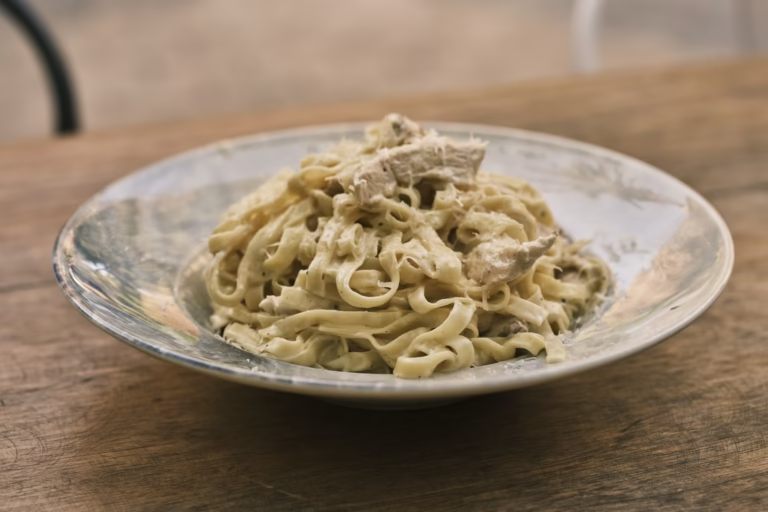
This creamy linguine al limone is exactly the sort of dish I love making on those evenings.
The sauce is silky, fragrant with fresh lemon zest, and wonderfully savory from the Parmigiano-Reggiano. There’s a little garlic, a generous splash of good olive oil, and just enough cream to bring everything together without hiding the fresh flavor of the lemons.
It’s lovely on its own, but I particularly enjoy serving it alongside grilled chicken, fish or a good piece of meat from the barbecue.
Add a salad, put everything on the table, and you have a meal that feels special without spending half the evening in the kitchen.
Sometimes life really can be that simple.
Why I Always Choose Good Pasta
I can be quite particular about the pasta I buy.
When a recipe has only a handful of ingredients, I think the quality of each one matters even more. For dried pasta, I often reach for a good Italian brand such as Rummo.
I like pasta that holds its shape, keeps a pleasant bite and has a slightly textured surface that helps the sauce cling to it.
Linguine is especially lovely with this lemon sauce.
The long, narrow ribbons are wide enough to catch the creamy coating, but delicate enough that the finished dish still feels light and fresh.
Of course, spaghetti or another long pasta will also work beautifully.
A Creamy Version of Italian Pasta al Limone
Pasta al limone is associated with Italian cooking, particularly the lemon-growing regions of southern Italy.
There are many ways to prepare it.
Some versions use little more than lemon, butter, pasta water and cheese. Others include olive oil or cream for a richer sauce.
This is my creamy version.
I use Spanish extra virgin olive oil because it’s what I always have in the kitchen, along with heavy cream, fresh lemon and plenty of finely grated Parmigiano-Reggiano.
The result is comforting without losing the brightness that makes lemon pasta so appealing.
The most important thing is getting the balance right.
Too much lemon juice can make the sauce unpleasantly sharp. Too much cream can hide the citrus flavor. And too much heat when adding the cheese can turn a beautifully smooth sauce into a grainy one.
Fortunately, those are all easy things to avoid.
The Secret to a Silky Lemon Sauce
One ingredient I never forget to save is the pasta cooking water.
As the linguine cooks, it releases starch into the water. Adding a little of that starchy liquid to the sauce helps everything come together into a smooth coating.
It’s one of those simple Italian cooking techniques that makes a noticeable difference.
I also add most of the lemon zest before the pasta goes into the sauce, then finish with the remaining zest and a little fresh lemon juice.
That gives the dish a beautiful citrus fragrance without overwhelming it.
And the Parmigiano?
Always grate it yourself if possible.
Freshly grated cheese melts and incorporates more smoothly than the pre-shredded varieties sold in bags.
What to Serve with Linguine al Limone
This is one of those pastas that goes beautifully with so many Mediterranean dishes.
I particularly love it with grilled chicken, simply seasoned with olive oil, salt and pepper.
It’s also delicious with grilled fish, especially when the fish has been cooked with a little lemon and herbs.
If we’re having a barbecue, I’ll often make the pasta while the meat or fish is cooking outside.
Then all I need is a large salad, perhaps some ripe tomatoes, good olive oil and a little vinegar.
And that’s dinner.
Of course, you can serve linguine al limone as a main course by itself. It’s lovely with a little extra Parmigiano and freshly ground black pepper.
But I think its real charm is how effortlessly it fits into a simple, generous meal shared around the table.
Good pasta. Fresh lemons. Beautiful olive oil.
Sometimes those are the meals I remember most.
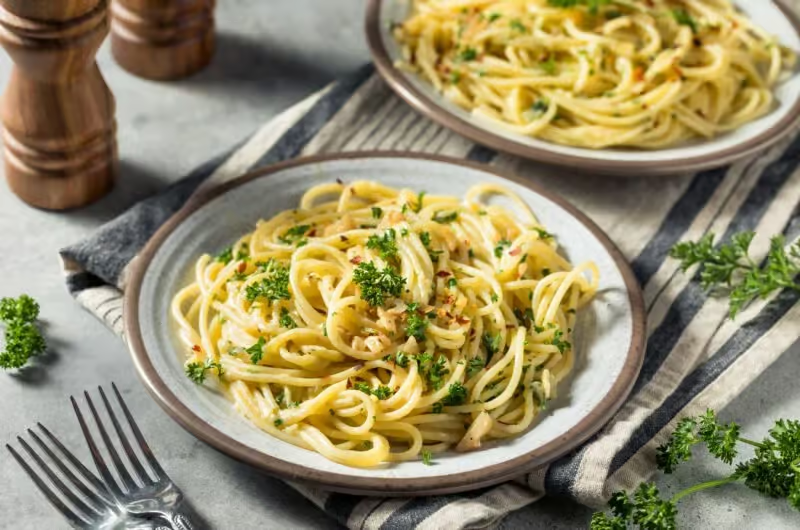
Creamy Linguine al Limone
Ingredients
- 400 g 14 oz dried linguine, preferably a good-quality Italian brand such as Rummo
- 2 medium unwaxed lemons finely grated zest from both and juice from 1, added to taste
- 2 garlic cloves finely minced
- 3 tbsp 45 ml extra virgin olive oil
- 200 ml ¾ cup plus 1 tbsp heavy whipping cream, approximately 35% fat
- 100 g 3½ oz / approximately 1 cup finely grated Parmigiano-Reggiano, plus extra for serving
- 15 g approximately ¼ cup fresh flat-leaf parsley, finely chopped
- Fine sea salt for the pasta water and to taste
- Freshly ground black pepper to taste
- 240 ml 1 cup reserved starchy pasta cooking water, added as needed
Method
- Bring a large pot of water to a boil. Add enough salt to season the water well, then cook the linguine according to the package directions until al dente. Before draining, reserve at least 1 cup (240 ml) of the starchy pasta cooking water.
- While the pasta cooks, finely grate the zest from both lemons, taking care to remove only the yellow outer layer and not the bitter white pith. Juice one lemon and set the juice aside. Finely grate the Parmigiano-Reggiano and prepare the garlic and parsley.
- Heat the olive oil in a large, deep skillet over medium-low heat. Add the minced garlic and cook gently for approximately 30–60 seconds, stirring frequently, until fragrant but not browned.
- Add approximately three-quarters of the lemon zest and stir for another 15–20 seconds to release its fragrance into the warm oil.
- Pour in the heavy cream and stir gently. Allow it to warm and simmer very lightly for 2–3 minutes, just until slightly thickened. Avoid a vigorous boil.
- Add the drained linguine directly to the skillet, along with approximately 60 ml (¼ cup) of the reserved pasta water. Toss gently until the pasta is coated with the warm cream sauce.
- Remove the skillet from the heat and allow the vigorous bubbling to stop. Add the finely grated Parmigiano-Reggiano in several additions, tossing the pasta continuously so the cheese melts into the warm sauce. Add a little more pasta water as needed to create a smooth, glossy coating.
- Add 1 tablespoon (15 ml) of the freshly squeezed lemon juice and toss again. Taste before adding more lemon juice, a little at a time, until the acidity is balanced with the cream and cheese. Season with freshly ground black pepper and additional salt only if necessary.
- Fold in most of the chopped parsley and toss once more. The sauce should coat the linguine lightly rather than sit thickly at the bottom of the pan. Add another splash of pasta water if it has become too thick.
- Divide the linguine between four warmed plates or transfer to a large serving bowl. Finish with the remaining lemon zest, parsley and a little extra freshly grated Parmigiano-Reggiano.
- Serve immediately while the pasta is silky, creamy and beautifully fragrant.