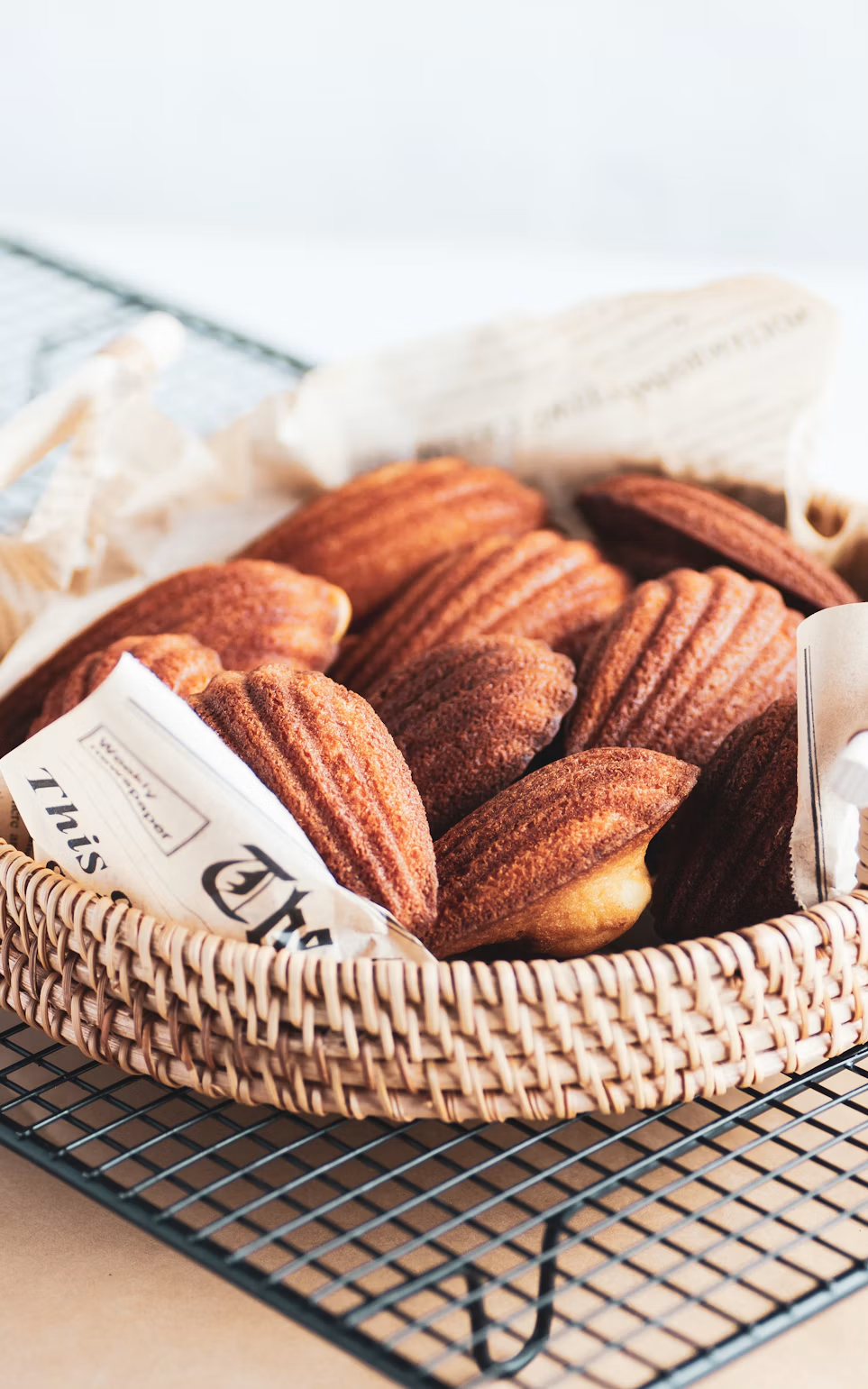
French Honey and Vanilla Madeleines – With the Perfect Hump
Ingredients
**For the madeleines**
- 200 g 14 tbsp unsalted butter, melted
- 245 g approximately 2 cups all-purpose flour
- 120 g 1 cup powdered sugar, sifted
- 10 g 2½ tsp baking powder
- 4 large eggs
- 130 g approximately ⅓ cup + 2 tsp honey
- 75 g 5 tbsp whole milk
- 3 g ½ tsp fine sea salt
- 1 vanilla bean split lengthwise and seeds scraped
- **For preparing the madeleine pan**
- A little softened butter
- A little all-purpose flour
**Optional fillings**
- Homemade salted caramel
- Pistachio cream
- Chocolate hazelnut spread
- Fruit preserves
Method
- The day before baking, place the eggs and sifted powdered sugar in a large mixing bowl. Beat with an electric mixer for approximately 3–4 minutes, until the mixture becomes pale, thick and slightly fluffy.
- Place the milk and honey in a small saucepan. Warm gently to approximately 50°C (122°F), stirring until the honey has dissolved into the milk. The mixture should be warm, not boiling.
- Slowly pour the warm honey and milk mixture into the beaten eggs while mixing gently on low speed.
- Sift the flour together with the baking powder. Gradually add the dry ingredients to the egg mixture, stirring just until combined and no dry flour remains.
- Melt the butter in a small saucepan or microwave and allow it to cool until warm rather than hot.
- Pour the melted butter into the batter in several additions, stirring gently until fully incorporated.
- Add the fine sea salt and the seeds scraped from the vanilla bean. Mix until the batter is smooth and evenly combined, without overworking it.
- Cover the bowl tightly and refrigerate the batter for 12 hours, preferably overnight.
- The following day, preheat the oven to 180°C (355°F), conventional setting, or approximately 160°C (320°F) fan. Allow the oven to heat thoroughly before baking.
- Lightly butter a metal madeleine pan and dust with flour, tapping out the excess. If using a traditional metal pan and following Feuillette's method, warm the prepared pan briefly in the oven before filling it, taking care when handling the hot metal.
- Remove the cold batter from the refrigerator and transfer it to a piping bag. Fill each madeleine cavity approximately three-quarters full. Do not spread the batter flat; it will settle as it bakes.
- Place the pan in the preheated oven and bake until the madeleines have risen, developed their characteristic hump and turned golden around the edges. Begin checking standard-sized madeleines after 9–10 minutes. They may need approximately 10–15 minutes, while larger patisserie-sized madeleines may require up to 18 minutes.
- The madeleines are ready when the centers spring back gently when touched and a toothpick inserted into the thickest part comes out without wet batter.
- Remove the pan from the oven. Allow the madeleines to stand for approximately 1 minute, then carefully release them from the molds and transfer to a wire rack.
- If baking in batches, keep the remaining batter refrigerated. Reprepare the pan between batches, making sure it is clean and lightly greased.
- Serve the madeleines slightly warm or at room temperature. If you wish to fill them, make a small opening in the underside of each cooled madeleine and pipe in a little caramel, pistachio cream, chocolate spread or fruit preserves.
Notes
Use a kitchen scale: Accurate measurements are particularly important when baking madeleines. Weigh the flour, butter, honey and sugar for consistent results.
Choose good honey: Use a mild, floral honey that complements the vanilla. Orange blossom honey is particularly lovely, but any good-quality mild honey will work.
Vanilla: A whole vanilla bean gives these madeleines a beautiful aroma. If necessary, substitute approximately 2 teaspoons of good-quality vanilla extract.