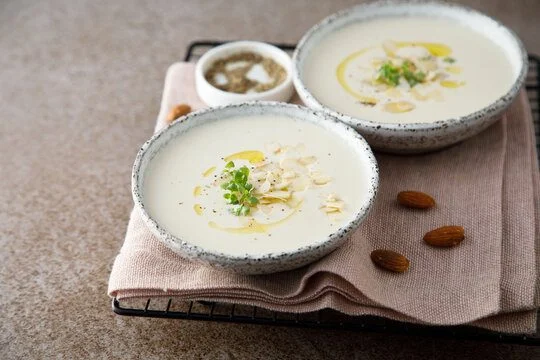
Sopa de Ajo – Spanish Garlic Soup
Ingredients
- 6 large garlic cloves peeled and thinly sliced
- 4 tbsp 60 ml Spanish extra virgin olive oil
- 100 g 3½ oz day-old rustic white bread, cut into slices or bite-sized pieces
- 1 tsp sweet Spanish paprika pimentón dulce
- 1 litre 4¼ cups low-sodium chicken stock
- 4 large eggs
- ½ tsp fine sea salt plus more to taste
- ¼ tsp freshly ground black pepper or to taste
- 1 tsp 5 ml sherry vinegar, optional
- 75 g 2.6 oz diced jamón serrano, optional for a richer variation
Method
- Peel the garlic cloves and slice them thinly and evenly. Cut the day-old bread into slices or generous bite-sized pieces. Have the paprika and warm chicken stock ready before you begin cooking.
- Heat the olive oil in a large, heavy-bottomed saucepan or Dutch oven over medium-low heat. Add the sliced garlic and cook gently for approximately 2–3 minutes, stirring frequently, until fragrant and pale golden. Do not allow the garlic to turn dark brown, as it will become bitter.
- Add the pieces of bread to the pan and stir gently so they absorb some of the garlic-infused olive oil. Cook for approximately 2–3 minutes, turning occasionally, until the bread begins to toast lightly around the edges.
- If using jamón serrano, add it during the final minute of toasting the bread and stir briefly to warm it through.
- Remove the pan from the heat. Sprinkle the sweet Spanish paprika over the garlic and bread, then stir for approximately 10 seconds until fragrant. Take care not to burn the paprika.
- Immediately pour in the warm chicken stock, stirring gently to combine everything and release any flavorful bits from the bottom of the pan.
- Return the saucepan to medium heat and bring the soup to a gentle simmer. Reduce the heat to low and cook uncovered for approximately 12–15 minutes, allowing the bread to soften and the garlic and paprika to flavor the broth.
- Taste the broth and season with salt and freshly ground black pepper. If you prefer a slightly sharper finish, add up to 1 teaspoon of sherry vinegar, but this is optional.
- Reduce the heat until the soup is barely simmering. Crack each egg into a separate small bowl, then gently slide the eggs into four different areas of the soup, keeping them as separate as possible.
- Cover the pan and cook gently for approximately 4–6 minutes, or until the egg whites are set and the yolks have reached your preferred consistency. Larger eggs or a cooler broth may require a little longer.
- Using a ladle, carefully divide the soup between four deep bowls, making sure each serving contains one egg, plenty of softened bread and fragrant broth.
- Serve immediately while piping hot.
Notes
Choosing the bread: Day-old rustic white bread is ideal. A traditional Castilian country loaf works particularly well, but ordinary crusty white bread is a good substitute. Avoid very soft sandwich bread, which can disintegrate too quickly.
How much bread? This recipe uses 100 g (3½ oz), creating a satisfying soup with visible pieces of softened bread. Add slightly more if you prefer a thicker, heartier result.
Garlic: Six cloves provide a pronounced but balanced garlic flavor. Slice them evenly so they cook at the same rate.
Do not burn the garlic: Garlic should become pale golden and fragrant, not dark brown. Burnt garlic produces a bitter taste that is difficult to correct.
Paprika: Use sweet Spanish paprika, or pimentón dulce. A small amount of smoked paprika can be used for a variation, but it will change the flavor.
Why add paprika off the heat? Ground paprika can burn quickly in hot oil. Stir it in briefly after removing the pan from the heat, then add the stock immediately.
Chicken stock or water: Traditional versions may use water or stock. Chicken stock gives the soup extra savory depth. If using salted stock, reduce the additional salt accordingly.
Sherry vinegar: Not an essential ingredient in traditional sopa castellana. If you enjoy a little acidity, begin with ½ teaspoon and use no more than 1 teaspoon unless your taste calls for more.
Jamón serrano: Add 75 g (2.6 oz) diced Spanish ham for a richer version. Reduce the salt because the ham is already salty.
Eggs: Gently poach one egg per serving directly in the broth. For soft yolks, cook just until the whites are set. For greater food safety, particularly for pregnant people and anyone at increased risk of foodborne illness, cook until both whites and yolks are firm.
Alternative egg method: Some Spanish home cooks beat the eggs and pour them gradually into the hot soup, creating delicate egg ribbons instead of whole poached eggs.
Texture: Sopa de ajo is not a blended cream soup. The bread softens and thickens the broth slightly, but some pieces should remain visible.
Best serving dish: Traditional earthenware bowls or small cazuelas look beautiful, but ordinary deep soup bowls are perfectly suitable.
Make ahead: Prepare the garlic, paprika, bread and broth base in advance, but add the eggs when you're ready to serve.
Storage: Refrigerate the soup base promptly at 4°C (40°F) or below and use within 3–4 days. Store it without the poached eggs when possible.
Reheating: Reheat the soup base until steaming hot, adding a little extra stock if the bread has absorbed too much liquid. Cook fresh eggs in the reheated broth.
Freezing: The soup base can be frozen, although the bread may become very soft after thawing. For the best texture, freeze the garlic-and-paprika broth without the bread or eggs, then add them when reheating.
Allergens: Contains wheat (gluten) and eggs. Optional jamón serrano contains pork. Check commercial stock labels for additional allergens.