Some of the best Spanish recipes are made with ingredients you probably already have in your kitchen.
A few cloves of garlic, some day-old bread, olive oil, paprika and a good broth.
Nothing particularly expensive. Nothing elaborate.
And yet, when you put them together in the right way, you get one of the most comforting soups in Spanish cooking.
Sopa de ajo, or Spanish garlic soup, is exactly that kind of recipe.
It’s warm, wonderfully fragrant and surprisingly satisfying. The garlic turns mellow and sweet as it cooks in olive oil, the paprika gives the broth its beautiful reddish color, and the bread softens into the soup, adding body without any need for cream.
Then comes my favorite part.
An egg, gently cooked directly in the hot broth until the white is set and the yolk is still soft.
Break into that yolk with your spoon, and it makes the soup even richer.
It’s the sort of meal I love when the weather turns cooler and we want something comforting without preparing an elaborate dinner.
A Soup from the Heart of Spain
Sopa de ajo is also known as sopa castellana, or Castilian soup.
Its roots are closely associated with the traditional cooking of Castile, where simple ingredients such as bread, garlic and olive oil formed the basis of many everyday meals.
This was practical cooking.
Bread was too valuable to waste, even when it had become hard and dry.
Rather than throwing it away, people used it to thicken soups and make inexpensive ingredients more satisfying.
And garlic was always there to provide flavor.
Over time, sopa de ajo became one of Spain’s most recognizable traditional soups.
It is especially associated with colder weather, and in some parts of Castile it also has a connection with Lent and Holy Week.
Of course, there isn’t just one version.
Some families use water, others prefer chicken or meat stock. Some add pieces of jamón serrano, while others keep the soup particularly simple.
But the combination of garlic, bread, olive oil and paprika remains at the heart of the dish.
The Importance of Good Spanish Paprika
One of the ingredients that makes sopa de ajo so distinctive is pimentón.
Spanish paprika gives the broth its warm red color and a beautiful depth of flavor.
For this recipe, I like using sweet Spanish paprika, or pimentón dulce.
You can also use a little smoked paprika if you prefer a smokier flavor.
But there’s one thing I always pay attention to.
Paprika burns very easily.
After cooking the garlic and bread, I briefly remove the pan from the heat before stirring in the paprika.
Just a few seconds are enough to release its aroma.
Then the stock goes in immediately.
It’s a simple technique, but it makes a real difference.
Why Day-Old Bread Is Perfect
I love recipes that make good use of ingredients that might otherwise go to waste.
And sopa de ajo is one of the best examples.
Day-old white bread or rustic country bread works beautifully because it absorbs the broth without disappearing immediately.
As the soup simmers, the bread softens and releases some of its starch, giving the broth a fuller texture.
The result isn’t supposed to be a smooth, blended soup.
You should still be able to see pieces of bread, softened by the broth and surrounded by the fragrant garlic and paprika.
I particularly like using a good rustic loaf with a substantial crumb.
If you bake your own sourdough bread, you can use that too, although a very sour loaf will give the soup a slightly different character.
The Egg Makes It a Meal
What transforms sopa de ajo from a simple bread soup into a satisfying lunch or dinner is the egg.
Once the broth has simmered and the bread has softened, I gently crack an egg into each portion.
The eggs cook directly in the hot soup, almost like poached eggs.
I love serving them with the whites set and the yolks still soft.
When you break the yolk, it blends into the hot broth and gives the soup a wonderfully rich finish.
If you prefer your eggs fully cooked, simply leave them in the broth a little longer.
Should You Add Jamón Serrano?
You’ll find plenty of Spanish versions of this soup containing little pieces of jamón serrano.
And I can certainly understand why.
The salty, savory flavor of the ham works beautifully with the garlic and paprika.
But I also think the simpler version deserves attention.
With good olive oil, plenty of garlic, flavorful stock and decent bread, the soup already has a wonderful character.
For this recipe, I’m keeping the ham optional.
That way, you can enjoy the basic Castilian-style soup or add a little jamón when you feel like something richer.
A Bowl of Spanish Comfort Food
I think one of the loveliest things about Spanish home cooking is how often the simplest dishes turn out to be the most memorable.
Not everything needs expensive ingredients or hours of preparation.
Sometimes all it takes is knowing what to do with a few things you already have.
A little garlic, some bread from yesterday, a spoonful of paprika and a good egg.
Serve the soup in a deep bowl, preferably with a spoon big enough to catch some of that wonderful broth and softened bread together.
And bring it to the table while it’s still steaming hot.
On a cold evening, I honestly can’t think of many things more comforting.
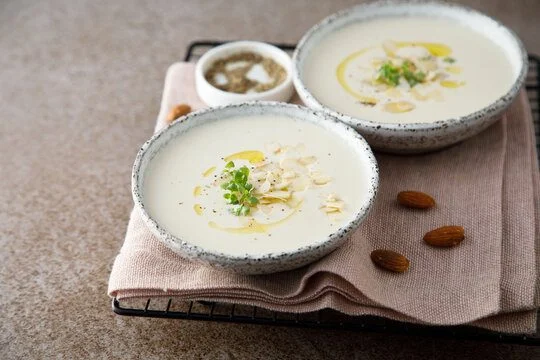
Sopa de Ajo – Spanish Garlic Soup
Ingredients
- 6 large garlic cloves peeled and thinly sliced
- 4 tbsp 60 ml Spanish extra virgin olive oil
- 100 g 3½ oz day-old rustic white bread, cut into slices or bite-sized pieces
- 1 tsp sweet Spanish paprika pimentón dulce
- 1 litre 4¼ cups low-sodium chicken stock
- 4 large eggs
- ½ tsp fine sea salt plus more to taste
- ¼ tsp freshly ground black pepper or to taste
- 1 tsp 5 ml sherry vinegar, optional
- 75 g 2.6 oz diced jamón serrano, optional for a richer variation
Method
- Peel the garlic cloves and slice them thinly and evenly. Cut the day-old bread into slices or generous bite-sized pieces. Have the paprika and warm chicken stock ready before you begin cooking.
- Heat the olive oil in a large, heavy-bottomed saucepan or Dutch oven over medium-low heat. Add the sliced garlic and cook gently for approximately 2–3 minutes, stirring frequently, until fragrant and pale golden. Do not allow the garlic to turn dark brown, as it will become bitter.
- Add the pieces of bread to the pan and stir gently so they absorb some of the garlic-infused olive oil. Cook for approximately 2–3 minutes, turning occasionally, until the bread begins to toast lightly around the edges.
- If using jamón serrano, add it during the final minute of toasting the bread and stir briefly to warm it through.
- Remove the pan from the heat. Sprinkle the sweet Spanish paprika over the garlic and bread, then stir for approximately 10 seconds until fragrant. Take care not to burn the paprika.
- Immediately pour in the warm chicken stock, stirring gently to combine everything and release any flavorful bits from the bottom of the pan.
- Return the saucepan to medium heat and bring the soup to a gentle simmer. Reduce the heat to low and cook uncovered for approximately 12–15 minutes, allowing the bread to soften and the garlic and paprika to flavor the broth.
- Taste the broth and season with salt and freshly ground black pepper. If you prefer a slightly sharper finish, add up to 1 teaspoon of sherry vinegar, but this is optional.
- Reduce the heat until the soup is barely simmering. Crack each egg into a separate small bowl, then gently slide the eggs into four different areas of the soup, keeping them as separate as possible.
- Cover the pan and cook gently for approximately 4–6 minutes, or until the egg whites are set and the yolks have reached your preferred consistency. Larger eggs or a cooler broth may require a little longer.
- Using a ladle, carefully divide the soup between four deep bowls, making sure each serving contains one egg, plenty of softened bread and fragrant broth.
- Serve immediately while piping hot.
Notes
Private Notes
What Is Sopa de Ajo?
Sopa de ajo is a traditional Spanish garlic soup made with bread, garlic, olive oil and paprika, usually cooked in water or broth.
It’s particularly associated with Castile, where it is also known as sopa castellana.
Although the ingredients are humble, the finished soup has a rich, aromatic flavor and a pleasantly substantial texture thanks to the bread.
Many versions are finished with an egg cooked directly in the hot broth.
Is Sopa de Ajo the Same as Sopa Castellana?
The names are often used interchangeably.
Both refer to Spanish garlic-and-bread soup, although individual recipes differ between regions and households.
Some versions contain only garlic, bread, paprika, water and olive oil.
Others include chicken stock, jamón serrano, eggs or additional seasonings.
The fundamental cooking technique remains similar.
Why Is Bread Added to Spanish Garlic Soup?
Bread gives the soup body and makes it more satisfying.
Traditionally, sopa de ajo was also an excellent way to use bread that had become too dry to enjoy fresh.
As it simmers, the bread absorbs the flavorful broth and gradually softens.
Some pieces retain their shape while others begin to break down, creating a slightly thickened texture.
It’s a traditional example of turning leftover ingredients into a nourishing meal.
What Is the Best Paprika for Sopa de Ajo?
Sweet Spanish paprika, known as pimentón dulce, is an excellent choice.
It gives the broth its characteristic reddish color and gentle pepper flavor.
You can also try a little smoked Spanish paprika for a deeper, smokier taste.
The most important thing is to avoid burning it, which can make the soup bitter.
Can I Make Sopa de Ajo Without Eggs?
Yes.
Eggs are common in many Spanish versions, but they aren’t necessary for the basic garlic-and-bread soup.
If you leave them out, the soup will be lighter and less substantial.
You can also serve the eggs separately, especially when preparing the soup for people with different preferences.
Can You Make Spanish Garlic Soup Vegetarian?
Absolutely.
Replace the chicken stock with a good vegetable stock or water and omit the optional jamón serrano.
The olive oil, garlic, paprika and bread will still give the soup plenty of flavor.
You can keep the eggs for a vegetarian version or omit them for a vegan variation, provided the bread and stock are suitable.
What Is the Difference Between Sopa de Ajo and Salmorejo?
Both are traditional Spanish dishes that use bread, olive oil and garlic, but they are very different soups.
Salmorejo comes from Córdoba in Andalusia and is made with ripe tomatoes blended into a thick, cold, creamy soup.
Sopa de ajo is particularly associated with Castile and is served hot. Its characteristic flavor comes from gently fried garlic and paprika, while the bread softens directly in the broth.
Salmorejo is usually finished with chopped hard-boiled egg and Spanish ham.
Sopa de ajo often contains an egg cooked directly in the hot soup.
They’re wonderful examples of how Spanish cooks use familiar ingredients in completely different ways.
What Should You Serve with Sopa de Ajo?
Sopa de ajo is hearty enough for a light lunch or supper, especially when served with an egg.
A simple green salad makes a lovely accompaniment.
You can also serve smaller portions as a starter before roasted chicken, grilled vegetables or a traditional Spanish main course.
Because the soup already contains bread, you don’t necessarily need anything else alongside it.
Can You Make Sopa de Ajo Ahead of Time?
Yes, but I recommend leaving out the eggs until you’re ready to serve.
Prepare the soup base, cool it promptly and refrigerate.
When you’re ready to eat, reheat it until steaming hot, adding extra stock if the bread has absorbed too much liquid.
Then gently cook the eggs in the hot broth and serve immediately.