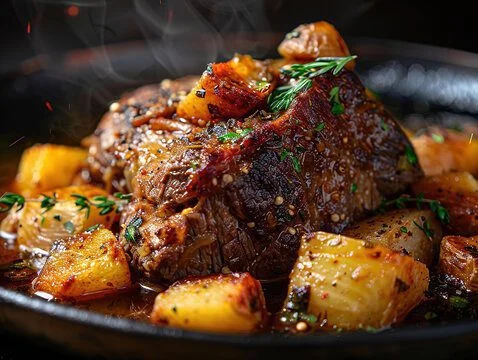
Stracotto di Manzo al Pomodoro- Italian Slow-Braised Beef with Red Wine, Pancetta and Rosemary
35kcal
Ingredients
- 75 g 2.6 oz diced Italian pancetta, preferably unsmoked
- 1 kg 2.2 lb beef chuck roast, cut into 3 large pieces
- 1½ tbsp 22 ml extra virgin olive oil, plus a little extra if needed
- 1 large onion about 200 g / 7 oz, finely chopped
- 2 small carrots about 150 g / 5.3 oz, finely diced
- 2 celery stalks about 100 g / 3.5 oz, finely diced
- 2 garlic cloves finely chopped
- 2 tsp 10 g tomato paste
- 150 ml ⅔ cup dry Italian red wine
- 350 ml about 1½ cups low-sodium beef stock
- 1 can 400 g / 14 oz diced tomatoes, with their juices
- 200 ml about ¾ cup plus 1 tbsp tomato passata
- 2 sprigs fresh rosemary
- 2 sprigs fresh thyme
- 2 bay leaves
- ¼ tsp red pepper flakes optional
- 15 g 1 tbsp unsalted butter
- 1 tsp fine sea salt divided, plus more to taste
- ½ tsp freshly ground black pepper plus more to taste
- 2 tbsp chopped fresh flat-leaf parsley for serving
- Finely grated Parmigiano-Reggiano optional, for serving
Method
- Remove the beef from the refrigerator shortly before cooking while you prepare the vegetables. Dry the surface thoroughly with kitchen paper, then season the meat with approximately ¾ teaspoon of the salt and the black pepper.
- Place a large, heavy-bottomed Dutch oven over medium heat. Add the diced pancetta and cook for 5–7 minutes, stirring occasionally, until some of the fat has rendered and the pancetta is lightly golden. Transfer it to a plate, leaving the fat in the pan.
- Add the olive oil to the pan and increase the heat to medium-high. Brown the beef in batches if necessary, allowing approximately 3–4 minutes per side until deeply browned. Avoid overcrowding the pot. Transfer the beef to a plate and set aside.
- Reduce the heat to medium. Add the onion, carrot and celery to the same pot. Cook for approximately 8–10 minutes, stirring frequently, until the vegetables are softened and lightly golden.
- Add the chopped garlic and tomato paste. Stir continuously for approximately 1–2 minutes, allowing the tomato paste to darken slightly without burning.
- Pour in the red wine and scrape the bottom of the pan with a wooden spoon to release the flavorful browned bits. Simmer for approximately 3–5 minutes, until the wine has reduced by roughly half.
- Add the beef stock, diced tomatoes, passata, rosemary, thyme, bay leaves and red pepper flakes, if using. Return the pancetta to the pot and stir to combine.
- Place the browned pieces of beef back into the sauce, together with any juices that have collected on the plate. The liquid should come partway up the meat rather than completely cover it. Bring the mixture just to a gentle simmer.
- Cover with a tight-fitting lid and reduce the heat to low. Cook for approximately 2½–3 hours, turning the beef occasionally and checking that the sauce remains at a very gentle simmer. Add a small splash of stock or water if necessary.
- The beef is ready when a fork slides into it easily and the meat can be pulled apart with very little resistance. If it still feels firm, continue cooking and check again after 20–30 minutes.
- Carefully remove the beef from the pot and place it on a board or large plate. Remove and discard the rosemary stems, thyme stems and bay leaves. Allow the sauce to cool slightly before blending.
- Using an immersion blender, blend the sauce until smooth and velvety, keeping the blender head completely submerged to avoid splashing. Alternatively, blend in batches using a heat-safe blender, following the manufacturer's instructions.
- If the sauce is too thin, simmer it uncovered over medium-low heat for approximately 10–15 minutes, stirring frequently, until it reaches your preferred consistency.
- Remove the pot from the heat and stir in the butter until melted. Taste and adjust the seasoning with the remaining salt and additional black pepper if needed.
- Using two forks, pull the beef into large, tender pieces rather than finely shredding it. Return the meat to the warm sauce and stir gently to coat.
- Serve immediately with creamy polenta, fresh tagliatelle or mashed potatoes. Finish with chopped parsley and a little freshly grated Parmigiano-Reggiano if desired.
Nutrition
Calories35kcalCarbohydrates2gProtein0.4gFat3gSaturated Fat2gPolyunsaturated Fat0.1gMonounsaturated Fat1gTrans Fat0.1gCholesterol8mgSodium611mgPotassium56mgFiber0.3gSugar1gVitamin A357IUVitamin C4mgCalcium9mgIron0.3mg
Notes
Best cut of beef: Beef chuck roast is ideal for this recipe. In Italy, similar slow-cooked dishes can be made with several braising cuts. Choose well-marbled beef with sufficient connective tissue rather than lean steak.
Large pieces or small cubes: Cut the beef into three large pieces instead of small cubes. This helps the meat remain succulent during the long braise and gives you generous pieces to serve.
Pancetta: Use Italian pancetta if possible. It's typically cured but unsmoked, adding savory richness without the smoky flavor of ordinary bacon.
Red wine: Choose a dry Italian red wine, such as Chianti, Montepulciano d'Abruzzo or Barbera. There's no need to use an expensive bottle, but choose a wine you enjoy drinking.
Wine-free variation: Replace the red wine with additional beef stock and a small splash of red wine vinegar toward the end to balance the flavor. The result will differ from the wine-braised version.
Soffritto: Take time to soften the onions, carrots and celery before adding the liquids. This creates a sweeter, more rounded base for the sauce.
Tomato paste: Cooking the tomato paste briefly with the vegetables develops a deeper flavor and removes some of its raw tomato character.
Fresh herbs: Rosemary and thyme work beautifully with slow-braised beef. Leave the sprigs whole so they can be removed before blending the sauce.
Chili flakes: The small amount suggested adds only a hint of warmth. Omit them if you prefer a completely mild sauce.
Don't boil aggressively: Keep the liquid at a gentle simmer. Prolonged vigorous boiling can tighten the meat fibers and reduce the sauce too quickly.
Cooking time: The exact time depends on the size and cut of beef. The meat should be exceptionally tender before you remove it from the sauce. If it's still tough, it generally needs more time at a gentle cooking temperature.
Blending the sauce: Remove the beef and woody herb stems first. Blend carefully because hot liquid can splash. If using a countertop blender, follow its instructions for hot foods and work in small batches.
Butter: A tablespoon of butter added at the end gives the tomato sauce a slightly rounder flavor and glossy finish.
Serving with polenta: Creamy polenta is a wonderful accompaniment. Stir in a little Gorgonzola just before serving for extra richness and a gently sharp contrast.
Serving with pasta: Fresh tagliatelle or pappardelle are excellent choices. Toss with a little of the sauce, then arrange the beef over the pasta.
Make ahead: This dish is excellent prepared a day in advance. Cool and refrigerate promptly, then reheat thoroughly before serving. The flavor often becomes more integrated after resting overnight.
Storage: Refrigerate leftovers at 4°C (40°F) or below and use within 3–4 days.
Freezing: Freeze in airtight, portion-sized containers for up to 3 months for best quality. Thaw in the refrigerator before reheating, or use an appropriate safe reheating method.
Reheating: Reheat gently until the beef and sauce reach 74°C (165°F) throughout. Add a little water or stock if the sauce has thickened in the refrigerator.
Allergens: Contains pork (pancetta) and milk (butter). Optional Gorgonzola and Parmigiano-Reggiano also contain milk.