There are certain ingredients that can completely change the way you cook a familiar dish. Not because they’re particularly complicated or expensive, but because they bring something to the table that an ordinary substitute simply cannot.
In Italian cooking, guanciale, pancetta, and ’nduja are three wonderful examples.
You might have seen them in an Italian delicatessen, spotted them on a restaurant menu, or come across them while searching for an authentic spaghetti carbonara recipe.
At first glance, they might all seem like variations of Italian bacon or sausage.
But they couldn’t be more different.
Guanciale is rich, deeply savory, and wonderfully aromatic. Pancetta is milder, versatile, and beautifully balanced. And ’nduja? Well, that’s a completely different experience: soft, spicy, intensely flavorful, and capable of transforming a simple tomato sauce into something rather extraordinary.
Understanding these three ingredients is one of those little pieces of Italian cooking knowledge that makes a surprisingly big difference.
What Is Guanciale?
Guanciale is a traditional Italian cured meat made from the cheek or jowl of a pig.
Its name comes from the Italian word guancia, meaning cheek.
The meat is rubbed with salt and seasonings, often including black pepper and sometimes herbs, before being left to cure.
Unlike ordinary bacon, traditional guanciale isn’t smoked.
And although it contains plenty of fat, that fat is precisely what makes it so valuable in cooking.
When guanciale is heated gently in a frying pan, the fat gradually melts and becomes wonderfully fragrant. The pieces of meat develop golden, crisp edges, while the rendered fat forms the flavorful foundation of the sauce.
This is why guanciale is so closely associated with some of Rome’s most famous pasta dishes.
Why Guanciale Matters in Authentic Carbonara
If you’ve ever wondered why a traditional Roman carbonara tastes different from the version made with bacon and cream, guanciale is a major part of the answer.
A classic Roman-style carbonara relies on a handful of ingredients: pasta, guanciale, eggs, Pecorino Romano, and black pepper.
There is no need for cream.
The creamy consistency comes from combining the eggs and cheese with the hot pasta, a little starchy cooking water, and some of the beautifully flavored fat from the guanciale.
That rendered fat is important.
It contributes richness, aroma, and the characteristic flavor that makes a proper carbonara so memorable.
Guanciale also plays an essential role in two other Roman classics:
Pasta alla Gricia combines guanciale, Pecorino Romano, black pepper, and pasta.
Pasta all’Amatriciana pairs guanciale with tomatoes and traditionally Pecorino Romano, producing a rich, savory sauce.
Three very different pasta dishes, all built around the same extraordinary ingredient.
How to Cook Guanciale
The biggest mistake you can make with guanciale is treating it like something that needs to be fried as quickly as possible.
Instead, give the fat time to render.
Cut the guanciale into strips or small pieces, remove any tough outer rind, and place it in a cold frying pan.
Turn the heat to medium-low and allow it to warm gradually.
As the fat begins to melt, the guanciale will slowly turn golden.
You generally won’t need any additional oil because the meat releases plenty of its own fat.
Once the pieces are beautifully browned, you can use both the guanciale and its rendered fat in your pasta sauce.
And please don’t throw away that fat.
In dishes such as carbonara and gricia, it’s one of the most important ingredients in the entire pan.
What Is Pancetta?
Pancetta is another traditional Italian cured pork product, but unlike guanciale, it comes from the belly of the pig.
It’s seasoned with salt and often pepper, herbs, or spices, then cured.
You’ll usually find it in two forms.
Pancetta tesa is flat, making it easy to slice or cut into cubes.
Pancetta arrotolata is rolled into a cylinder, producing those attractive spiral slices often seen at Italian delicatessens.
The flavor is generally milder than guanciale, with a lovely balance of cured pork, salt, and fat.
Most traditional pancetta is unsmoked, although smoked versions, called pancetta affumicata, are also available.
When Should You Use Pancetta?
Pancetta is wonderfully versatile.
I particularly like it in dishes where you want a savory background flavor without overpowering the other ingredients.
It’s excellent in pasta sauces, soups, risotto, and slow-cooked dishes.
A little diced pancetta cooked with onions and vegetables can give a soup or stew a beautiful depth of flavor.
It also works well with peas, mushrooms, potatoes, and beans.
And because its flavor is usually less intense than guanciale, it can be especially useful when you’re cooking something delicate.
Can You Substitute Pancetta for Guanciale?
Yes, you can.
But there is a difference between making a delicious pasta dish and reproducing the traditional Roman flavor.
If you’re making carbonara and cannot find guanciale, unsmoked pancetta is a reasonable alternative.
It will still produce a lovely dish.
However, it won’t taste exactly the same because pancetta comes from a different part of the pig and has a different balance of fat and meat.
If authenticity is your goal, particularly for carbonara, gricia, or amatriciana, it’s worth looking for guanciale.
What Is ’Nduja?
Now we come to the most unusual of the three.
’Nduja is a soft, spicy, spreadable cured pork sausage from Calabria, the southern Italian region that forms the toe of Italy’s boot.
It’s particularly associated with the village of Spilinga.
Unlike guanciale or pancetta, ’nduja is made from finely ground pork and fat mixed with generous amounts of red chili pepper.
The result is a richly colored, intensely flavored sausage with a soft, spreadable texture.
Depending on the producer, it may be lightly smoked as part of the traditional preparation.
The flavor is savory, spicy, slightly smoky in some versions, and wonderfully rich.
And because it’s so concentrated, a relatively small amount can flavor an entire dish.
How Do You Cook with ’Nduja?
One of my favorite things about ’nduja is how easily it transforms an ordinary meal.
Warm a little in a pan with olive oil or tomatoes, and it softens into the sauce, distributing its spicy flavor throughout the dish.
It’s especially good in tomato-based pasta sauces.
You can also spread a small amount on toasted bread, add it to pizza, stir it into beans, or use it to bring warmth and depth to a vegetable dish.
It works beautifully with ingredients that balance its richness and heat, such as tomatoes, creamy cheeses, and mild vegetables.
And if you enjoy spicy food, you’ll probably find yourself thinking of more and more ways to use it.
Is ’Nduja Very Spicy?
It certainly can be.
But the intensity varies between producers.
Some versions offer a pleasant warmth, while others are decidedly fiery.
If you’re using ’nduja for the first time, begin with a small amount and taste before adding more.
A teaspoon stirred into a sauce may be enough to introduce its distinctive flavor without making the dish overwhelmingly hot.
You can always add more.
Taking it away is rather more difficult.
Guanciale vs Pancetta vs ’Nduja: What’s the Difference?
Although all three belong to Italy’s wonderful tradition of cured pork products, they’re made differently and serve different purposes.
| Ingredient | Made From | Flavor | Best Uses |
|---|---|---|---|
| Guanciale | Pork cheek or jowl | Rich, savory, peppery | Carbonara, gricia, amatriciana |
| Pancetta | Pork belly | Mild, savory, delicately spiced | Pasta, soups, risotto, vegetables |
| ’Nduja | Finely ground fatty pork with chili | Spicy, rich, intense | Pizza, tomato sauces, toasted bread |
The simplest way to remember the difference is this:
Guanciale gives you richly flavored rendered fat. Pancetta brings a more delicate cured-pork flavor. ’Nduja adds concentrated spicy heat.
Once you understand that, choosing between them becomes much easier.
Is Italian Pancetta the Same as Bacon?
This is probably one of the most common questions.
And the short answer is no.
Pancetta and many types of bacon come from pork belly, but their preparation and flavors can be quite different.
Typical American or British bacon is smoked or has a pronounced smoky flavor.
Traditional Italian pancetta is usually cured without smoking.
That difference matters in cooking.
If you replace pancetta or guanciale with smoked bacon, the smoky flavor can become a dominant part of the finished dish.
Sometimes that can be delicious.
But it won’t produce the same flavor as the Italian original.
For a traditional Roman carbonara, guanciale remains the preferred choice.
How to Buy Good Guanciale, Pancetta, and ’Nduja
You don’t necessarily have to travel to Italy to find these ingredients.
Specialist Italian delicatessens, well-stocked food shops, and some online retailers carry them.
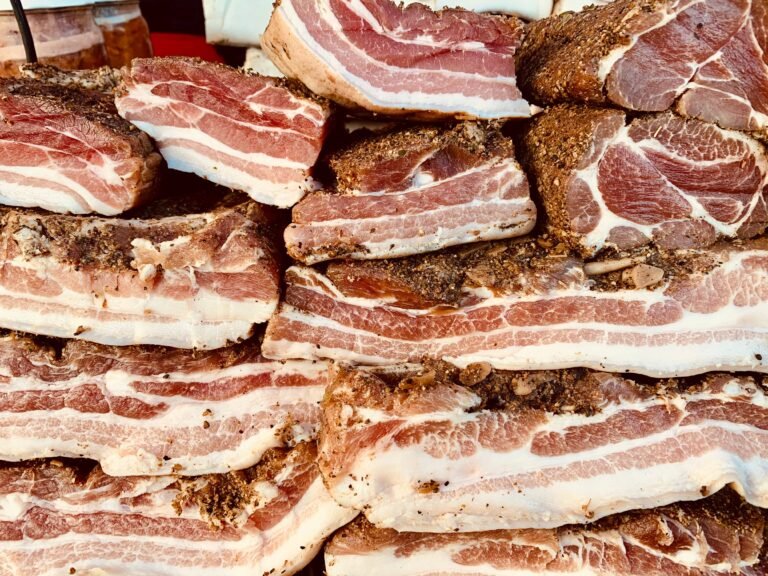
When buying guanciale, look for a firm piece with a generous amount of white fat and a darker strip of meat.
Pancetta should have clearly defined layers of fat and meat, with a pleasant cured aroma.
For ’nduja, look for a product made with pork, pork fat, chili peppers, and salt. Some producers include additional ingredients or use different curing methods, so checking the label is worthwhile.
If you’re buying packaged products, follow the manufacturer’s storage and handling instructions.
And remember that these are cured meat products, not ordinary cooked meats. Whether they’re suitable for eating without further cooking depends on the specific product and its labeling.
What If You Can’t Find Guanciale?
If you live somewhere without a good Italian delicatessen, don’t let that stop you from cooking.
Unsmoked pancetta is usually the closest practical alternative for dishes that call for guanciale.
It won’t deliver precisely the same result, but it can still make a delicious pasta sauce.
Smoked bacon is less suitable if you’re trying to reproduce a traditional Italian flavor, although it can certainly be used in a dish inspired by the original.
For ’nduja, there isn’t an exact substitute that offers quite the same combination of soft texture, pork richness, and chili heat.
A little spicy Italian sausage with chili can provide some of the flavor, but the texture and way it melts into a sauce will be different.
Three Ingredients, Three Different Italian Traditions
One of the things I love about Italian food is how strongly regional traditions influence the ingredients.
Guanciale takes us to the pasta kitchens of Rome and central Italy.
Pancetta appears in countless preparations throughout the country, bringing a savory foundation to everything from rustic soups to elegant pasta dishes.
And ’nduja belongs to Calabria, where chili peppers play such an important role in the local cuisine.
They’re not simply three interchangeable Italian pork products.
Each has its own character, its own traditions, and its own place in the kitchen.
And understanding the difference means that the next time you’re making carbonara, shopping at an Italian delicatessen, or wondering what to do with a jar of ’nduja, you’ll know exactly what you’re working with.
Sometimes, learning just a little more about an ingredient is all it takes to make a familiar recipe taste completely different.