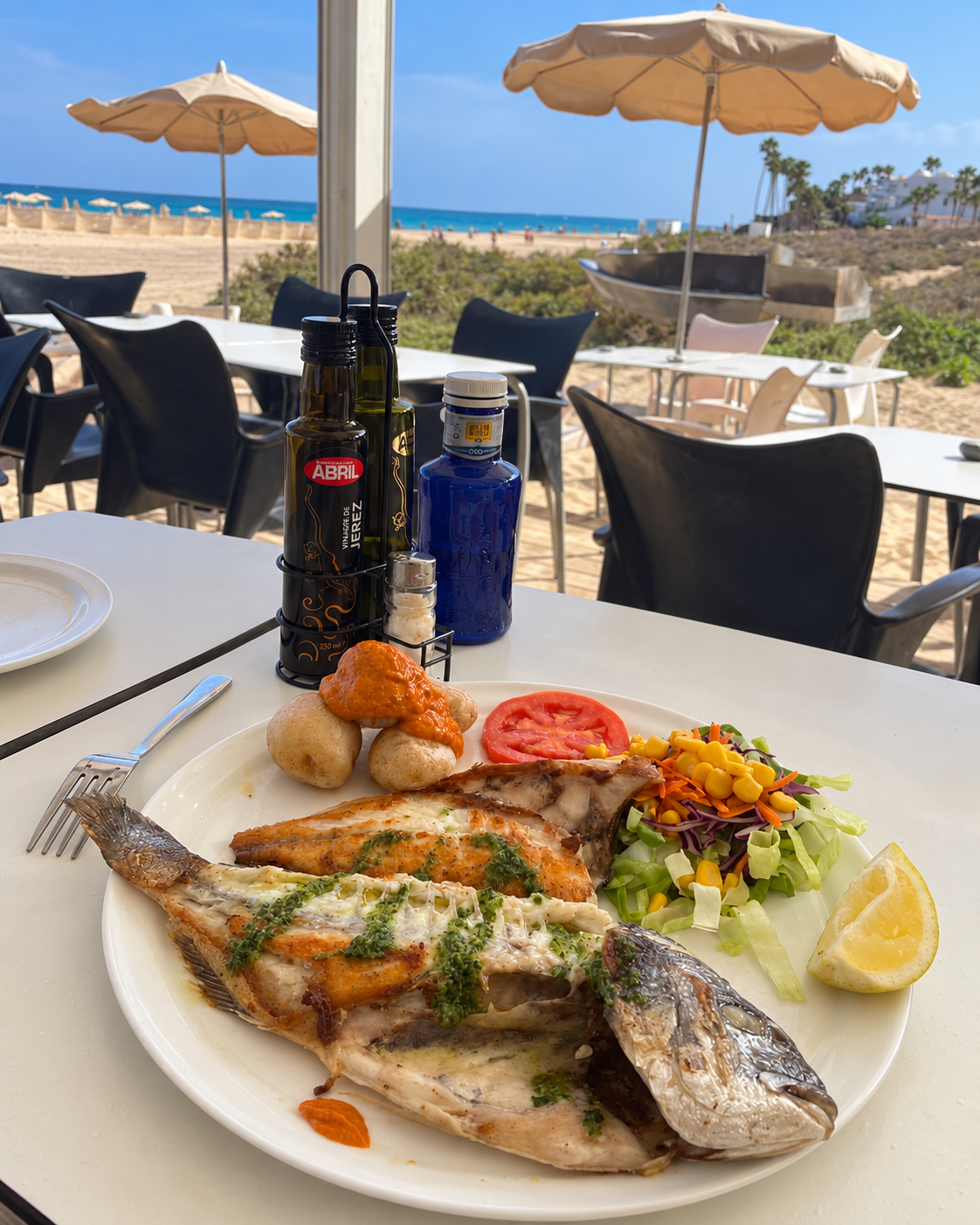
This Canarian-style roasted fish brings together a whole sea bream, salt-dusted papas arrugadas and two punchy mojo sauces. It is the kind of colourful, generous lunch Sam and I look forward to whenever we return to the Canary Islands..and one that is surprisingly easy to recreate at home.
The dish we always order by the sea
Sam and I have always loved the Canary Islands. We once seriously considered buying a little house there, but island life would have made his work as an architecture and interior photographer much more difficult. Many of his assignments take him to houses, boutique hotels and unusual interiors across mainland Europe, and travelling back and forth would soon have become impractical.
So we did not buy the house, but we still return whenever we can, sometimes for a holiday and sometimes simply to get away for a few days.
We usually hire a car so we can explore the island at our own pace. Sooner or later, we end up at a restaurant near the beach, where we often order a whole roasted or grilled fish with papas arrugadas and little bowls of red and green mojo.
With the salty potatoes, garlicky sauces and the sea in the background, it is remarkable how special such a simple plate of food can feel.
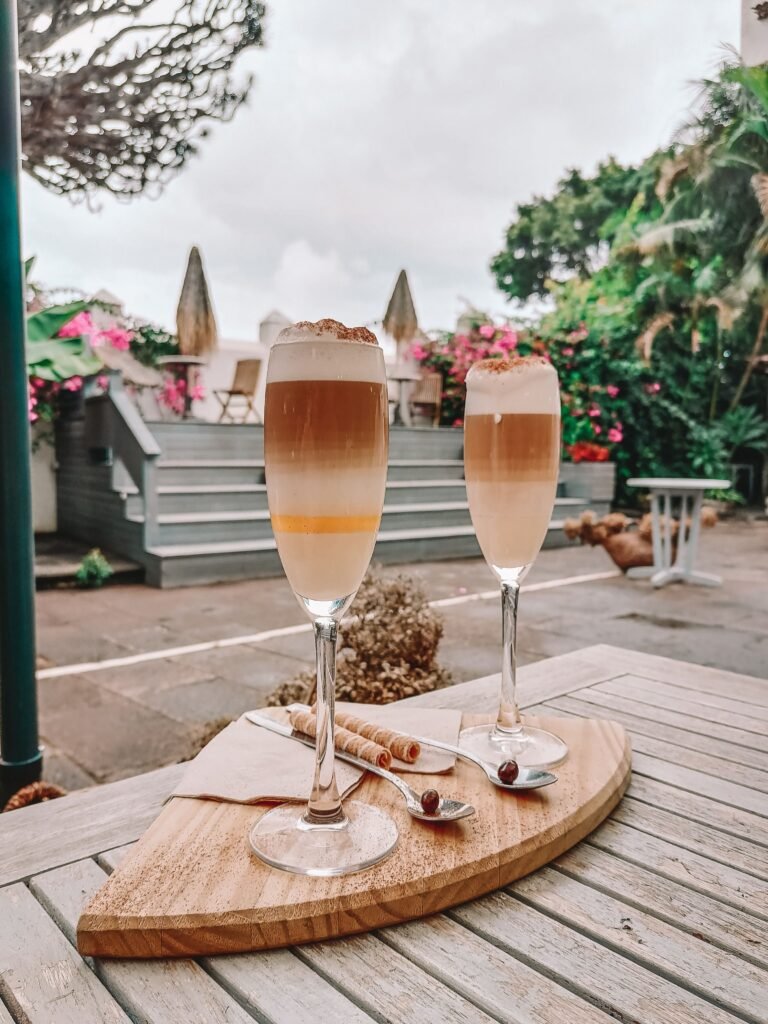
Afterwards, we like to order a barraquito, the beautifully layered Canarian coffee made with espresso, condensed milk, foamed milk, cinnamon, lemon peel and a splash of liqueur. It is sweet, creamy and quite unlike an ordinary after-dinner coffee.
And then there are the Canarian bananas. They are smaller than the bananas we usually buy at home, but so intensely sweet that they remind me of the little banana-shaped foam sweets I ate as a child. I always end up eating far more of them than I intended.
This oven roasted fish is the version we make at home when we want to bring back a little of those days by the sea, papas arrugadas, both mojo sauces and Canarian sunshine included.
What makes this roasted fish Canarian?
The fish itself is kept simple: good olive oil, sea salt and lemon are all it needs before it goes into a hot oven. The unmistakably Canarian part of the plate comes from the papas arrugadas and the two mojo sauces.
Papas arrugadas literally means “wrinkled potatoes.” Small potatoes are cooked in heavily salted water, drained and returned to the hot pan until their skins wrinkle and develop a fine white salt bloom. They are eaten with their skins on and dipped into mojo.
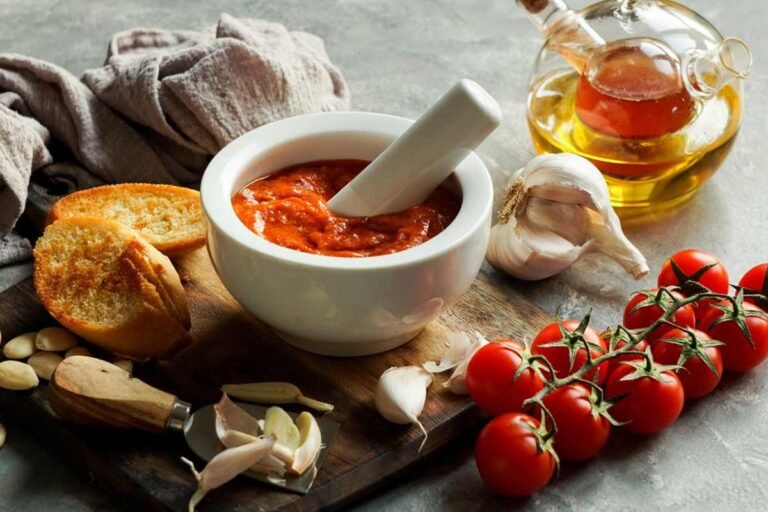
Mojo verde is the fresh green sauce, made here with coriander, green pepper, garlic and cumin. It is especially good with fish. Mojo rojo is warmer and earthier, with dried red pepper and paprika, and is wonderful spooned over the potatoes.
There is no single household recipe for either sauce. Some are fiery, some contain enough garlic to clear a room and others are made quite mild. These versions keep the characteristic flavours but make sensible quantities for four people.
The best fish to roast whole
Sea bream, known in Spain as dorada, is my first choice. Its flesh remains moist in the oven and its mild flavour works beautifully with both sauces.
Sea bass lubina in Spain and often sold as branzino elsewhere, is equally good. A whole snapper of a similar weight will also work.
For four people, look for a fish weighing between 1.2 and 1.5 kilograms, or about 2 pounds 10 ounces to 3 pounds 5 ounces. Ask the fishmonger to scale and gut it, leaving the head and tail attached for serving.
A fresh whole fish should smell clean and mild rather than strongly fishy. Its flesh should feel firm and its eyes should look clear and bright. Cook it on the day you buy it whenever possible.
How to roast a whole fish without drying it out
Dry the fish thoroughly before rubbing it with olive oil and salt. Three shallow cuts on each side help the thicker part cook evenly, while lemon slices and coriander stems perfume the cavity without overpowering the fish.
A fish of this size needs approximately 28–35 minutes in a hot oven. Begin checking at the earlier time, because the exact cooking time depends on its shape as well as its weight.
The flesh at the thickest point should be opaque and separate easily from the backbone. An instant-read thermometer inserted into the thickest part should register 63°C/145°F.
Let the fish rest for five minutes before serving. To portion it neatly, lift away the top fillet, remove the backbone in one piece and then serve the lower fillet. This is rather more civilised than asking everyone to attack it with their hands—and considerably safer when small bones are involved.
The secret to properly wrinkled potatoes
Use small, unpeeled waxy potatoes of a similar size. True Canarian potato varieties are wonderful if you can find them, but small new potatoes or baby potatoes make a good substitute.
The amount of salt in the pan looks alarming, but the potatoes do not absorb all of it. Most is poured away with the water. What remains is the delicate salty coating on the skin that makes papas arrugadas so distinctive.
Once the potatoes are tender, drain them completely and place the pan back over low heat. Shake it for a minute or two as the last moisture evaporates and the skins begin to wrinkle. A short rest beneath a clean kitchen towel finishes the job.
Mojo verde and mojo rojo
Both sauces can be made before you begin cooking the fish. In fact, they taste better after resting for at least 30 minutes, which gives the garlic, cumin and vinegar time to settle into the oil.
Traditional mojo is often made in a mortar. A small food processor or stick blender is quicker and gives a reliable texture, but stop once the sauces are combined. They should be loose enough to spoon, not thick like mayonnaise.
For the red mojo, use a dried ñora pepper if you can find one. It has a sweet, gently earthy flavour rather than fierce heat. A dried mild red chilli works too, and a pinch of cayenne can be added if you prefer a hotter mojo picón.
What to serve with Canarian roasted fish
This is already a complete meal, but a simple tomato and avocado salad is lovely alongside it. The cool avocado balances the garlic, vinegar and salt on the plate.
For a longer Spanish-style lunch, begin with Honey-Marinated Olives or Pimientos de Padrón. Serve the fish with cold beer or a crisp white wine, then finish with fresh Canarian bananas and a barraquito—preferably somewhere close enough to the sea to hear the waves.
Canarian-Style Roasted Fish with Papas Arrugadas and Mojo
Ingredients
- 1 whole sea bream or sea bass 1.2–1.5 kg (2 lb 10 oz–3 lb 5 oz), scaled and gutted
- 2 tablespoons extra virgin olive oil
- 1 teaspoon fine sea salt
- 1 lemon
- 6 fresh coriander stems reserved from the mojo verde
- 800 g 1 lb 12 oz small waxy or baby potatoes, preferably all a similar size
- 200 g 7 oz coarse sea salt
- 1 thin slice lemon
- Water as needed
- 30 g 1 packed cup fresh coriander leaves and tender stems
- 1 small mild green pepper deseeded and roughly chopped
- 3 garlic cloves peeled
- 1 teaspoon cumin seeds or ¾ teaspoon ground cumin
- ½ teaspoon coarse sea salt
- 2 tablespoons white wine vinegar
- 100 ml 7 tablespoons extra virgin olive oil
- 1 –2 tablespoons cold water as needed
- 1 dried ñora pepper or mild dried red chilli
- 3 garlic cloves peeled
- 1 teaspoon cumin seeds or ¾ teaspoon ground cumin
- 1 teaspoon sweet Spanish paprika
- ¼ teaspoon cayenne pepper optional
- ½ teaspoon coarse sea salt
- 2 tablespoons white wine vinegar
- 100 ml 7 tablespoons extra virgin olive oil
- 1 –2 tablespoons cold water as needed
Method
- Place the dried ñora or chilli in a small heatproof bowl, cover it with just-boiled water and leave it to soften for 20 minutes. Remove the stem and seeds once softened.
- Make the mojo verde. Place the coriander, green pepper, garlic, cumin, salt and vinegar in a small food processor. Blend to a coarse paste. With the motor running, gradually add the olive oil. Add enough cold water to make a loose, spoonable sauce. Taste and adjust the salt or vinegar, then transfer it to a small bowl.
- Make the mojo rojo. Place the softened pepper, garlic, cumin, paprika, optional cayenne, salt and vinegar in the cleaned processor. Blend to a paste, then gradually add the olive oil. Thin it with a little cold water until spoonable. Transfer it to a second bowl. Leave both sauces at room temperature while preparing the fish and potatoes.
- Preheat the oven to 220°C/425°F, or 200°C fan. Line a large roasting tray with baking parchment.
- Dry the fish thoroughly inside and out. Make three shallow diagonal cuts on each side, cutting through the skin but not as far as the backbone. Rub the fish with the olive oil and sea salt, including inside the cavity.
- Cut half the lemon into thin slices and place them inside the fish with the coriander stems. Reserve the remaining lemon for serving. Place the fish on the prepared tray and roast it for 28–35 minutes.
- As soon as the fish goes into the oven, scrub the potatoes without peeling them. Place them in a saucepan in a snug single or double layer. Add the coarse salt and lemon slice, then pour in only enough cold water to almost cover the potatoes.
- Bring the potatoes to a boil, reduce the heat and simmer for 20–25 minutes, or until a small knife enters the centre easily. The cooking time will depend on their size.
- Drain away all the potato water. Return the uncovered pan to low heat and shake it frequently for 1–2 minutes, until the skins look dry, lightly wrinkled and dusted with salt. Remove the pan from the heat, cover it with a clean kitchen towel and leave the potatoes for 5 minutes.
- Begin checking the fish after 28 minutes. It is ready when the flesh at the thickest part is opaque, separates easily from the backbone and reaches 63°C/145°F. Remove it from the oven and let it rest for 5 minutes.
- Transfer the fish to a large serving platter and arrange the papas arrugadas around it. Spoon a little mojo verde over the fish and serve the remaining green and red mojo in separate bowls. Add the reserved lemon wedges and serve immediately.