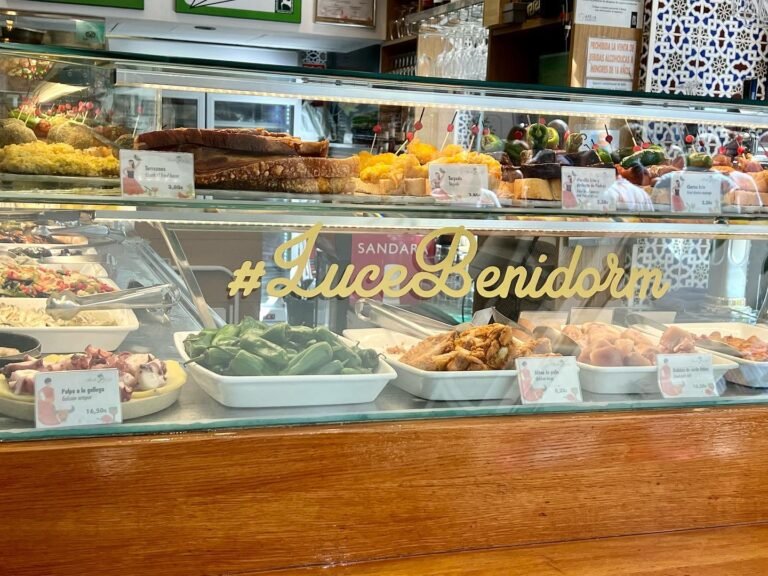
The first time I truly understood sobremesa, I was sitting at a restaurant somewhere along the Spanish coast, wondering why nobody seemed interested in leaving.
Lunch had been wonderful.
There were empty plates scattered across the table, a few remaining olives, half-finished glasses of wine, and the unmistakable smell of freshly brewed coffee.
The waiter had cleared most of the dishes.
Someone ordered another coffee.
Then somebody remembered a funny story.
And just like that, another hour disappeared.
Nobody looked at their watch.
Nobody asked for the bill.
And nobody seemed remotely concerned that lunch had finished ages ago.
Except me.
At the time, I was still thinking like the American girl who had grown up believing that when you finish eating, you leave the table.
But in Spain, I was about to discover, the best part of lunch sometimes begins when there’s nothing left to eat.
What Is Sobremesa?
The Spanish word sobremesa refers to the time spent sitting around the table after a meal, talking, laughing, sharing stories, and enjoying each other’s company.
It’s pronounced approximately soh-breh-MEH-sah.
The word comes from sobre, meaning over or upon, and mesa, meaning table.
And although English has expressions such as “after-dinner conversation” or “lingering over coffee,” neither quite captures the feeling of a proper Spanish sobremesa.
Because sobremesa isn’t simply what happens after lunch.
It’s part of the meal itself.
The food may be finished, but the gathering continues.
Sometimes for fifteen minutes.
Sometimes for an hour.
And occasionally, particularly on Sundays or special occasions, for considerably longer.
There’s no official starting time, no particular ritual to follow, and certainly no requirement to order another bottle of wine.
You simply stay.
And talk.
My Spanish Father’s Long Sunday Lunches
Growing up in a small American town near Salem, Massachusetts, I experienced two rather different approaches to family meals.
My mother is French, my father is Spanish, and both brought their own food traditions into our American home.
My mother cared deeply about good ingredients, proper cooking, and the pleasure of setting a beautiful table.
My father had another habit.
He never seemed particularly eager to leave that table.
Especially on Sundays.
While my friends’ families might finish lunch and move on to whatever came next, my father was perfectly happy to sit with another coffee and continue a conversation that had already been going on for hours.
There were stories about Spain, discussions about food, occasional arguments about completely unimportant things, and plenty of laughter.
As a child, I found it rather puzzling.
Why were we still sitting there?
Hadn’t we finished eating?
Couldn’t we do something else?
Looking back, I realise that my father was bringing a little piece of his Spanish upbringing into our American home.
He was teaching us sobremesa without ever formally explaining what it meant.
And it took moving to Spain for me to appreciate what he’d been doing all those years.
Sunday Lunch in Spain Is a Different Experience
If you really want to understand sobremesa, experience a long Sunday lunch with Spanish friends or family.
The meal itself might begin around two in the afternoon.
Perhaps there’s a plate of jamón, some olives, good bread, a salad, and a large paella in the middle of the table.
Or maybe someone has prepared a traditional rice dish, a roast, or a slow-cooked stew.
There’s wine, mineral water, and plenty of conversation.
People help themselves.
Someone insists you haven’t eaten enough.
Another person wants to know exactly how the rice was cooked.
Eventually, dessert arrives.
Then coffee.
And somewhere around this point, something rather wonderful happens.
The meal stops being about food.
Someone brings up an old family story.
Two people disagree about what actually happened.
An uncle insists that his version is correct.
Someone else remembers an entirely different incident.
And suddenly everyone is laughing.
The afternoon stretches on.
Sometimes a little glass of hierbas, brandy, or another local digestif makes an appearance.
And long after the table has been cleared, everyone is still there.
That’s sobremesa.
Not a formal ceremony, but an ordinary social pleasure.
The Coffee That Doesn’t Mean Goodbye
One thing I had to learn after moving to Spain was that coffee doesn’t necessarily signal the end of a restaurant visit.
In many American restaurants, the arrival of coffee and the bill often means that the meal is drawing to a close.
In Spain, coffee can be the beginning of another conversation.
You might order a café solo, a small, strong espresso.
Or a cortado, espresso with a little milk.
Perhaps someone prefers a café con leche.
The waiter brings the cups.
And unless the restaurant needs the table for another sitting, you may find that nobody expects you to leave immediately.
Of course, restaurants vary, especially in busy tourist areas, and it’s always considerate to respect their service arrangements.
But in many traditional restaurants, lingering over coffee is an entirely familiar part of eating out.
One coffee can become two.
And what began as lunch can gradually turn into a lovely afternoon.
Sobremesa Isn’t the Same as a Siesta
Here’s something visitors to Spain sometimes confuse.
Sobremesa and siesta are not the same thing.
A siesta is an afternoon rest or nap.
Sobremesa is the social time spent after eating.
You can enjoy one without the other.
In fact, I’ve known Sunday lunches where the sobremesa lasted so long that there was barely any afternoon left for a siesta.
The two traditions may belong to a similar part of the day, but they serve different purposes.
One is about resting.
The other is about staying together.
And although the popular image of Spain often includes long naps and leisurely lunches, modern working life doesn’t allow everyone to spend hours at the table every day.
Sobremesa tends to be especially noticeable at weekends, during family gatherings, and on holidays.
Which, perhaps, makes those occasions even more enjoyable.
The Conversations That Make Sobremesa Special
What do people actually talk about during sobremesa?
Almost anything.
Family news.
Politics.
Football.
Recipes.
Village gossip.
The price of olive oil.
Someone’s cousin who moved to Valencia.
A wedding that took place twenty years ago.
The neighbour’s new dog.
And, inevitably, food.
I’ve noticed that conversations about lunch have a remarkable tendency to lead to discussions about the next meal.
Someone mentions a particularly good restaurant.
Another person remembers a dish their grandmother used to make.
Before you know it, three people are debating which variety of tomato makes the best salad.
I love that.
For someone who spends so much of her time thinking, writing, and learning about food, it’s wonderful to be surrounded by people who can discuss olive oil with the same enthusiasm that other people reserve for television programmes.
But the subject isn’t really the important part.
It’s the fact that people are there, together, with enough time to listen.
Sobremesa at Our Farmhouse in Alcalalí
These days, Sam and I have begun developing our own version of sobremesa.
Our old farmhouse in Alcalalí isn’t always as orderly as I’d like.
There’s usually something that needs repairing, a photography project spread across Sam’s desk, or an unfinished job somewhere in the garden.
And there’s always something I want to cook.
But when friends come for lunch, I try to remember something my father understood instinctively.
The afternoon doesn’t have to be organised around a schedule.
We might begin with marinated olives, freshly baked bread, and a few little dishes to share.
Perhaps I’ll make a paella, a slow-cooked lamb dish, or something inspired by the wonderful ingredients we find at the local markets.
The wine comes from a nearby bodega.
The vegetables are whatever looked particularly good that week.
And I like to leave a bowl of almonds or a little plate of something sweet on the table for afterwards.
Eventually, the main dishes are cleared.
Sam makes coffee.
Someone moves their chair out of the sun.
And the conversation continues.
Sometimes we talk about places we’ve travelled.
Sometimes about our plans for the farmhouse.
And sometimes absolutely nothing important at all.
Those are often my favourite afternoons.
The Mediterranean Art of Spending Time Together
Although sobremesa is particularly associated with Spain, the pleasure of lingering around a table isn’t uniquely Spanish.
My French mother certainly understood it.
In France, long family lunches and animated conversations around the table are also familiar traditions.
Italy has its own culture of extended meals, especially on Sundays and during celebrations.
Throughout the Mediterranean, sharing food has long been an important way of bringing families and communities together.
But I love that Spanish has a specific word for the moment after the meal.
A word that gives that time its own identity.
Because once you begin thinking about sobremesa, you realise how easily it can disappear from everyday life.
We eat while checking our phones.
We finish lunch and immediately begin clearing everything away.
We look at the clock and think about what needs to be done next.
And sometimes we miss the opportunity for the most interesting conversation of the day.
Not because we don’t care about spending time together.
But because we’re so accustomed to moving from one activity to another.
How to Enjoy Your Own Sobremesa
You don’t have to live in Spain to enjoy sobremesa.
You don’t even need to cook an elaborate meal.
Invite a few friends for lunch.
Make something you can prepare in advance, so you’re not spending the entire afternoon in the kitchen.
Put a bowl of olives on the table.
Open a bottle of something you enjoy.
Serve dessert, followed by coffee or tea.
And when everyone has finished eating, resist the temptation to clear absolutely everything away and announce that lunch is over.
Leave the coffee cups.
Bring out a few biscuits.
Ask someone about their latest adventure.
Or tell a story.
You may be surprised how long everyone stays.
The wonderful thing about sobremesa is that it costs very little.
You don’t need expensive ingredients, a perfectly decorated home, or a table overlooking the Mediterranean.
Just good company, something to drink, and the willingness to let a conversation find its own direction.
The Part of Spain I Want to Keep Forever
A few weeks ago, we had one of those lovely afternoons that reminded me why I enjoy living here so much.
Lunch had finished.
The plates were empty.
And the afternoon sun was beginning to move across the terrace.
I stood up to take the coffee cups inside.
“Leave them,” Sam said. “We can do that later.”
So I sat down again.
And we stayed there for another hour, talking about our plans, remembering places we’d visited, and watching the light change over the mountains.
Nothing particularly remarkable happened.
There was no special occasion.
No celebration.
Not even an especially memorable conversation.
But I remember the feeling of that afternoon.
The pleasure of being exactly where I wanted to be, with no immediate reason to leave.
And I thought about my father, sitting at our family table in America all those years ago, happily drinking another coffee while I wondered why lunch was taking forever.
I think I finally understand him.
The best part of a meal isn’t always what you serve.
Sometimes it’s what happens when everyone has finished eating.