There is more to Jávea than beautiful beaches and turquoise water. Behind the busy waterfront lies a working fishing harbor where colorful boats, freshly caught seafood, and a few well-fed cats tell a different story of life on Spain’s Costa Blanca.
Some of my favorite days in Spain begin with very little planning.
A drive through the beautiful countryside, a coffee overlooking the Mediterranean, and perhaps something delicious to bring home for dinner.
One of the places I love returning to is Jávea, or Xàbia, as it is called in Valencian.
It’s an easy outing from our old farmhouse in Alcalalí, and although Jávea is well known for its beaches and holiday atmosphere, there is another side of the town that I find especially charming.
The fishing harbor.
Here, among working boats, tangled nets, and fishermen going about their daily business, you can still catch a glimpse of the Jávea that existed long before the town became a popular holiday destination.
And if there are fresh sardines available, I already know what we’ll be having for dinner.
Coffee First, Sardines Later
I have a little routine whenever I visit the harbor.
First, coffee at Cala Bandida.
Situated right beside the port, Cala Bandida has wonderful views across the Mediterranean. It’s a lovely place to sit with a coffee, watch the boats, and enjoy the atmosphere of the waterfront.
There’s something about looking out over the sea that makes even an ordinary morning feel special.
I sometimes find myself watching the fishing boats and wondering what they have brought back that day.
Perhaps sea bream, squid, red mullet, or a beautiful catch of sardines.
And while I could happily sit there for another hour, there’s usually a good reason to finish my coffee and head toward the fish market.
I’ve learned that it’s much wiser to enjoy my coffee before buying fresh fish.
A bag of sardines and a leisurely coffee in the Spanish sunshine are not a particularly good combination.
The Working Fishing Port of Jávea
The fishing harbor is part of Duanes de la Mar, the traditional maritime neighborhood of Jávea.
Although restaurants, cafés, and holiday apartments have become part of the waterfront, commercial fishing remains an important connection to the town’s past.
Walk around the harbor and you’ll see fishing boats moored close together, ropes and nets piled on their decks, and equipment that makes it clear these aren’t decorative boats for tourists.
They’re working vessels.
I particularly love their colors: blue and white hulls, weathered paint, bright floats, and fishing gear that has clearly spent years at sea.
There’s a certain beauty in that.
Not everything needs to be perfectly polished to be worth photographing.
In fact, Sam would probably agree that the worn surfaces, tangled ropes, and interesting light make the harbor even more appealing.
Buying Fresh Fish in Jávea
One of the pleasures of living near the Mediterranean is having access to locally caught fish.
And Jávea is a particularly interesting place to buy it.
The town has a traditional fish auction, known as La Llotja, where catches brought in by the local fishing fleet are sold.
The fishermen’s association, the Cofradía de Pescadores de Xàbia, also operates a retail outlet where members of the public can buy fish.
Depending on the fishing boats and the day’s catch, the selection can change.
That’s part of the pleasure.
Rather than arriving with an exact shopping list, I like seeing what is available.
Sometimes I’m lucky enough to be there when a boat is coming in, and buying fish so close to where it has just been landed makes the experience feel wonderfully direct.
It doesn’t get much closer to the source than that.
Of course, freshly landed fish should still be checked for quality and kept properly chilled.
But there is something lovely about knowing where your dinner came from.
The Cats of Jávea’s Fishing Harbor
There’s another little detail about this harbor that always makes me smile.
The cats.
Around the fish-selling area, you can sometimes spot quite a few of them, clearly familiar with the daily routines of the harbor.
I’ve watched them being fed by the fish stall, and I have a feeling they know exactly when it’s worth appearing.
They certainly look as though they understand the fishing business.
Some wait nearby.
Others wander about with the confidence of creatures who consider the whole harbor their personal territory.
I wouldn’t be surprised if a few of them have favorite fishermen.
For me, these little moments are part of what makes a place memorable.
They’re not the things you generally find in a glossy travel brochure.
But they’re often the things you remember most.
Fresh Sardines for the Barbecue
If there’s one fish I particularly love bringing home from Jávea, it’s sardines.
Not expensive, not elaborate, just beautiful fresh sardines destined for the barbecue.
In Spain, grilled sardines are one of those dishes that perfectly capture the Mediterranean approach to cooking.
Good ingredients, careful preparation, and very little interference.
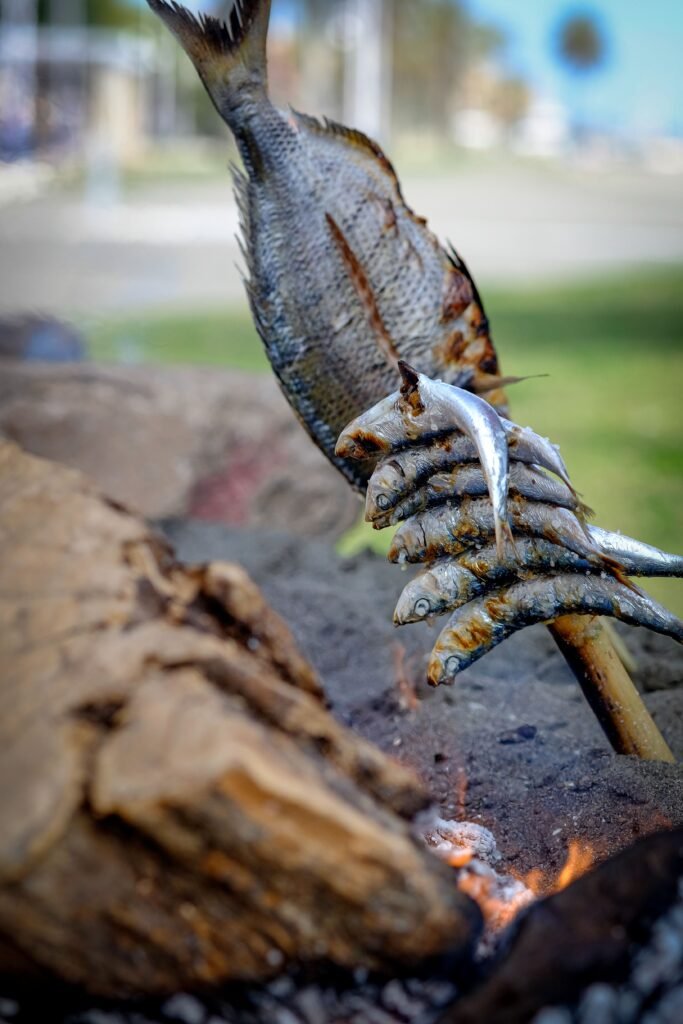
At home, I usually keep them whole, season them with coarse sea salt, and grill them over hot charcoal.
The skin becomes lightly charred, the flesh stays juicy, and the natural oils of the fish create that wonderful aroma that instantly reminds me of summer evenings.
A little lemon is lovely, although it isn’t always necessary.
We might serve them with a simple tomato salad, some good bread, and a glass of local wine.
It’s one of my favorite ways to eat fish.
And there is something satisfying about starting the day beside the fishing boats and ending it with freshly grilled sardines at our farmhouse.
How Can You Tell If Fish Is Really Fresh?
Buying fish in a working harbor is a wonderful experience, but freshness is about more than proximity to a fishing boat.
Fish should be handled hygienically, kept cold, and sold promptly.
When choosing whole fish, I look for several things.
The eyes should generally be clear and full, rather than deeply sunken or cloudy.
The skin should look moist and the colors natural.
The flesh should feel firm, although this varies depending on the species.
If the gills are visible, fresh fish often have red or pink gills, but color alone isn’t a reliable guarantee.
And perhaps most importantly, fresh fish should smell pleasantly of the sea, not strongly sour, rancid, or ammonia-like.
No single visual test can guarantee that fish is safe. Proper refrigeration and a trustworthy seller matter just as much.
When I buy sardines, I bring an insulated cool bag with ice packs so they stay chilled on the way back to Alcalalí.
I refrigerate them immediately and prefer to cook them the same day.
Discovering Duanes de la Mar
The harbor is only one part of Jávea’s maritime neighborhood.
Duanes de la Mar has a different atmosphere from the historic old town, which lies farther inland.
Here, the streets are shaped by the sea.
There are restaurants serving seafood and rice dishes, cafés overlooking the waterfront, and places where locals and visitors gather throughout the day.
One of the neighborhood’s most distinctive buildings is the Church of Nuestra Señora de Loreto.
Its unusual modern architecture, inspired by maritime forms, is quite unlike the traditional Spanish churches you might expect to find along the Costa Blanca.
It’s worth taking a look if you’re exploring the neighborhood.
And if you enjoy photography, the harbor itself offers wonderful opportunities.
The fishing boats, reflections in the water, old ropes, colorful equipment, and changing Mediterranean light make it a fascinating place to wander with a camera.
What Else Is There to See in Jávea?
Although I have a particular affection for the fishing port, Jávea has plenty of other places worth discovering.
The Historic Old Town
Away from the waterfront, Jávea’s old town has narrow streets, traditional houses, small squares, and beautiful stone buildings.
The fortified Church of San Bartolomé is one of its most recognizable landmarks.
It’s a lovely area to explore on foot.
Arenal Beach
Playa del Arenal is the town’s best-known sandy beach, with a lively promenade full of restaurants and cafés.
It offers a very different experience from the working harbor.
The Montgó
The impressive Montgó mountain rises above the surrounding landscape and is one of the defining natural landmarks of the area.
You can see its changing silhouette from many places around Jávea.
The Coastal Viewpoints
The coastline around Jávea is known for its dramatic cliffs, coves, and Mediterranean views.
Several viewpoints offer wonderful opportunities to appreciate the landscape.
But even with so many beautiful places nearby, I often find myself returning to the harbor.
Sometimes the simplest places are the most interesting.
Practical Tips for Visiting Jávea’s Fishing Port
If you’d like to experience the maritime side of Jávea, here are a few things worth knowing.
Location: The fishing harbor is in Duanes de la Mar, close to Playa de la Grava.
Fish shopping: Fresh fish is sold through the local fishermen’s association. There is a public sales outlet associated with the harbor’s fish auction, while the municipal market in the old town is another option.
Timing: Fishing activity, auctions, and retail opening times depend on the day, season, and fishing conditions. It’s worth checking locally if buying fish is the main purpose of your visit.
Bring a cooler: An insulated bag with frozen ice packs is essential if you plan to take seafood home.
Coffee with a view: Cala Bandida, on Muelle Pesquero, is a lovely place to enjoy the harbor atmosphere.
Photography: The working fishing boats are wonderful subjects, but remember that the harbor is also a workplace. Respect restricted areas and the fishermen going about their jobs.
And one final suggestion: don’t feel you have to see everything in one visit.
Sometimes a coffee, a short walk, and a few freshly caught sardines are more than enough to make a memorable day.
Frequently Asked Questions About Jávea’s Fishing Port
Can you buy fresh fish at Jávea harbor?
Yes. The local fishermen’s association operates a public fish sales outlet associated with the harbor’s fish auction. Availability and opening times can vary.
Can you buy fish directly from the fishing boats?
You may sometimes see fish being landed and have the opportunity to buy very close to the boats, but the established public retail outlet is the reliable option. Not every fishing vessel sells directly to customers.
Where is Jávea’s fishing port?
The working fishing port is in Duanes de la Mar, the maritime neighborhood of Jávea, also known as Xàbia.
What fish are caught around Jávea?
The local catch varies by season and fishing method, but may include sardines, anchovies, red mullet, squid, sea bream, and other Mediterranean species.
Where can you have coffee overlooking Jávea harbor?
Cala Bandida is located by the fishing port and offers views across the Mediterranean.
Is Jávea worth visiting outside the summer season?
Absolutely. The fishing harbor, historic old town, local food, and coastal scenery offer plenty to enjoy beyond the summer beach season.
A Little Piece of Everyday Mediterranean Life
There are plenty of spectacular places along the Costa Blanca.
Beautiful beaches, dramatic cliffs, picturesque villages, and restaurants with wonderful views.
But some of the things I love most about living here are much simpler.
A cup of coffee beside the sea.
Watching the fishing boats in the harbor.
The cats waiting hopefully near the fish stall.
A bag of fresh sardines packed carefully into the cool box.
And the drive back to our old farmhouse in Alcalalí, knowing that dinner will be something delicious cooked over charcoal.
For me, that’s Mediterranean living.
Not something extravagant or complicated.
Just good food, beautiful surroundings, and the pleasure of enjoying the little things.