Every year, a small village in Spain’s Marina Alta brings its agricultural past back to life. With baskets of Moscatel grapes, a wood-fired cauldron, and centuries-old traditions, L’Escaldà is much more than a festival about raisins.
There is something I particularly love about living in a small Spanish village: the festivals.
Not the enormous celebrations with thousands of tourists, but the local ones where people come together to keep an old tradition alive.
Since Sam and I moved to our old farmhouse in Alcalalí, in Spain’s beautiful Vall de Pop, I’ve discovered that almost every village has a story worth celebrating.
And some of those stories are quite extraordinary.
Just a short distance from our home lies Llíber, a small village surrounded by vineyards, mountains, and traditional agricultural land.
Every year, Llíber celebrates a fascinating part of its history: the transformation of fresh Moscatel grapes into raisins.
The tradition is called l’escaldà.
At first, it might not sound particularly exciting. After all, how complicated can making raisins be?
But once you see the enormous wood-fired cauldron, the traditional baskets, the freshly harvested grapes, and the people working together, you begin to understand that this is about much more than dried fruit.
It is a glimpse into a time when the raisins produced in these valleys were exported across Europe and beyond.
And when the prosperity of entire villages depended on the humble Moscatel grape.
What Is L’Escaldà?
L’Escaldà is a traditional Valencian process used to prepare Moscatel grapes for drying into raisins.
The name comes from the Valencian word associated with scalding.
Instead of simply leaving freshly harvested grapes to dry in the sun, growers briefly immersed them in a specially prepared boiling liquid.
This treatment altered the grape skins, allowing moisture to escape more readily during drying.
The grapes were then spread across woven reed trays and placed outside in the Mediterranean sunshine.
After drying, they became panses, the Valencian word for raisins.
Although the technique may sound simple, the work required considerable experience, coordination, and knowledge of the weather.
And that knowledge was passed down through generations.
The Annual Raisin Festival in Llíber
Llíber celebrates this agricultural heritage during its annual Fira del Llaurador, or Farmers’ Fair.
The event brings together traditional crafts, local food, music, and demonstrations of agricultural practices that were once part of everyday life in the Vall de Pop.
In 2026, the fair took place on September 5 and 6, with the main Escaldà demonstration held on Sunday, September 6.
One of the most memorable sights is the traditional procession associated with collecting the grapes.
A horse carries large woven baskets filled with freshly harvested Moscatel grapes, accompanied by people dressed for the occasion.
It feels like a scene from another century.
Then comes the part that really makes you appreciate how much work once went into producing raisins.
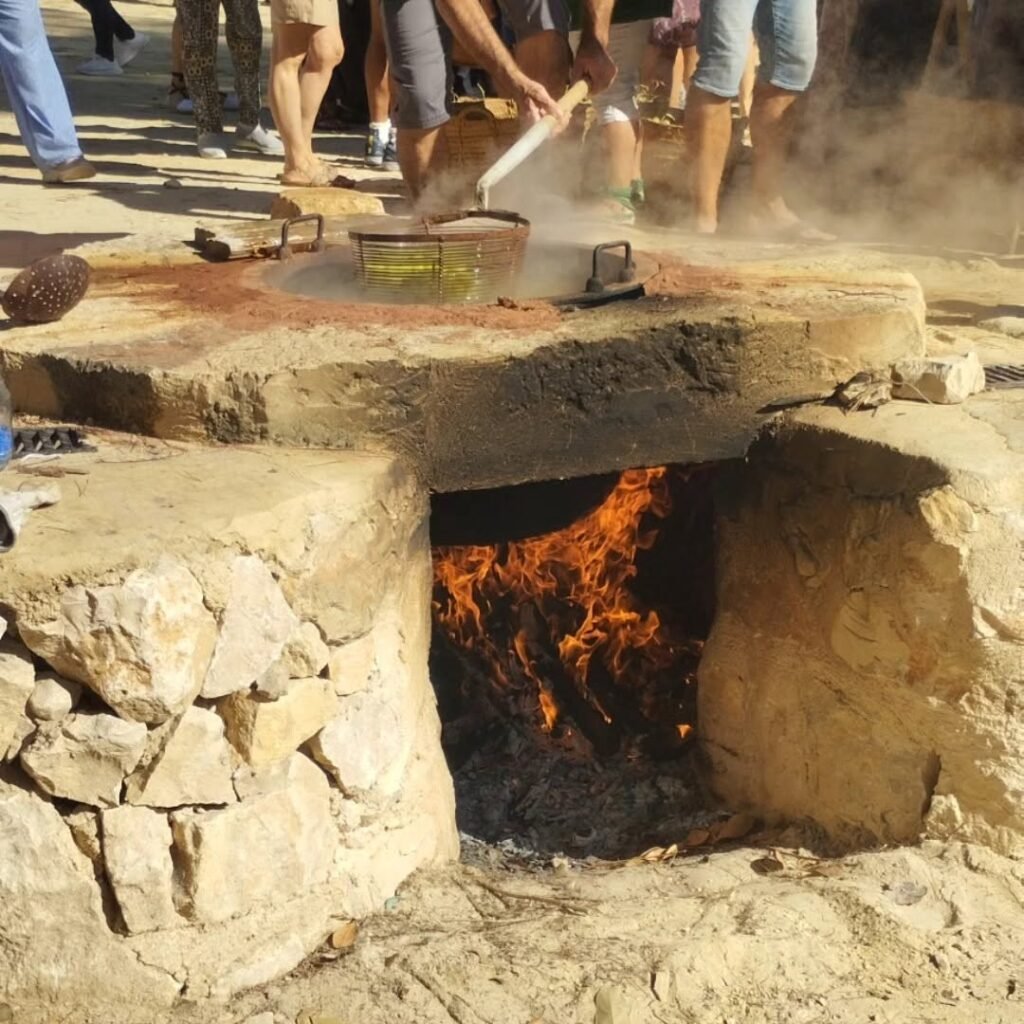
A large fire burns beneath a traditional stone furnace.
Above it, a metal cauldron holds the hot liquid used to treat the grapes.
The baskets are lowered into the cauldron, lifted out again, and the grapes are prepared for drying.
Around the demonstration, people gather to watch, talk, and share stories.
For a village celebration, it is a remarkable connection to the past.
And that is what I enjoy so much about these festivals.
They don’t simply tell you what people used to do.
They show you.
Why Were Grapes Scalded Before Drying?
If you’ve ever made dried fruit at home, you probably know that removing moisture takes time.
Grapes have a natural waxy outer layer that helps protect the fruit.
This layer also slows the drying process.
Traditional Escaldà techniques were developed to make the grape skins more permeable, allowing moisture to escape faster.
Historically, growers used a carefully prepared alkaline liquid, often made with ingredients such as water, ash-derived lye, and lime.
Aromatic plants, including olivarda, were also associated with the traditional process.
In later practices, caustic soda was sometimes used instead of the older ash-based mixture.
This was not simply a matter of dipping grapes into ordinary boiling water.
It was a specialist agricultural technique involving potentially dangerous alkaline substances and boiling liquid.
The process required considerable skill and careful handling.
Today, festival demonstrations preserve the knowledge and history of the technique.
It is not something I would recommend attempting at home.
For homemade raisins, there are much safer methods using a food dehydrator or a low-temperature oven.
From Fresh Moscatel Grapes to Raisins
The traditional raisin-making process followed a sequence of carefully organized tasks.
Harvesting the Grapes
The grapes used in the traditional Escaldà were generally Moscatel de Alejandría, known internationally as Muscat of Alexandria.
These sweet, aromatic grapes are well suited to the Mediterranean climate.
They were harvested when ripe, typically during late summer.
The bunches were then collected and transported to the area where the scalding would take place.
Preparing the Furnace
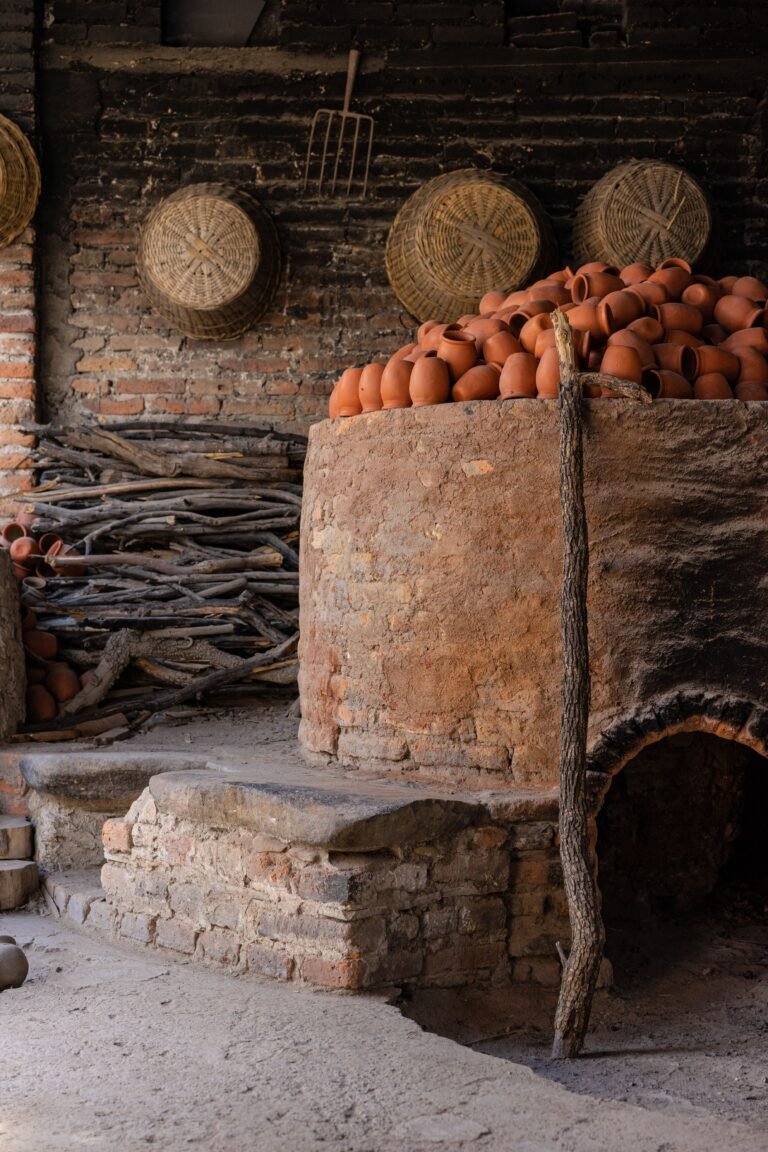
The traditional furnace, or forn d’escaldar, was built to support a large metal cauldron above a wood fire.
The fire needed to produce enough heat to maintain the boiling liquid.
The person responsible for scalding the grapes had to work carefully and efficiently.
Scalding the Grapes
The grapes were placed in a metal basket and briefly immersed in the prepared hot liquid.
The treatment affected the surface of the grapes, allowing them to dry more efficiently.
The exact method was part of the specialist knowledge developed by local growers.
Spreading the Grapes on Canyissos
Once treated, the grapes were spread onto large woven reed trays known as canyissos.
These trays were an essential part of the drying process.
The grapes needed sufficient air circulation and exposure to sunshine to lose their moisture.
Drying in the Mediterranean Sun
The trays were placed in sunny areas prepared for drying.
But there was always one problem.
The weather.
Even during the hot Mediterranean summer, a sudden rain shower or heavy overnight moisture could threaten the harvest.
And that is why the region developed one of its most distinctive architectural features.
What Is a Riurau?
If you travel through the Marina Alta, you may notice traditional buildings with rows of stone arches.
These are called riuraus.
At first glance, they can look like open farm buildings or covered terraces.
But many were originally built to protect grapes during the raisin-making process.
The structure usually consisted of a covered space with open arches along one side.
The design allowed air to circulate while providing shelter.
When rain threatened, the reed trays holding the drying grapes could be moved into the protected area.
The riurau was therefore an essential part of the agricultural economy.
It was practical architecture designed around a very particular crop.
And today, these beautiful old buildings remain among the most recognizable features of the Marina Alta countryside.
Some have been restored.
Others have been incorporated into homes or converted for new uses.
And some still stand quietly among the fields, reminders of a time when raisins were a major source of prosperity.
Why Were Raisins So Important to the Marina Alta?
It is difficult to imagine today just how important the raisin trade once was.
During the nineteenth century, the production and export of raisins became a major part of the economy of the Marina Alta and surrounding areas.
Large quantities were shipped abroad, particularly to Britain.
The sweet Moscatel raisins from this part of Spain became valuable ingredients for cakes, puddings, and other baked goods.
The trade helped transform the region.
Vineyards expanded across hillsides and valleys.
Terraces were constructed to make agricultural land more productive.
Riuraus appeared throughout the countryside.
Merchants, warehouse owners, transport workers, and shipping businesses all benefited from the trade.
The Connection With the Port of Dénia
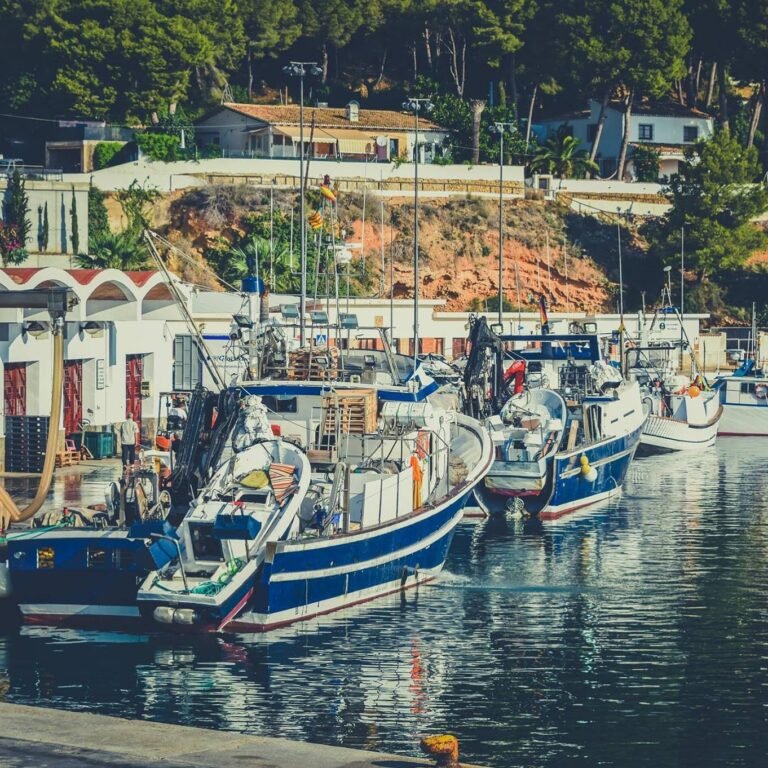
The nearby port of Dénia played an important role in exporting the region’s raisins.
The raisin trade contributed to commercial development, storage facilities, transport connections, and the growth of international business links.
During its most prosperous years, the industry connected small agricultural communities in southeastern Spain with markets across Europe and farther afield.
Something as ordinary as a raisin could therefore have an extraordinary economic impact.
Why Did the Raisin Industry Decline?
The traditional raisin industry did not disappear overnight.
Its decline developed over time as a result of several factors.
Changing international markets, agricultural difficulties, competition from other producing regions, and economic disruption all affected the industry.
By the early twentieth century, the once-thriving export trade had weakened considerably.
Many vineyards were abandoned or converted to other agricultural uses.
The production techniques gradually became less common.
And the riuraus, which had once been essential agricultural buildings, lost much of their original purpose.
Some were demolished or fell into disrepair.
Others survived because families continued using them as farm buildings or incorporated them into their homes.
Today, the remaining riuraus are an important part of the region’s architectural heritage.
Why L’Escaldà Is Still Celebrated Today
For me, this is perhaps the most interesting part of the story.
The traditional raisin trade is no longer the economic force it once was.
Yet villages such as Llíber continue to celebrate the skills and customs associated with it.
Why?
Because agriculture shaped more than the economy.
It influenced the buildings, the landscape, family life, seasonal routines, local vocabulary, and the food people prepared.
L’Escaldà required many hands.
Different members of a family or community worked together to harvest, scald, spread, dry, protect, and collect the grapes.
Neighbors helped one another during the busy harvest period.
These were not simply individual farming tasks.
They formed part of the social fabric of the villages.
When people demonstrate the Escaldà process today, they are preserving something much larger than a way of making raisins.
They are keeping a piece of local history alive.
A Tradition Recognized as Cultural Heritage
In 2018, the Valencian regional government officially declared L’Escaldà an item of intangible cultural heritage.
The recognition covers the traditional process of transforming Moscatel grapes into raisins.
It acknowledges the importance of the agricultural techniques, associated architecture, customs, and cultural practices.
This designation helps emphasize why preserving the tradition matters.
It isn’t simply a picturesque activity for visitors.
It is a recognized part of Valencian cultural history.
And local celebrations play an important role in passing that knowledge to younger generations.
What Are Moscatel Grapes?
Moscatel is the Spanish name used for several aromatic Muscat grape varieties.
The traditional raisins of the Marina Alta were particularly associated with Muscat of Alexandria.
These grapes are known for their sweetness and distinctive floral aroma.
They can be enjoyed fresh, dried into raisins, or used in winemaking.
In the Vall de Pop, Moscatel is also closely connected with local wine culture.
You will find sweet Moscatel wines and mistela, a traditional fortified grape-must drink, among the regional specialties.
This makes the humble grape rather remarkable.
Depending on how it is prepared, it can become a fresh fruit, a raisin, or part of a distinctive local drink.
How Were the Raisins Used?
The raisins produced in the Marina Alta were appreciated both locally and internationally.
In Britain, imported raisins became important ingredients in traditional cakes and puddings.
Christmas puddings, fruitcakes, and other rich baked goods relied heavily on dried fruit.
Here in the Valencian Community, raisins also appeared in traditional sweet breads, pastries, and certain savory dishes.
The combination of raisins with rice, nuts, or other ingredients reflects a long Mediterranean culinary tradition.
Even today, raisins are a familiar ingredient in many Spanish and Mediterranean kitchens.
They are particularly delicious with almonds, citrus, cinnamon, and warm spices.
And of course, a handful of good raisins makes a lovely little addition to a cheese board.
Visiting L’Escaldà in Llíber
If you are visiting Spain’s northern Costa Blanca in late summer, the Escaldà celebrations are well worth looking out for.
Llíber is a small village in the Vall de Pop, within the Marina Alta region of Alicante province.
It is surrounded by vineyards and the beautiful countryside that makes this area so appealing.
The annual Fira del Llaurador traditionally brings together agricultural heritage, local crafts, food, music, and community activities.
The exact dates and program can change from year to year.
In 2026, the event was held over the weekend of September 5 and 6, with the Escaldà demonstration taking place on Sunday morning.
If you are planning a visit, check the latest announcements from the local organizers before traveling.
And if you have time, explore the surrounding villages as well.
Alcalalí, Xaló, and the rest of the Vall de Pop have their own food traditions, markets, and agricultural history.
It is a wonderful part of Spain to discover beyond the beaches.
Frequently Asked Questions About L’Escaldà
What is L’Escaldà?
L’Escaldà is a traditional Valencian process used to prepare Moscatel grapes for drying into raisins. The grapes are briefly immersed in a specially prepared hot liquid before being spread on reed trays to dry.
Where is the Escaldà festival celebrated?
The tradition is celebrated in several communities of the Marina Alta and nearby regions, including Llíber, Jesús Pobre, Xaló, and other villages.
When is the festival in Llíber?
Llíber’s Escaldà celebration is normally associated with the late-summer agricultural season. In 2026, it took place on September 6 as part of the Fira del Llaurador. Future dates should be checked with the organizers.
What is a riurau?
A riurau is a traditional agricultural building with covered arches, historically used to shelter reed trays of drying grapes from rain and moisture.
What grapes are used for traditional Spanish raisins?
The traditional process in the Marina Alta is particularly associated with Moscatel de Alejandría, or Muscat of Alexandria.
Why were the grapes dipped into boiling liquid?
The treatment made the grape skins more permeable, helping moisture escape during the drying process.
Is L’Escaldà protected cultural heritage?
Yes. The Valencian regional government recognized it as intangible cultural heritage in 2018.
Can you make raisins at home using the same method?
The traditional process involved dangerous alkaline substances and boiling liquid, so it is not appropriate to reproduce casually at home. A food dehydrator or a suitably controlled oven is a safer option for homemade raisins.
A Living Piece of Mediterranean History
One of the reasons I love living in the Vall de Pop is that history never seems very far away.
Sometimes it is an old stone farmhouse, a forgotten agricultural terrace, or a beautiful riurau standing at the edge of a vineyard.
And sometimes it is an entire village coming together around a wood-fired cauldron to show how raisins were made generations ago.
Watching traditions like L’Escaldà reminds me that Mediterranean food has always been about much more than recipes.
It is about the landscape, the seasons, the work of farmers, and the knowledge passed from one generation to the next.
The raisins that once brought prosperity to the Marina Alta may no longer dominate the region’s economy.
But their story is still here.
In the old buildings, the vineyards, the village festivals, and the people who continue to keep these traditions alive.
And that, to me, is one of the loveliest things about discovering life in this part of Spain.