Olive oil, Spanish ham, cheese, local markets, and the surprising cost of everyday groceries. After two years of living in Spain, here’s what I’ve discovered.
“Well, at least your groceries must be much cheaper now that you live in Spain.”
If I had a euro for every time someone said that to me, I might actually save a little on my weekly shopping.
Before Sam and I moved to Spain, I thought exactly the same thing.
After all, Spain produces some of the most wonderful food in Europe. Olive oil, oranges, almonds, olives, cheeses, cured hams, and sausages are all part of everyday life here.
Surely living so close to where these things are produced would make them more affordable?
Well, not quite.
After two years of living in Spain, I have discovered that the reality is rather different from the picture many people have in their heads.
Some things are genuinely cheaper. Others are surprisingly expensive. And a few have made me look twice at the total on the supermarket receipt.
So, how much does grocery shopping in Spain really cost? And is Mercadona cheaper than Carrefour?
Let’s look at the prices, the supermarkets, and some of the things I wish I had known before moving here.
Is Grocery Shopping in Spain Actually Cheaper?
The short answer is that it depends on what you buy.
If your shopping basket is filled with basic vegetables, seasonal fruit, ordinary olive oil, and supermarket own-brand products, Spain can offer excellent value.
But if you prefer good cured ham, artisan cheese, local olive oil, sourdough bread, and quality meat, the total can rise surprisingly quickly.
And this is something that took me a little while to appreciate.
Living in a country that produces excellent food does not necessarily mean that the best examples are inexpensive.
In fact, some of the local products I enjoy most are among the more expensive things in my shopping basket.
Mercadona vs Carrefour: Which Supermarket Is Cheaper?
Two of the best-known supermarket chains in Spain are Mercadona and Carrefour.
Both sell a wide range of groceries, but I find that they offer rather different shopping experiences.
Shopping at Mercadona
Mercadona is usually my first choice for everyday shopping.
One reason is simple: I can find almost everything I regularly use in one store.
From fresh produce and dairy to cleaning products, pantry staples, and household essentials, it is convenient and familiar.
Mercadona’s Hacendado food brand and Bosque Verde household products are worth knowing about if you live in Spain.
Some of the everyday products are genuinely good value.
For example, I can pick up a bottle of laundry detergent for around €3.
That is the kind of price that makes you feel rather pleased with your shopping.
But Mercadona is not necessarily the cheapest option for everything.
And although I appreciate the convenience, there are times when I prefer to buy something more local or a little more special.
Shopping at Carrefour
Carrefour offers a different experience, particularly in its larger stores.
There is often a broader choice of national brands, imported groceries, specialty products, and different sizes.
This can be useful when you are looking for a particular cheese, a specific olive oil, or an ingredient that isn’t available in your regular supermarket.
Carrefour also runs promotions, although I prefer comparing the actual price per kilogram or liter rather than being distracted by promotional labels.
One thing I have learned is that supermarket size and choice do not automatically tell you which chain is cheaper.
Sometimes Mercadona wins. Sometimes Carrefour does.
And sometimes the difference is so small that it is hardly worth making an extra journey.
Olive Oil Prices in Spain: Is It Really Cheaper?
Olive oil is one of the first things people associate with Spanish food.
And with good reason.
Spain is the world’s largest olive oil producer, and olive groves are an unmistakable part of the landscape.
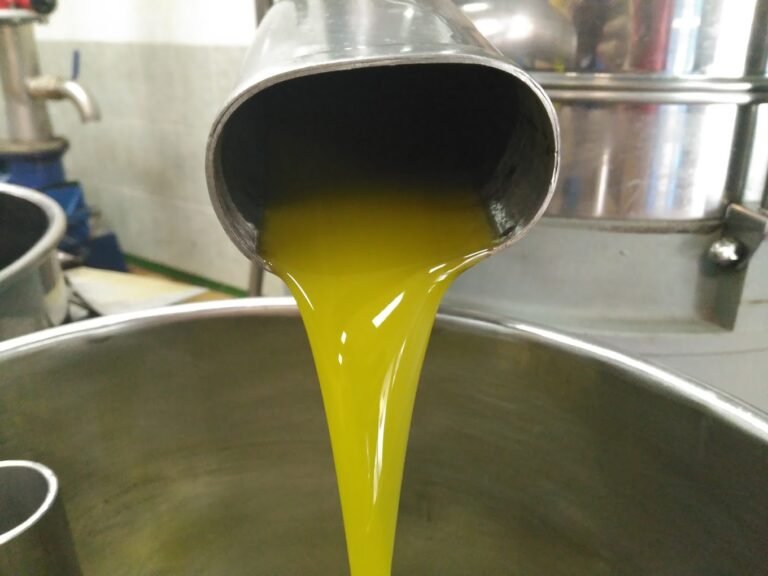
Living in the Mediterranean, I use olive oil for almost everything: cooking vegetables, preparing salads, roasting chicken, and finishing dishes.
So this is one product where prices really matter.
In October 2026, the listed price of a one-liter bottle of Hacendado extra virgin olive oil at Mercadona was €4.35.
At Carrefour, a one-liter bottle of its own-brand extra virgin olive oil was listed at approximately €4.34.
That is virtually the same price.
But there is another interesting comparison.
At Albert Heijn and Jumbo in the Netherlands, a one-liter bottle of their own-brand extra virgin olive oil was listed at €9.69.
That makes the Spanish supermarket examples considerably cheaper.
Of course, these are different oils from different suppliers, and the taste and quality may vary.
But it does demonstrate that some groceries really are significantly less expensive in Spain.
Why Is Some Spanish Olive Oil Still Expensive?
Not all olive oil is the same.
There is a difference between an everyday supermarket extra virgin olive oil and a carefully produced, early-harvest oil from a small estate.
Olive variety, harvest timing, production methods, packaging, and quality all influence the price.
A beautifully made local olive oil can cost much more than a supermarket own-brand bottle.
Personally, I think it makes sense to keep one good everyday olive oil for cooking and another more distinctive oil for salads, bread, and finishing dishes.
The important thing is to compare products of similar quality rather than assuming that every bottle of extra virgin olive oil is identical.
How Much Does Spanish Serrano Ham Cost?
Spanish ham is another product that surprises people.
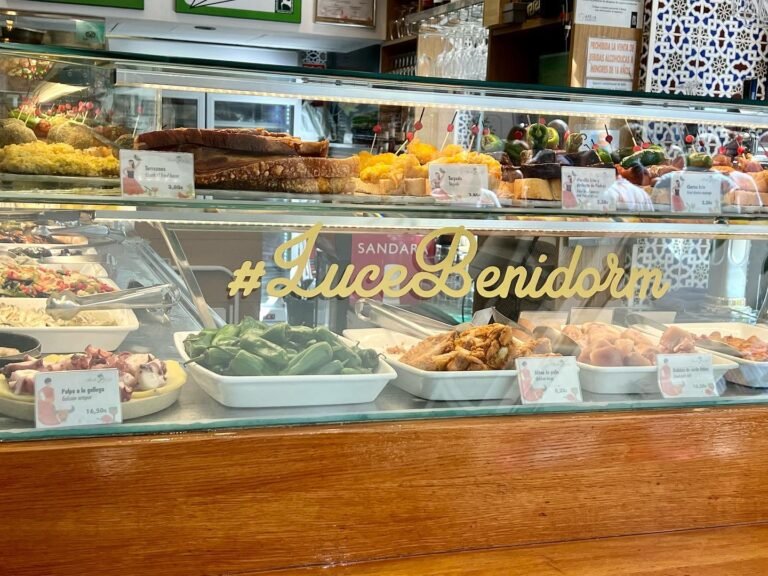
When you imagine life in Spain, it is easy to picture beautiful platters of thinly sliced jamón served with bread and a glass of wine.
And yes, you can enjoy those little pleasures here.
But good ham isn’t necessarily cheap.
At Mercadona, a 240 g package of sliced Incarlopsa Serrano ham was listed at approximately €3.95 in the product-price records I checked.
That works out at around €16.46 per kilogram.
A comparable category of sliced Serrano Reserva ham at Carrefour was listed at approximately €4.29 for 240 g, or €17.87 per kilogram.
These are different products, so the figures should be treated as a price comparison rather than a quality ranking.
And that is before we begin talking about more expensive Iberian ham.
Serrano Ham vs Ibérico Ham
One thing worth understanding is that Serrano ham and Ibérico ham are not the same.
Serrano ham is a traditional Spanish dry-cured ham.
Ibérico ham comes from pigs with the required Iberian breed ancestry and is sold in different classifications.
Some premium Ibérico hams, particularly those from acorn-fed pigs, can be extraordinarily expensive.
A few slices can cost considerably more than an everyday packet of Serrano ham.
It is wonderful food, but it is not something I automatically regard as a budget purchase simply because I live in Spain.
What About Cheese Prices in Spain?
Cheese is another area where the price depends enormously on what you choose.
Spain produces beautiful cheeses, from mild everyday varieties to mature sheep’s milk cheeses with wonderful depth of flavor.
I particularly enjoy exploring local cheeses, but there is a difference between buying an ordinary supermarket cheese and selecting a carefully matured regional variety.
For example, Mercadona listed a 270 g wedge of its Hacendado DOP Manchego cheese at approximately €5.43 in the product data available for this comparison.
That is just over €20 per kilogram.
At Carrefour, an own-brand 200 g mixed-milk cured cheese was listed at €2.49, or €12.45 per kilogram.
These two cheeses are not directly comparable.
Manchego DOP is a protected sheep’s milk cheese, whereas a mixed-milk cheese uses a different blend of milk.
And that is precisely why it is important to look beyond the price tag.
Sometimes the cheaper cheese is perfectly good for a sandwich.
Other times, I would rather buy a smaller piece of a cheese I really love.
Spain vs the Netherlands: What About the Overall Grocery Bill?
Recently, I was talking with my Dutch neighbor about supermarket prices.
We began comparing the prices of groceries in Spain with those at Albert Heijn and Jumbo in the Netherlands.
It was a surprisingly interesting conversation.
She told me that her everyday grocery shopping in Spain costs her approximately €300 more per month than it did when she lived in the Netherlands.
That is her personal experience, of course, not an official statistic.
Shopping habits, household size, location, preferred brands, and how often you eat at home all influence the total.
I haven’t kept a detailed like-for-like record of my old Dutch grocery bills, so I cannot honestly say that I spend exactly the same amount more.
But I certainly understand what she means.
There are occasions when I reach the checkout and find myself looking at the total twice.
It is not always the basic items that cause the surprise.
Often, it is the nicer things you add along the way.
A good cheese. Some beautiful cured ham. A special bottle of olive oil. Fresh fish. A few locally made sausages.
Each seems perfectly reasonable on its own.
Together, they can make a considerable difference.
Why I Also Shop at Masymas
Although Mercadona is my main supermarket, I also like shopping at Masymas.
One of the reasons is its selection of regional products.
Living in the Marina Alta, I enjoy buying food that reflects this particular part of Spain.
I like finding products from local producers, discovering unfamiliar ingredients, and trying regional specialties.
For me, food shopping isn’t only about filling the refrigerator.
It is also a way of getting to know where we live.
And sometimes, I would rather spend a little more on something produced nearby than automatically choose the cheapest alternative.
That is a personal preference, not a claim that local products are always better or more affordable.
Are Local Markets in Spain Cheaper Than Supermarkets?
This is another popular assumption about living in Spain.
Surely the weekly village market must be cheaper?
Not necessarily.
I love visiting local markets.
There is something wonderful about walking between stalls filled with seasonal vegetables, fresh herbs, olives, cheeses, and homemade products.
But I have learned not to assume that buying directly from a market stall means paying less.
Saturday Market in Xaló
Our local Saturday market in Xaló is a lovely example.
It is the kind of place where you can discover regional products and enjoy the atmosphere of a Spanish village on market day.
But some of the prices can still surprise me.
A small box of free-range eggs, for example, can cost considerably more than I would expect to pay for ordinary supermarket eggs.
That doesn’t necessarily mean the eggs are overpriced. But for me, 10 eggs for 6 euro is a little steep.
Small producers have their own costs, and the farming methods, scale, freshness, and quality may be different.
But it does mean that local markets are not automatically the cheapest places to shop.
And I think that is an important distinction.
I visit markets because I enjoy the products, the atmosphere, and the connection with local producers.
Not because I expect every purchase to save me money.
Why I Started Baking My Own Sourdough Bread
And then there is bread.
I love proper sourdough bread.
A beautiful crust, a slightly chewy interior, and that wonderful flavor that develops through slow fermentation.
But paying €5 or €6 for a single artisan sourdough loaf? That was becoming a little difficult to justify. It’s only flour, water and salt..
Especially when you buy good bread regularly.
So I decided to start baking my own.
And it has turned into one of my favorite kitchen habits.
There is something enormously satisfying about taking flour, water, salt, and an active sourdough starter and turning them into a beautiful loaf of bread.
Of course, homemade sourdough isn’t completely free.
Good flour costs money, and so does heating the oven.
But it can work out significantly cheaper than buying an artisan loaf every few days.
I also know exactly what goes into the bread.
And the smell of freshly baked sourdough in the farmhouse kitchen is a rather lovely bonus.
I’ll share my own sourdough recipe and a beginner’s guide to making a starter in a separate article.
The Hidden Difference Between Cheap Groceries and Affordable Living
One thing I have learned during our two years in Spain is that the cost of groceries is only part of the larger picture.
Some aspects of life can be less expensive here.
For example, the annual vehicle tax we pay is considerably lower than what we were used to in the Netherlands.
But that saving doesn’t automatically mean that every part of daily life costs less.
Groceries, insurance, energy, housing costs, and local taxes all need to be considered separately.
It is perfectly possible to save money in one area and spend more in another.
And that is why I think the simple statement that Spain is cheap can be rather misleading.
It depends entirely on your circumstances and how you choose to live.
How I Keep My Grocery Shopping Under Control
After two years, I have developed a few habits that help.
I compare prices per kilogram or liter instead of relying on the price of a package.
I buy ordinary household essentials where they offer good value.
I keep an eye on seasonal produce, particularly when it is grown nearby.
I make certain things myself, including sourdough bread.
And I try to decide which ingredients are worth spending more on.
For me, excellent olive oil, good cheese, and certain local specialties are often worth the extra cost.
But I don’t need the most expensive version of absolutely everything.
There is a balance between enjoying good food and being sensible about the weekly grocery bill.
And I think that balance is different for everyone.
Frequently Asked Questions About Grocery Shopping in Spain
Is Mercadona cheaper than Carrefour?
Not always. Prices depend on the product, package size, brand, and current promotions. Some everyday products cost almost exactly the same at both supermarkets.
Is olive oil cheaper in Spain?
In the October 2026 examples checked for this article, supermarket own-brand extra virgin olive oil was considerably cheaper in Spain than in the Netherlands. Premium and artisan oils can cost much more.
Is Serrano ham cheap in Spain?
Some everyday Serrano ham is reasonably priced, but higher-quality and specialty hams can be expensive. Ibérico ham is a different category with its own classifications and prices.
Are Spanish markets cheaper than supermarkets?
Not necessarily. Markets are wonderful for discovering local products, but prices can be higher for artisan foods and goods from small producers.
Is cheese cheaper in Spain?
It depends on the type. Everyday supermarket cheeses may be affordable, while protected-origin sheep’s milk cheeses and artisan varieties can be relatively expensive.
Is it cheaper to bake sourdough bread at home?
Often, yes, particularly when comparing homemade bread with artisan sourdough loaves costing €5–€6. Flour and energy costs still need to be included.
Is living in Spain cheaper than living in the Netherlands?
Some expenses may be lower, but others may be similar or higher. Your total cost of living depends on housing, transport, household expenses, shopping habits, and location.
So, Is Grocery Shopping in Spain Really Cheaper?
After two years of living here, I would say that the answer is much more complicated than I expected.
Yes, there are some genuine bargains.
I still appreciate finding affordable everyday products at Mercadona. And compared with Dutch supermarket prices, certain basic ingredients, such as olive oil, can offer excellent value.
But good food is not automatically cheap just because it is produced nearby.
Beautiful Spanish ham, mature cheese, handmade sausages, artisan bread, and specialty products can all make a noticeable difference to the weekly shopping bill.
And local markets, wonderful as they are, aren’t necessarily budget shopping destinations either.
Would I change the way we live here?
Not for a moment.
I love the markets, the small shops, the seasonal ingredients, and the pleasure of discovering foods that belong to this part of the Mediterranean.
I have simply learned that living in Spain is not the same as living in a permanently discounted supermarket.
And perhaps that is the real lesson.
Moving to Spain hasn’t made me stop thinking about grocery prices.
It has made me think more carefully about what I buy, where it comes from, and what is genuinely worth paying for.