Hi friends! Before we moved to Spain, we didn’t know how many cheeses this country has. When we thought of cheese, we thought of the Netherlands first, and then France. In the Netherlands, cheese mostly means firm, aged wheels, and France is famous for its soft and creamy ones.
Then we walked into a Spanish supermarket. There are cheeses made from cow’s milk, sheep’s milk, goat’s milk, and sometimes all three together. There are cheeses that are rock hard, cheeses you can scoop with a spoon, and cheeses that are aged in mountain caves. So let’s sort it all out together: what to buy, how Spaniards eat it, what to drink with it, and what it costs.
What Is Spanish Cheese?
Spanish cheese isn’t one cheese. It’s a huge family of cheeses, and nearly every region has its own. They’re made from cow’s, sheep’s, or goat’s milk, or from a mix. Some are made in big dairies, and others in small mountain huts. As a result, no single word can describe them all.
Hard, Soft, and Blue
To make it simple, here are the main groups, with a few cheeses you can look for:
| Group | Examples | What to expect |
|---|---|---|
| Hard and semi-hard | Manchego, Mahón, Idiazábal, Zamorano | Firm, nutty, and good for slicing |
| Soft and creamy | Tetilla, Arzúa-Ulloa, Torta del Casar | Mild and milky, or soft enough to spread |
| Goat | Murcia al Vino, Ibores, Majorero | Tangy, often with a special rind or coating |
| Blue | Cabrales, Valdeón, Picón | Sharp, salty, and strong |
How to Read the Age Labels
In Spain, age is part of the name. Tierno is young and soft, semicurado is semi-aged, and curado is aged. Viejo (or añejo) is the oldest, and it’s the sharpest and driest. For example, Mercadona’s “viejo” cheeses are aged for at least 6 to 10 months. In general, the older the cheese, the drier, stronger, and more crumbly it becomes.
Cow, Sheep, Goat, or All Three?
You’ll often see mezcla on a label. It means a mix of cow’s, sheep’s, and goat’s milk. For example, Mercadona’s semicurado mezcla contains at least 50% cow’s milk, 20% sheep’s milk, and 15% goat’s milk. A mix gives you a cheese that’s mild and approachable, and it’s usually the most affordable option.
Pure sheep’s milk cheese is richer, because sheep’s milk has about twice the butterfat of cow’s milk. Pure goat’s milk cheese is tangier. Which one you pick is a matter of taste, so try them all.
Where Does It Come From?
Spain’s cheeses follow its landscape. Here are some of the best-known ones, by region:
| Region | Cheese | Milk |
|---|---|---|
| Castilla-La Mancha | Manchego | Sheep |
| Basque Country | Idiazábal | Sheep |
| Balearic Islands | Mahón (Maó) | Cow |
| Galicia | Tetilla | Cow |
| Asturias | Cabrales | Mostly cow, sometimes mixed |
| Extremadura | Torta del Casar | Sheep |
| Murcia | Murcia al Vino | Goat |
| Canary Islands | Majorero | Goat |
Manchego
Manchego is Spain’s best-known cheese, and its name is protected by the European DOP label. It comes from La Mancha, in the provinces of Albacete, Ciudad Real, Cuenca, and Toledo. It must be made from the milk of Manchega sheep, and it’s always sold with its rind. Cheeses up to 1.5 kg age for at least 30 days, while larger ones age for 60 days up to 2 years. Every piece carries a numbered label, so you can tell it’s genuine.
From the Factory to the Cave
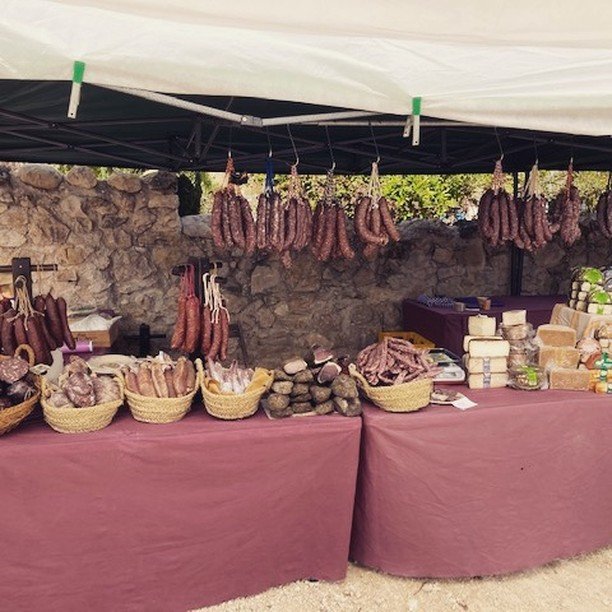
How cheese is made varies as much as the cheese itself. At one end, big dairies make millions of kilos, and the cheese is pasteurized and uniform. Mercadona’s cheeses, for example, are made by suppliers such as Entrepinares, a dairy in Valladolid. At the other end, small makers use raw milk and old methods. Raw-milk Manchego can carry the word Artesano on the label.
Some cheeses have special treatments:
- Cabrales ages in natural caves in the Picos de Europa mountains, at 95 to 98% humidity. The basic version ages about four months, while a Reserva can age up to 10 months. Most makers use cow’s milk, although sheep’s and goat’s milk are allowed.
- Picón Bejes-Tresviso is a blue cheese from Cantabria that matures in caves for at least two months.
- Murcia al Vino is a goat’s milk cheese soaked in red wine while it ripens.
- Torta del Casar is made from sheep’s milk and thistle rennet, and its inside is so soft you can spread it.
- Ibores is a goat’s milk cheese treated with smoked paprika and olive oil as it ages.
What Does It Taste Like?
Each cheese has its own personality, and age changes it too. Here’s a quick guide:
| Cheese | What it tastes like |
|---|---|
| Young Manchego | Fresh and milky, with a gentle nuttiness |
| Aged Manchego (viejo) | Crumbly, with notes of butterscotch, roasted almonds, and a little leather |
| Mahón | Buttery and salty |
| Idiazábal | Aged, with a slightly smoky flavor |
| Zamorano | Nutty and crumbly |
| Tetilla | Mild, milky, and slightly salty |
| Torta del Casar | Rich and aromatic, with a slightly bitter finish |
| Murcia al Vino | Slightly acidic, with a floral aroma |
| Cabrales | Sharp, pungent, and intense |
How to Use It in Cooking
In Spain, cheese is more often eaten than cooked. It’s a tapa, a snack, and a finish to a meal. Still, it works well in the kitchen too.
How Spaniards Eat It
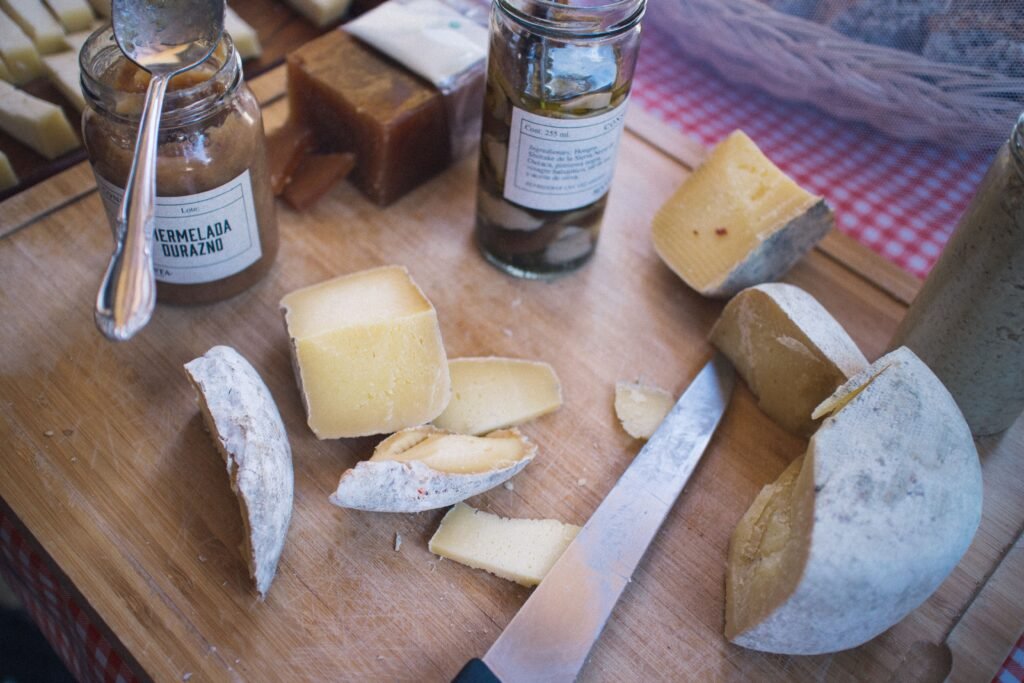
The classic is a few thin wedges of Manchego, served as a tapa with a drink. The traditional partner is membrillo, or quince paste, and the two are practically synonymous in Spain. Slice the paste thinly, and place it on a piece of cheese, with toasted bread or crackers. Marcona almonds, walnuts, olives, and figs go well too, and fig jam is a lovely alternative to quince.
A Simple Cheese Tapa
For a quick tapa, slice 4 ounces of Manchego into thin wedges. Cut 2 ounces of quince paste into small slices, and place one on each piece of cheese. Serve it with a handful of almonds and a glass of wine. That’s all it takes.
Which Wine?
The older the cheese, the bigger the wine:
| Cheese | Wine to try |
|---|---|
| Young Manchego (semicurado) | Verdejo, Albariño, Cava, or a dry Fino sherry |
| Aged (curado) | Rioja Crianza, or Garnacha |
| Very aged (viejo) | Rioja Reserva or Gran Reserva, or an aged sherry |
In the Kitchen
Cabrales is used in sauces and croquettes, and Arzúa-Ulloa is good for melting. Idiazábal works in risottos and even desserts. For everyday cooking, a semicurado mezcla is the easiest choice, because it melts well.
What Does It Cost at Mercadona?
Here are some examples from Mercadona. Keep in mind that prices change, and we’ve noted the date for each. The 2023 prices are from news articles, and they are likely higher today.
| Cheese | Pack | Price | Per kilo | Date |
|---|---|---|---|---|
| Semicurado mezcla (cow, sheep, goat) | 420 g | €4.07 | €9.69 | June 2026 |
| Viejo intenso mezcla (raw cow, sheep, goat) | 1.5 kg piece | €15 | about €10 | March 2026 |
| Queso fresco de cabra (goat) | 250 g | €2.95 | €11.80 | June 2026 |
| Viejo de oveja (sheep) | 380 g | €6.10 | about €16 | December 2023 |
| Curado con trufa (mix, with truffle) | 200 g | €3.90 | €19.50 | October 2023 |
| Manchego viejo (raw Manchega sheep, 8 months) | 350 g | €8.15 | about €23 | December 2023 |
In short, the mixed-milk cheeses are the bargains, at around €10 a kilo, while a genuine Manchego costs more than twice as much.
What Can You Substitute?
If you can’t find a Spanish cheese, these work:
- Manchego: Pecorino or an aged Dutch cheese. Both are firm, nutty, and good for slicing.
- Mahón: a young Gouda, which is similarly buttery.
- Cabrales: any strong blue cheese, such as Roquefort or Gorgonzola. Use a little less.
- Torta del Casar: a ripe, soft cheese, such as Brie.
How to Store It
Wrap hard cheese in wax or parchment paper, and keep it in the fridge. Take it out about 30 minutes before serving, so the flavor can open up. Soft cheeses, such as Torta del Casar, should be eaten soon after opening. The rind of Manchego isn’t meant to be eaten, and you can cut it off before serving.