Hi friends! Chances are you have a jar of smoked paprika in your pantry. It’s one of the most popular spices around, and yet the label can be surprisingly confusing. What’s the difference between dulce, agridulce, and picante? Why do some jars taste deeply smoky while others taste like plain paprika? And what does that little DOP logo really mean?
In Spain, where we live now, pimentón is a pantry staple, and the best of it comes from one small corner of the country. So let’s find out how it’s made, how to spot the real thing, and how to cook with it, including three dishes where it truly steals the show.
What Is Pimentón de la Vera?
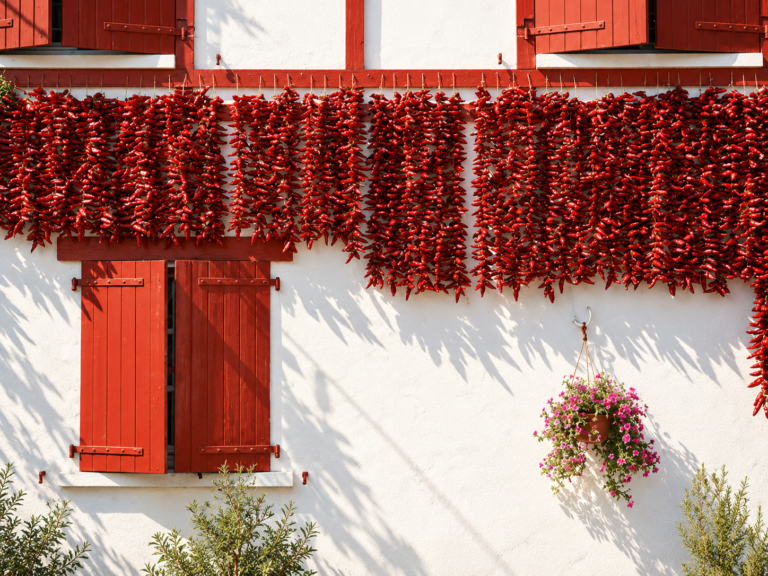
Pimentón is the Spanish word for paprika, and Pimentón de la Vera is its top-quality, smoked version. First, red peppers are dried slowly over smoldering oak, and then they’re ground into a fine, deep-red powder. The name comes from La Vera, a valley in the Extremadura region of western Spain.
Pimentón vs. Hungarian Paprika
Both start with red peppers, but the drying method changes everything:
| Pimentón de la Vera | Hungarian paprika | |
|---|---|---|
| Drying | Over smoldering oak | With heaters and fans |
| Flavor | Smoky and fruity | Rich and fruity, but not smoky |
The Three Types
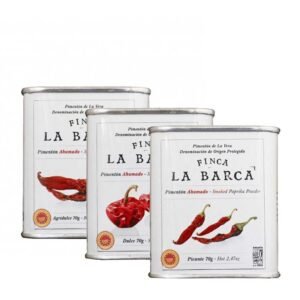
Pimentón de la Vera comes in three types, each made from a different blend of peppers:
| Type | Heat | Made from |
|---|---|---|
| Dulce (sweet) | None, completely sweet | Bola and Jaranda peppers |
| Agridulce (bittersweet, also called ocal) | Mild heat | Jaranda and Jariza peppers |
| Picante (hot) | Pronounced heat | Jeromín, Jariza, and Jaranda peppers |
Where Does It Come From?
Pimentón has a long history in Spain, and it all comes back to one region. Its story starts across the ocean, continues in monasteries, and ends in a valley that still protects its methods today.
From the Americas to Extremadura
Peppers came to Europe from the Americas. Then, according to tradition, Columbus brought seeds to the monks of the Guadalupe monastery in 1493, and cultivation later spread from the Yuste monastery. Later, in the mid-1800s, farmers in La Vera began growing peppers for profit and making pimentón, and the tradition has continued ever since.
The DOP Area
Only pimentón grown, dried, ground, and packaged in a protected area can carry the Pimentón de la Vera DOP. That area covers four districts in northern Cáceres, in Extremadura: La Vera, Campo Arañuelo, Valle del Ambroz, and Valle del Alagón. DOP, short for Denominación de Origen Protegida, is a European label that protects a product’s origin and method. The area’s damp climate, shaped by the Sierra de Gredos, also makes sun-drying impractical, which is one reason farmers turned to smoke.
How the Oak Smoke Method Works
Here’s how the peppers go from field to jar:
- Harvest: the peppers are picked in autumn, when they’re bright red but before they dry out.
- Smoke-drying: they go to a secadero, a brick-and-tile drying house, where they lie on an upper floor above a fire of holm oak or oak. The peppers dry slowly for 10 to 15 days, and their moisture drops from about 80% to under 15%.
- Careful heat: farmers keep the room at around 120°F or cooler. If it’s hotter, the peppers start to cook, and if it’s cooler, they can rot. In total, drying takes about 5 kilos of firewood for every kilo of dried pepper.
- Cleaning: the dried peppers are de-stalked and de-seeded.
- Milling: stone mills grind them, with up to five passes, and then slower horizontal stones refine the powder. The stones must stay cool, below about 122°F.
How to Spot the Real Thing
Because “smoked paprika” isn’t a protected name, the label matters. Look for these signs:
- The exact name: it should say Pimentón de la Vera, not just “smoked paprika” or “Spanish paprika.”
- The DOP logo and a numbered back label: under the DOP rules, every package must carry both the logo and a single-use numbered label.
- A short ingredient list: it should list peppers and nothing else, although the rules allow a little sunflower oil.
- The word ahumado: it means “smoked.” Some pimentón isn’t smoked at all, so check that the label says so.
- A tin: a tin blocks light and air, which keeps the spice fresh.
- Deep color and a real smoky aroma: a deeper color generally means better quality. If the jar smells like plain, dusty paprika, be skeptical.
What Does It Taste Like?
All three types share the same backbone: a dusky, sweet smokiness with a fruity edge. In fact, that’s what sets pimentón apart from the bland paprika in many supermarkets. From there, each type has its own personality.
Dulce is the mildest. It’s smoky, fruity, and a little sweet, and many cooks notice cherry-like aromas from the Jaranda peppers. It adds color and depth without any heat, so it works almost everywhere.
Agridulce, meanwhile, sits in the middle. It has the same smoky base, plus a mild, bittersweet warmth.
Finally, picante brings the heat. It’s pronounced, but it’s still balanced, because the smoke comes through strongly alongside it. Start with a little, then add more to taste.
How to Use It in Cooking
Pimentón is easy to love, but it’s also easy to ruin. The peppers contain more natural sugars than most ground spices, so they scorch fast and turn bitter. Because of that, a few simple habits make all the difference. First, though, let’s look at three dishes where pimentón is the star.
Three Dishes Where Pimentón Steals the Show
1. Pulpo a la gallega (Galician octopus). This is the classic, so let’s start here. First, slice 1 pound of cooked octopus and arrange it on a plate. Drizzle it with 2 tablespoons of good olive oil, then add flaky salt and a generous sprinkle of ½ teaspoon pimentón, dulce or picante. Because the spice is raw, it tastes at its boldest here.
2. Patatas revolconas (smoky mashed potatoes). Boil 2 pounds of potatoes until tender, then mash them roughly with 3 tablespoons of olive oil, 2 minced garlic cloves, 1 teaspoon of pimentón dulce, and salt. They’re simple, so they make a comforting side for almost any meal.
3. Pimentón-rubbed pork or chicken. Brush pork tenderloin or chicken with oil infused with pimentón dulce, or use the powder as a dry rub. Pimentón is also what gives chorizo its flavor and color, and most of the bulk production goes to chorizo makers.
The Golden Rule: Don’t Burn It
Add pimentón to warm oil, not smoking-hot oil, and take the pan off the heat first. For soups and stews, add it together with the liquid, although its flavor fades into the background as the dish simmers. Finally, as a finishing touch, sprinkle it over tomato salad, eggs, or grilled fish. It’s most assertive when it’s raw.
Which Type for Which Job?
| If you’re making… | Reach for… |
|---|---|
| Tomato salad, eggs, or grilled octopus | Dulce |
| Rubs, marinades, and roasted vegetables | Dulce or agridulce |
| Stews, chorizo-style dishes, or spicy potatoes | Agridulce or picante |
| Anything that needs smoke and heat | Picante |
Quick Pimentón Oil
Gently warm 3 tablespoons of olive oil with 1 smashed garlic clove over low heat for 2 minutes. Then remove the pan from the heat, and stir in 1 teaspoon of pimentón dulce. Use it right away as a drizzle over meat, fish, potatoes, or bread.
What Can You Substitute?
Nothing quite matches Pimentón de la Vera, but you have options:
- Smoked paprika (dulce): mix regular sweet paprika with a small pinch of ground chipotle. You’ll get some of the smoke, although not the fruity depth.
- Picante: for each tablespoon, use 1 tablespoon of smoked sweet paprika and ¼ teaspoon of cayenne.
- Hungarian paprika: it adds color and sweetness, but it won’t taste smoky.
- Chipotle powder: use a little, because it’s much hotter and has a different smokiness.
How to Store It
Paprika goes stale quickly, so how you store it matters. Choose a small tin, because tins block light and air. Then keep the tin tightly closed in a cool, dark cupboard, away from the stove. Finally, use it within about a year. If the color has faded or the smoky aroma has gone, it’s time for a fresh one.