Hi friends! Picture a little white village in the French Basque Country. The houses have bright red shutters, and every single one is draped in long, glowing strings of red peppers, drying in the autumn sun. It looks like a movie set, but it’s real. That’s Espelette, and those peppers are some of the most charming ingredients you can keep in your kitchen.
Today I’m sharing everything I love about Espelette pepper: what it tastes like, where it comes from, how to shop for the real thing, and how to use it (spoiler: on way more than you’d think).
So, What Exactly Is Espelette Pepper?
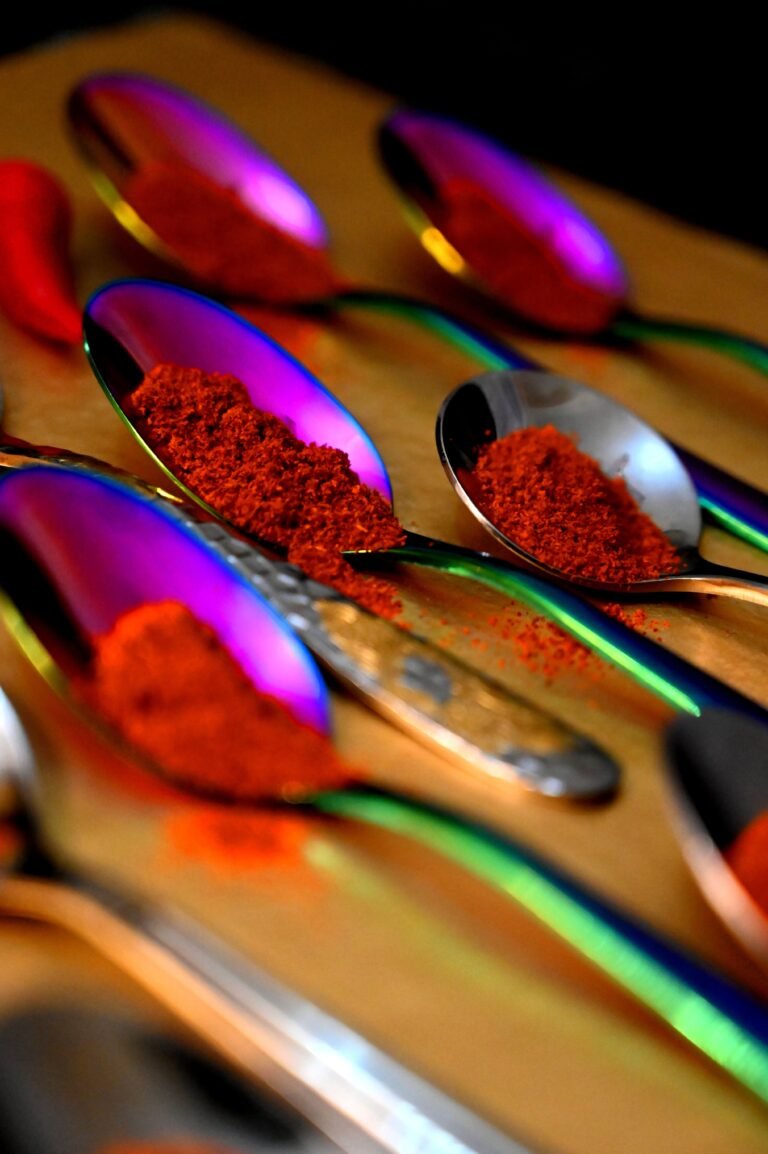
Espelette pepper, or piment d’Espelette in French, is a red chile that’s dried and usually ground into a deep brick-red powder. It’s named after the village of Espelette, in the foothills of the Pyrenees, not far from the Spanish border.
Like chocolate, tomatoes, and potatoes, the pepper traveled to Europe from the Americas. It has been grown in the Basque Country since at least 1650. One popular story says a Basque sailor who traveled with Christopher Columbus brought the first chiles home. Whether or not that’s exactly how it happened, the Basques took to the pepper in a big way. For a long time they used it to flavor and preserve meat, and they saved the seeds of the best peppers each year to plant the next season.
What Does It Taste Like?
This is what I love most: Espelette is more about flavor than fire. It’s sweet, fruity, and a little smoky, with a gentle warmth that builds slowly and never takes over. It sits at around 4,000 on the Scoville scale at the very most, and some are even milder. For comparison, a jalapeño can range anywhere from 2,500 to 10,000. So it’s about as mild as paprika at the low end and reaches the bottom of jalapeño territory at the top.
That’s what makes it so easy to cook with. You can sprinkle it on a dish for guests of every spice tolerance, and it adds warmth and a gorgeous color without a single person reaching for a glass of milk.
Why the Peppers Hang on the Houses
Those famous strings aren’t just for show. Espelette peppers are picked by hand, starting in late August once they turn red. Many are strung together, and the strings, which hold at least 20 peppers each, are made by hand. Then they’re hung on the fronts of houses to dry in the sun, which concentrates both the color and the aroma. After drying, the peppers are ground into powder, and the powder is what most of us end up buying.
Every year, on the last weekend of October, the village celebrates the end of the harvest with the Fête du Piment. There are parades, music, a market, and a ceremony where new members are welcomed into the Confrérie du Piment, the pepper brotherhood. It’s a joyful, very Basque party, and it has been going since 1967.
Why It’s Protected (and Why That Matters to You)
The real Espelette pepper holds an AOP, a European protected designation of origin, which it earned in 2002 after receiving an earlier AOC in 2000. In short, only peppers grown and processed in a tiny area made up of ten villages can be called piment d’Espelette. It’s the only chile in France with this protection.
Things weren’t always so rosy. By the 1980s the pepper was in decline and close to disappearing, until local farmers joined forces in 1993 and fought for its recognition. Today it’s a symbol of the region and a good reason to buy carefully.
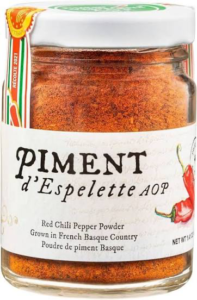
How to Shop for the Real Thing
A few simple things to look for:
- The AOP label. Look for “Piment d’Espelette AOP” on the jar. If it just says “Espelette-style” or “Espelette chile,” it isn’t the protected product.
- Powder in a glass jar. The real thing is traditionally sold in small glass jars.
- A short ingredient list. The powder should be 100% ground Espelette pepper, with nothing else added.
- Whole strings, if you want a beautiful pantry decoration. They look wonderful hanging in a kitchen, and you can grind a pepper as you need it.
A small jar costs around $10 to $12 in most stores, and since you use it by the pinch, it lasts a long time.
Ways I Love to Use It
Think of Espelette as the pepper you reach for instead of black pepper or paprika. Here are my favorite ways to use it:
- Scrambled eggs and omelets. A tiny sprinkle on top makes breakfast feel fancy.
- Roasted vegetables and potatoes. Toss them with a little olive oil, salt, and a pinch of Espelette before roasting.
- Fish and chicken. It’s a classic with Basque chicken, and it’s lovely on a simple baked fish.
- Pizza, pasta, and salads. Use it as a finishing touch, the way you would red pepper flakes, only gentler.
- Gougères and cheese. It goes beautifully with Gruyère in warm cheese puffs, and it’s great on a cheese board.
- Sweet things. Seriously! A pinch on dark chocolate, strawberries, or even vanilla ice cream is a revelation.
A quick Espelette butter: Mix 4 tablespoons of softened butter with ½ teaspoon of Espelette powder, a pinch of flaky salt, and a small squeeze of lemon. Spoon it onto warm bread, grilled corn, steak, or fish and let it melt. It’s so simple and so good.
A tip on timing: The flavor is delicate, so I like to add Espelette at the end of cooking or sprinkle it on right before serving. Long, high heat can dull the fruity notes.
How to Store It
Keep the powder in a cool, dry place away from direct light, with the lid closed tightly. It’s at its best soon after opening, so don’t let it sit for years. If your jar has lost its sweet, fruity aroma, it’s time for a fresh one.
Quick FAQs
Is Espelette pepper very spicy?
No, it’s mild to medium. It has more warmth and fruitiness than heat.
What can I use instead of Espelette?
Nothing is exactly the same, but you can come close with sweet paprika and a tiny pinch of cayenne. It won’t have the same fruity depth, but it works in a pinch.
Can I use it in place of red pepper flakes?
Yes, and it’s gentler. Use a little more than you would of hot pepper flakes, and taste as you go.
Where does the name come from?
From the village of Espelette. In the Basque language it’s called Ezpeletako biperra, and you’ll sometimes see that name on the label too.
The Takeaway
If you love a little warmth in your food but don’t want to scorch your taste buds, Espelette pepper is for you. Pick up a small jar of the real thing, sprinkle it on tonight’s eggs or roasted potatoes, and I promise you’ll be hooked.