Imagine living in a small Spanish village centuries ago, looking out toward the countryside after dark and seeing mysterious flames dancing around a cave.
Nobody seems to know who’s lighting the fires. People whisper about witches meeting in the darkness, and parents warn their children never to go near the place.
Would you be curious enough to investigate?
Or would you stay safely at home?
Near the village of El Poble Nou de Benitatxell, on Spain’s Costa Blanca, there’s a place with a rather wonderful name: Cova de les Bruixes, the Cave of the Witches.
And the story behind that name is even more interesting than you might expect.
The Mysterious Fires of Benitatxell
According to local legend, the cave was once a hiding place for bandits and smugglers.
They needed somewhere they could meet without attracting unwanted attention. And apparently, they came up with a rather clever solution.
They made people believe the cave was haunted by witches.
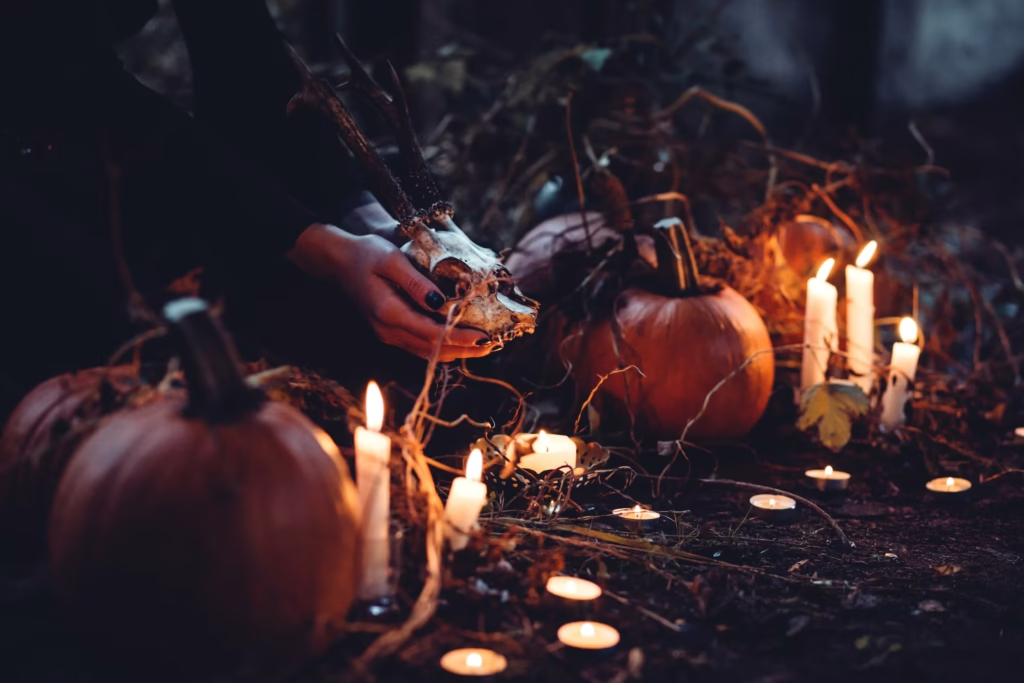
The story goes that fires were lit around the entrance at night, creating strange flickering lights that could be seen from the nearby village.
One version of the legend even claims that the smugglers burned sulfur, producing unusual flames and making the whole scene appear particularly frightening.
It didn’t take long for people to start talking.
Parents told their children that witches gathered there after dark, and that approaching the cave was a very bad idea.
Whether the smugglers really invented the entire story or simply took advantage of an existing superstition is impossible to establish.
But if their intention was to keep curious villagers away, the legend certainly served its purpose.
The name survived long after the mysterious nighttime gatherings disappeared.
A Cave with More Than 2,000 Years of History
Here’s where the story becomes even more fascinating.
Cova de les Bruixes isn’t simply a place with an entertaining local legend. It’s also an important archaeological site.
The cave is located in the l’Abiar area of El Poble Nou de Benitatxell, and archaeological excavations have uncovered evidence of human activity stretching back more than two thousand years.
The site was used during the Iberian and Roman periods, and later by communities living here under Andalusi rule.
Archaeologists have discovered pottery, stone structures and evidence that the natural rock shelter was used for practical purposes, including keeping animals.
The surrounding area also contains the remains of an old Andalusi farming settlement known as Alabiar, documented in 1277.
So, long before anyone was telling stories about witches, people were already working, storing food and living around this little cave.
The Secrets Hidden Beneath the Ground
Sometimes the most interesting discoveries are hidden in the most ordinary objects.
At Cova de les Bruixes, archaeologists have found pottery fragments from different historical periods, including Roman tableware and decorated Iberian ceramics.
One particularly remarkable find was a complete piece of Iberian pottery, now kept at the Archaeological Museum in Xàbia.
Excavations also revealed storage pits once used for grain. After they fell out of use, some were filled with discarded household materials.
That might not sound particularly glamorous, but these finds help archaeologists understand what people ate, how they stored their food and what everyday life looked like centuries ago.
It’s rather lovely to think that a place famous for witches can tell us so much about ordinary families and their kitchens.
And the discoveries haven’t stopped. Archaeological research and conservation work have continued in recent years, revealing more of the settlement’s long history.
Why Smugglers Loved This Part of Spain
The Costa Blanca is famous today for its beaches, beautiful villages and Mediterranean views.
But the coastline also has a history of smuggling.
Its steep cliffs, isolated coves and rocky shelters once made useful hiding places for people moving goods without attracting the attention of the authorities.
Tobacco, fabrics and other products could arrive by small boats, with smugglers using secluded coastal locations to hide or transfer their cargo.
The landscape around Benitatxell still contains caves and old stone shelters associated with this part of local history.
The Cova de les Bruixes legend belongs to that same world of smugglers, secrecy and people who knew the countryside far better than anyone trying to catch them.
And really, what better way to keep people away from your hiding place than to convince them that witches are waiting inside?
Were There Really Witches at Cova de les Bruixes?
There’s no historical or archaeological evidence that witches gathered at the cave.
What we do have is a local tradition that has been passed down through generations.
The stories about strange fires, secret meetings and frightening nighttime activity form part of the cultural history of El Poble Nou de Benitatxell.
The archaeological evidence tells a different, much older story, one involving Iberian communities, Roman life and a medieval Andalusi settlement.
The two histories now exist side by side.
One can be investigated through pottery, walls and excavation records.
The other survives in the name of the cave and the stories people continue to tell.
A Different Side of the Costa Blanca
When people think about this part of Spain, they usually picture sunshine, blue water and beautiful houses overlooking the Mediterranean.
But there are so many quieter stories hidden among the hills and villages.
I love discovering places like Cova de les Bruixes because they remind me that the Costa Blanca has a history that goes far beyond its beaches.
And there’s something wonderfully mischievous about the idea of a group of smugglers convincing an entire village to stay away from their hiding place.
So, were there ever witches at the cave?
Probably not.
But I suspect the smugglers would have been delighted to know that, centuries later, people are still talking about
them.
Can You Visit the Cave of the Witches?
Yes! Cova de les Bruixes is located in the l’Abiar area, just outside El Poble Nou de Benitatxell in Alicante, Spain.
The archaeological site was restored and reopened to visitors in 2026. It’s also part of the local Ruta Abiar heritage trail, where you can discover the cave, its archaeological remains and other historical sites in the surrounding countryside.
The local tourism website provides a digital audio guide explaining the history and legends associated with the cave. Check with the Benitatxell tourist office for current visiting arrangements before setting out.