There’s something about eating ribs outside in Spain that I absolutely love.
On a warm afternoon, with the barbecue going and a cold beer on the table, a plate of ribs is always welcome. They’re not particularly elegant to eat, but that’s half the fun. You just have to accept that you’re going to get your fingers sticky.
We often have pork ribs from the barbecue here in Spain, but when I don’t feel like lighting the grill, I make this oven-baked version instead.
And they’re every bit as delicious.
The Secret Is Giving Them Time
These aren’t ribs you throw into a hot oven for half an hour.
I start by soaking them in a simple salt brine for several hours. Then they go into a low oven, where the meat slowly becomes beautifully tender.
But what I particularly love about this recipe is the glaze.
It’s made with apple cider vinegar, beer, a little sugar, Worcestershire sauce and hot sauce. The combination is sweet, tangy and slightly spicy, with just enough bitterness from the beer to balance everything.
As the ribs cook, I brush them with the glaze several times. Gradually, the outside develops a lovely sticky coating while the meat stays tender underneath.
By the time they’re ready, the meat should be soft enough to pull easily from the bone.
What to Serve with Oven-Baked Ribs
I like serving these ribs with patatas bravas or a simple Spanish tomato and onion salad.
Grilled peppers and zucchini are lovely alongside them too, especially during the summer when there’s plenty of fresh produce around.
And, of course, a little crusty bread never goes amiss.
I usually bring the whole platter to the table, put out some extra napkins and let everyone help themselves.
A cold beer, good company and a plate of sticky ribs.
Sometimes that’s all you need for a very good afternoon.
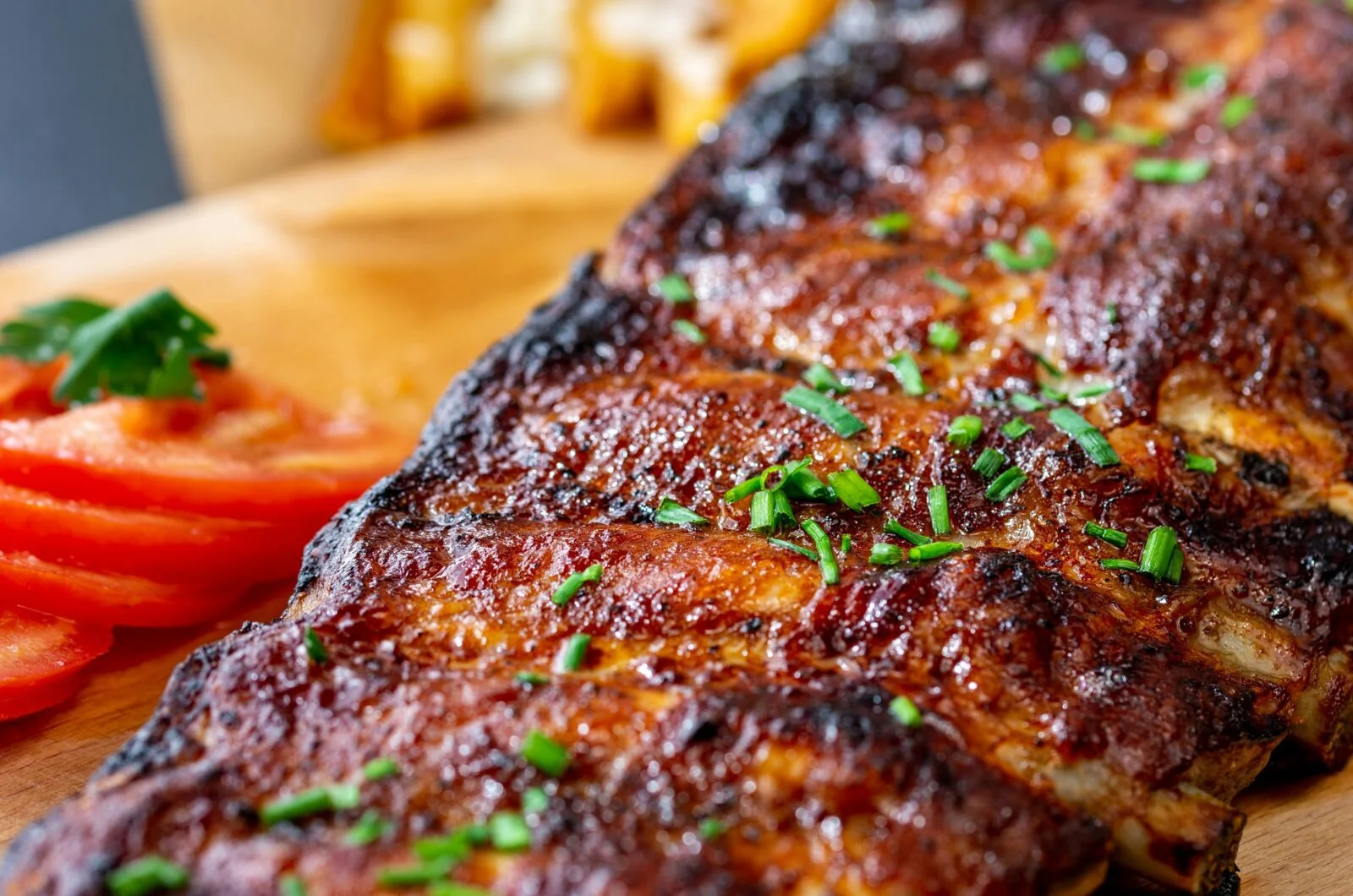
Costillas de Cerdo al Horno – Sticky Spanish-Style Oven Ribs
Ingredients
- 1.5 kg 3.3 lb baby back pork ribs, approximately 2 racks
- 2 liters 8½ cups water, previously boiled and completely cooled
- 60 g 2.1 oz kosher salt or coarse sea salt, weighed rather than measured by volume
- 2 tbsp granulated sugar
- **For the beer and apple cider vinegar glaze**
- 250 ml 1 cup + 2 tsp apple cider vinegar
- 50 g ¼ cup granulated sugar
- 1 tbsp hot sauce such as Tabasco or a Spanish hot sauce
- 1 tbsp coarsely crushed red peppercorns
- 1 tsp Worcestershire sauce
- 250 ml 1 cup + 2 tsp pale lager, at room temperature
- Fine sea salt to taste
- Freshly ground black pepper to taste
- Reserved glaze prepared before any contact with raw pork
- Patatas bravas tomato salad or grilled vegetables
- Crusty bread optional
Method
- Bring the water to a boil, then remove it from the heat. Stir in the kosher salt and 2 tablespoons of sugar until completely dissolved. Allow the brine to cool completely, then chill it in the refrigerator before adding the pork.
- Place the ribs in a large food-safe container or sealable brining bag. Pour the cold brine over them, making sure the meat is fully submerged. Cover and refrigerate for at least 5 hours or overnight. Never leave the ribs in brine at room temperature.
- Remove the ribs from the brine and discard the liquid. Dry the ribs thoroughly with paper towels. If the thin membrane is still attached to the bone side, loosen it with a blunt knife and pull it away using a paper towel for grip.
- To prepare the glaze, combine the apple cider vinegar, pale lager, 50 g of sugar, hot sauce, coarsely crushed red peppercorns and Worcestershire sauce in a saucepan. Add a little salt and freshly ground black pepper. Bring to a boil, then reduce the heat and simmer gently for approximately 5 minutes, stirring until the sugar has dissolved.
- Taste the glaze and adjust the seasoning if necessary. It will still be fairly thin at this stage; it develops its coating as it is brushed onto the ribs during cooking. Before brushing the raw meat, pour approximately 240 ml (1 cup) into a separate clean container to use later as a dipping sauce. Refrigerate that portion until needed.
- Preheat the oven to 135°C (275°F). Place a wire rack inside a deep roasting tray and arrange the ribs on top, meat side up. If necessary, cut the racks into smaller sections so they fit without overlapping.
- Brush the ribs generously with the glaze intended for cooking. Cover the roasting tray tightly with aluminum foil, making sure the foil doesn’t press directly onto the meat.
- Place the covered ribs in the oven and bake for approximately 2 hours. The low heat and covered tray allow the ribs to cook gently while retaining moisture.
- Carefully remove the roasting tray from the oven and lift away the foil, watching out for hot steam. Brush the ribs with another layer of glaze.
- Return the ribs to the oven, uncovered, and continue cooking for approximately 45–60 minutes. Brush with more glaze every 20 minutes, building up several thin layers. Watch the surface carefully toward the end so the sugar does not burn.
- Check the ribs for tenderness. The meat should have pulled back slightly from the ends of the bones, and a skewer should slide between the bones with very little resistance. If the ribs are still firm, cover them loosely and continue cooking, checking every 15–20 minutes.
- When the ribs are tender and the glaze has become sticky, remove them from the oven. Brush once more with the cooking glaze if desired. Leave to rest for approximately 10 minutes before cutting between the bones.
- Warm the reserved dipping sauce in a clean saucepan. Transfer the ribs to a serving platter and serve with the sauce, patatas bravas, a tomato and onion salad or grilled vegetables.