Hola friends! In our first week in Spain, we bought a tiny bottle just because we liked it. We thought there was olive oil inside. Back home, it turned out to be a golden, honeyed sweet wine, which was a lovely surprise. We liked it so much that we went back, and that’s when someone explained what Moscatel really is.
Since then, we’ve bought it often, usually at Bodega Riko in Xaló. However, you can find it almost everywhere in this part of Spain. So let’s find out what Moscatel is, where it comes from, how it tastes, and how to use it in your kitchen.
What Is Moscatel?
Moscatel is the Spanish name for the Muscat grape. It’s also the name of the sweet, aromatic wines made from it. In our corner of Spain, the grape is usually Muscat of Alexandria. It’s a white grape with a strong, floral perfume.
Moscatel Wine or Mistela?
This is where the labels get confusing. On the Costa Blanca, you’ll see two styles:
- Moscatel wine: a sweet wine made from Muscat grapes, such as the Moscatel de la Marina from Alicante.
- Mistela: a sweet liqueur wine of about 15% alcohol. It’s made by adding wine alcohol to fresh grape must. The alcohol stops the fermentation, so the natural grape sugar stays in the bottle.
Some mistelas are made entirely from Moscatel, so the two words often overlap. As a result, a bottle sold simply as “Moscatel” may be either one. Check the label for the words vino or mistela.
Why It Tastes So Sweet
In both cases, the sweetness comes from the grapes themselves. Fermentation is cut short or stopped, so the sugar remains. One mistela of Moscatel is described as made from sun-dried grapes, which concentrates the sweetness even more.
Where Does It Come From?
Moscatel grows around the Mediterranean, and Spain has several regions that specialize in it. Ours is the Marina Alta, in the north of the province of Alicante. The wines here fall under the DO Alicante.
The Marina Alta and Xaló
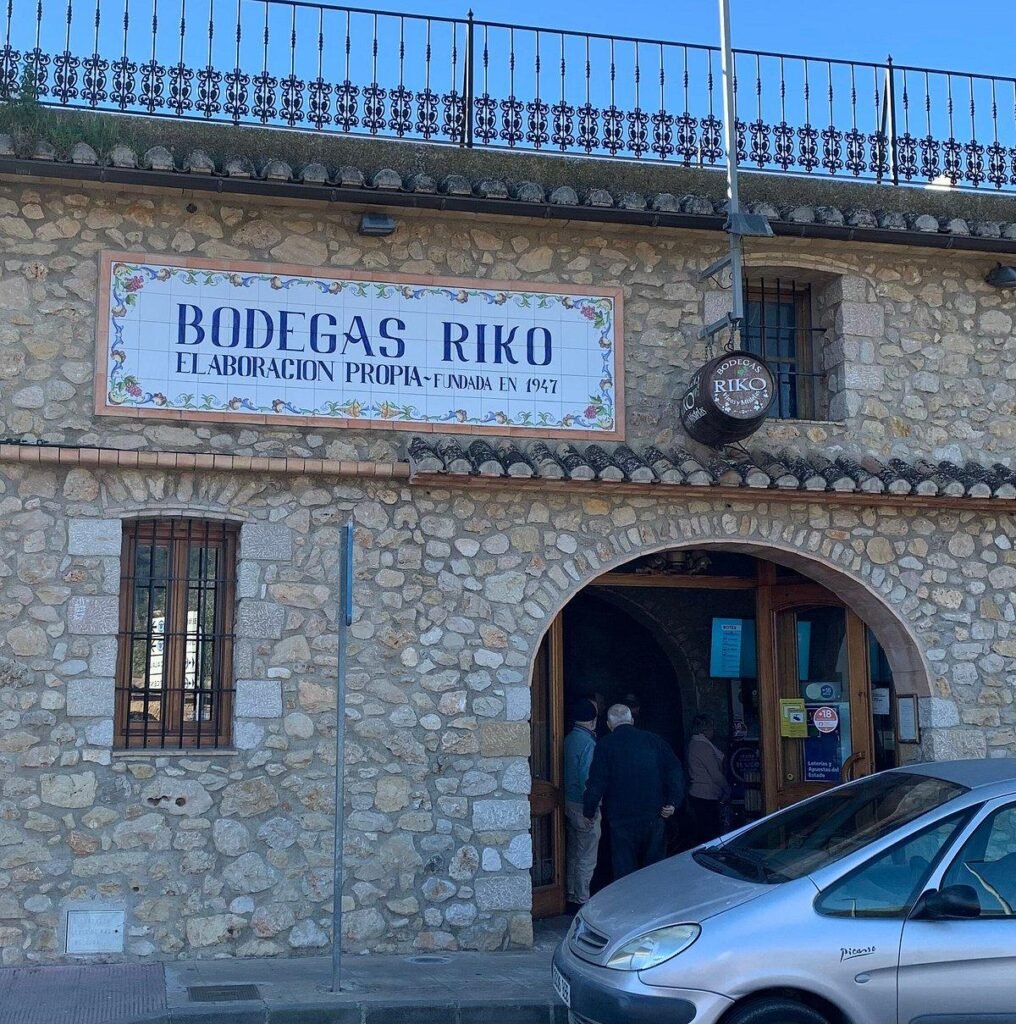
Xaló (also spelled Jalón) lies in the Jalón Valley, and it’s the center of the Moscatel tradition in our area. Bodegas Xaló is based here, and its mistelas are typical of the Marina Alta. Bodega Riko is a historic winery in the village, and it grows Moscatel and another local grape called Giró. It makes wines, vermouth, and mistelas.
Visiting a Winery
If you’d like to taste before you buy, Bodega Riko offers guided visits in English, Spanish, and Catalan. The listed opening hours are Monday to Friday from 9:30 to 13:30 and 16:00 to 20:00, and Saturday from 9:30 to 14:00. It’s closed on Sunday. Opening hours can change, so check before you go. Since Xaló also has its rastro on Saturdays, you could combine the two in one morning. Our Costa Blanca market days overview lists the other markets nearby.
What Does It Taste Like?
Moscatel is sweet, but it isn’t heavy. It smells of white flowers, honey, ripe grapes, and orange peel. Good bottles also have enough acidity to keep the sweetness fresh. One Alicante Moscatel, for example, has about 171 grams of sugar per liter, which is far less than a Pedro Ximénez.
Moscatel vs. Pedro Ximénez
These two sweet wines are easy to mix up, but they’re quite different. Our Pedro Ximénez guide explains PX in detail. PX is dark and syrupy, with notes of raisins and toffee. Moscatel is golden, lighter, and more floral. As a result, PX works as a dessert in itself, while Moscatel is easier to drink in larger glasses.
How to Use It in Cooking
Moscatel works at the table and in the kitchen.
At the Table
Serve it well chilled, at around 46 to 50°F (8 to 10°C). Pour it in a small glass, as a dessert wine or an afternoon treat. It also goes well with:
- Cured cheeses: Manchego or Parmesan. See our Spanish cheese guide.
- Fresh fruit: peaches, pears, and figs.
- Almonds: a handful of Marcona almonds is a classic.
- Simple desserts: sponge cake, flan, or ice cream.
In the Kitchen
Moscatel adds a floral sweetness to cakes. It’s also good for poaching fruit, such as pears or peaches. Simmer the fruit in Moscatel with a strip of lemon peel until it’s soft, and serve it with its syrup.
Our Favorite: The Moscatel Olive Oil Cake
We bake a Moscatel olive oil cake often. It uses 120 ml (½ cup) of Moscatel in the batter, and it’s lovely with afternoon coffee. If friends come over for dinner, we serve a slice with a small glass of chilled Moscatel. Here’s the full recipe: Spanish Moscatel Olive Oil Cake.
What Can You Substitute?
If you can’t find Moscatel, try one of these:
- Sauternes: a French sweet wine, and the original choice for the cake that inspired ours. It’s usually more expensive.
- Late-harvest white wine: look for something sweet and floral.
- Cream sherry: it’s nuttier and a little darker, but it works in cakes.
- Moscato d’Asti: an Italian Muscat wine, lighter and often slightly fizzy, so it’s best for drinking.
Keep in mind that these are our suggestions, so taste as you go.
How to Store It
Close the bottle tightly, and keep it in the fridge after opening. Because it’s rich in sugar and, in the case of mistela, fortified, it holds up better than a dry wine. Even so, it tastes best cold and fresh, so check the producer’s advice on the label. Unopened bottles keep in a cool, dark cupboard.
What Does It Cost?
Moscatel is easy on the wallet. Here are two examples from the online shop Licorea. The pages didn’t show a date, so check the current price.
| Product | Size | Alcohol | Price |
|---|---|---|---|
| Vall de Xaló, Mistela de Moscatel, Bodegas Xaló | 75 cl | 15% | €5.50 |
| Moscatel Vall de Gorgos, Bodegas Xaló | 2 liters | 15% | €9.95 |
At those prices, it’s easy to keep one bottle for baking and one for drinking.