Hola friends! Some bottles in a Spanish pantry look like a mistake. The liquid is nearly black, it pours like syrup, and it smells like raisins and toffee. That’s Pedro Ximénez, or PX for short, one of the sweetest wines in the world, and also one of the most useful things you can keep in your kitchen.
We live in Spain, where PX turns up everywhere. It’s poured over ice cream, served with blue cheese, and reduced into sauces for pork. Better still, it comes in two forms: a sweet wine and a sweet vinegar. So let’s look at what PX is, where it comes from, how to use it, and what to buy.
What Is Pedro Ximénez?
Pedro Ximénez is a white grape grown in southern Spain. It’s also the name of the sweet wine made from it. To carry the name, a wine must contain at least 85% of the grape.
A Wine Made from Raisins, Almost
The grapes are picked ripe and then dried in the sun. This step is called asoleo, and it concentrates the sugar. Because so much water evaporates, the juice yield drops sharply. As a result, the wine is very sweet, and very dark.
Sweet Wine, Sweet Vinegar, and Dry Wine
You’ll see PX on shelves in a few forms:
- PX wine: the classic dessert wine, sweet and syrupy.
- PX vinegar: a sweet, dark vinegar made with PX must. We’ll cover it below.
- Dry PX wine: Montilla-Moriles also makes dry wines from the grape, including fino-style wines. They’re much less common, but they exist.
What About the Name?
Nobody is sure where it comes from. One old story credits a German or Flemish soldier named Peter Siemens, but it lacks proof. A more likely explanation is that the grape was named after a local grower with the surname Ximénez or Jiménez.
Where Does It Come From?
PX belongs to Andalusia. Two regions matter most: Jerez, the home of sherry, and Montilla-Moriles, a hot, dry area in the province of Córdoba.
Jerez and Montilla-Moriles
Sun-drying was historically practiced in Jerez. However, most of the base wine now comes from Montilla-Moriles, where the warmer, drier climate reduces the risk of rot. Some of it is then moved to Jerez to age, and it can be labeled as sherry. Therefore, a bottle of PX may come from either region, depending on the label.
How the Wine Is Made
The process is unusual, because the fermentation is only partial:
- Drying: the grapes are picked in late August or early September, and they dry in the sun for about seven to fifteen days.
- Pressing and fermenting: the yeast works for a short time, and then it stops by itself at around 5 to 6% alcohol. Most of the sugar stays in the wine.
- Fortifying: producers add grape spirit to bring the wine to roughly 15 to 17% alcohol.
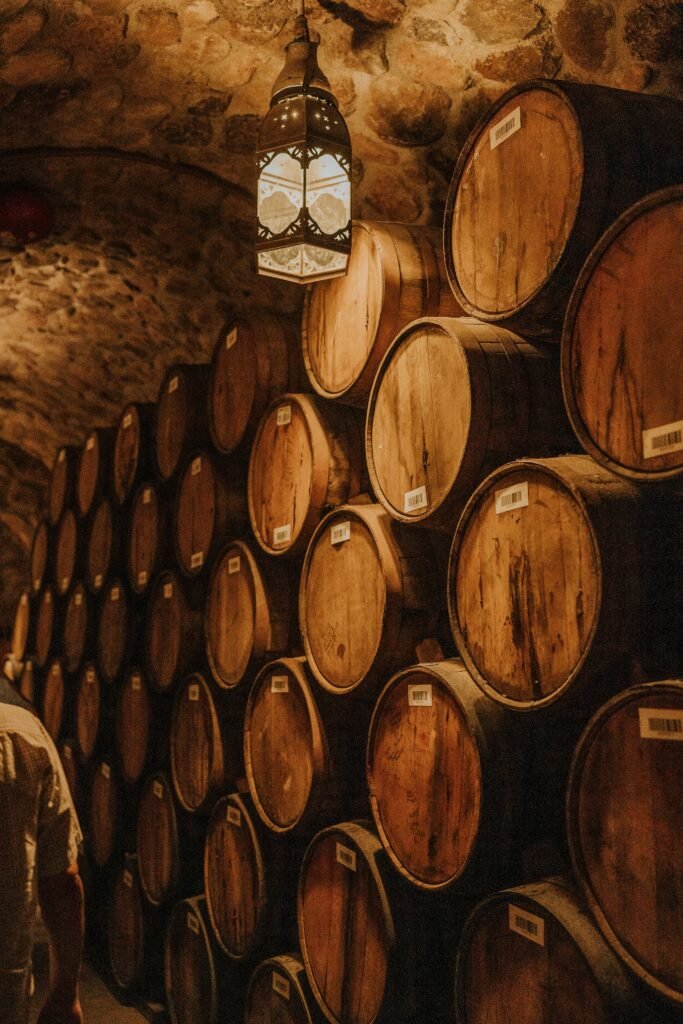
- Aging: PX ages in old oak barrels in a solera system, often for years, and sometimes for decades. Unlike fino sherry, it ages without a layer of flor yeast.
How Sweet Is It?
PX must contain at least 212 grams of sugar per liter, and many bottles have 300 to 400 grams. That’s far sweeter than most dessert wines. Because of this, it’s best served in small glasses.
What Does It Taste Like?
PX is rich, sticky, and intense. The color ranges from deep amber to almost black. Young wines taste of raisins, dates, and dried figs, often with chocolate and spice. Older ones add coffee, licorice, and orange peel.
Does Age Matter?
Yes, it does. Wines with 30 or more years of age can become more savory, with herb, tar, and smoke notes. They stay sweet, but they gain acidity and elegance. In other words, the older the bottle, the more complex it tastes.
And the Vinegar?
PX vinegar is syrupy and dark, with a strong raisin aroma. Its flavor is bittersweet. Under the Montilla-Moriles rules, sweet PX vinegars must contain at least 70 grams of sugar per liter. They’re also aged in wood, so you’ll find categories such as Crianza (at least six months), Reserva (at least two years), and Gran Reserva (at least ten years). If you already know our sherry vinegar guide, think of this as its sweeter cousin.
How to Use It in Cooking
PX works at the table and in the kitchen. You only need a little, so a bottle lasts a long time.
Serving It as a Drink
Serve PX in a small glass, slightly chilled. Young wines are best at around 10°C (50°F), while older ones suit 12 to 14°C (54 to 57°F). It’s a dessert in itself, and it also goes well with other sweet things.
Easy Ideas for the Wine
- Over vanilla ice cream: the classic. Pour a spoonful over each scoop, and it tastes like raisins and caramel.
- With blue cheese: try it with a strong blue such as Cabrales, which we cover in our Spanish cheese guide.
- With aged hard cheese: drizzle a little over shavings of Parmigiano Reggiano.
- With chocolate desserts: dark chocolate and PX are a natural match.
- In sauces: reduce a few tablespoons in a pan to make a glossy sauce for pork, duck, or roasted vegetables.
- In cocktails: a small splash adds sweetness and body without syrup.
Easy Ideas for the Vinegar
PX vinegar is milder and sweeter than regular vinegar. As a result, it works well in places where you’d use balsamic vinegar. Whisk it into a vinaigrette with olive oil, drizzle it over roasted vegetables, or splash it on strawberries. Also, a few drops over grilled meat or a goat cheese salad is delicious.
A Simple PX Sauce
Pour 1/2 cup of PX into a small pan, and simmer it over medium heat until it’s reduced by about half. It should coat the back of a spoon. Take it off the heat, and spoon it over pork, ice cream, or cheese.
What Can You Substitute?
There’s no exact match for PX, but you can get close:
- Cream sherry or sweet oloroso: not as sweet or dark, but a good option for sauces.
- Port: use a tawny, and reduce it a little longer.
- Raisins soaked in hot water: for ice cream or desserts, you can use a spoonful of the syrup.
- For the vinegar: reduce a little balsamic vinegar, or mix a spoonful of honey into sherry vinegar.
Keep in mind that these are our suggestions, so taste as you go.
How to Store It
Close the bottle tightly after opening it. Keep it in the fridge, and it will last for months. Take it out about 30 minutes before serving. Because the sugar acts as a preservative, PX is one of the more forgiving wines to keep. The vinegar can stay in the pantry, in a cool, dark place, away from the stove.
What Does It Cost?
Prices vary widely, from a few euros to several dozen. Here’s what we found at El Corte Inglés in Spain. The pages didn’t show a date, so check the current price before you buy.
| Product | Size | Price |
|---|---|---|
| Alvear Pedro Ximénez, sweet wine, DO Montilla-Moriles | 75 cl | €8.10 |
| Alvear Pedro Ximénez 1927, old sweet wine, DO Montilla-Moriles | 75 cl | €20.35 |
| Vinagre de Jerez Reserva al Pedro Ximénez DOP, El Corte Inglés Selection | 250 ml | €4.15 |
Notice that the Alvear 1927 costs more than twice as much as the basic bottle, because it’s older. For cooking, the basic one is enough.