There’s something wonderful about sitting down to a bowl of cold salmorejo on a hot Spanish afternoon.
It’s rich and silky, with the beautiful flavor of ripe tomatoes, good olive oil and just a hint of garlic. Then come the traditional toppings: chopped hard-boiled egg and little pieces of Spanish ham.
If you’ve never tried it before, you might assume it’s simply a thicker version of gazpacho.
But once you’ve tasted proper salmorejo, you’ll discover that it’s a very different dish.
And one that deserves a place in your summer recipe collection.
A Taste of Córdoba
Salmorejo is one of the great culinary specialties of Córdoba, the beautiful Andalusian city famous for its historic streets, flower-filled patios and extraordinary Mezquita-Cathedral.
It’s the kind of dish you’ll find in traditional taverns and restaurants throughout the city, often served in small bowls as a starter or tapa.
And there’s something lovely about how little it needs.
Ripe tomatoes, bread, garlic, extra virgin olive oil and salt.
That’s essentially it.
No cream, no butter and no complicated cooking techniques.
The creamy texture comes entirely from the bread and olive oil, which are blended with the tomatoes to create a thick, velvety emulsion.
Salmorejo vs. Gazpacho: What’s the Difference?
Both salmorejo and gazpacho are served cold, and both are closely associated with Andalusian cooking.
But they aren’t interchangeable.
Gazpacho is generally lighter and more liquid, often made with tomatoes, cucumber, peppers, garlic, olive oil and vinegar. You can even drink it from a glass.
Salmorejo is much thicker.
It contains a generous amount of bread, which gives the finished soup a smooth, creamy consistency. You eat it with a spoon rather than drinking it.
The flavor is also different.
Where gazpacho has the freshness of several raw vegetables, salmorejo allows the tomatoes and olive oil to take center stage.
And then there are the toppings.
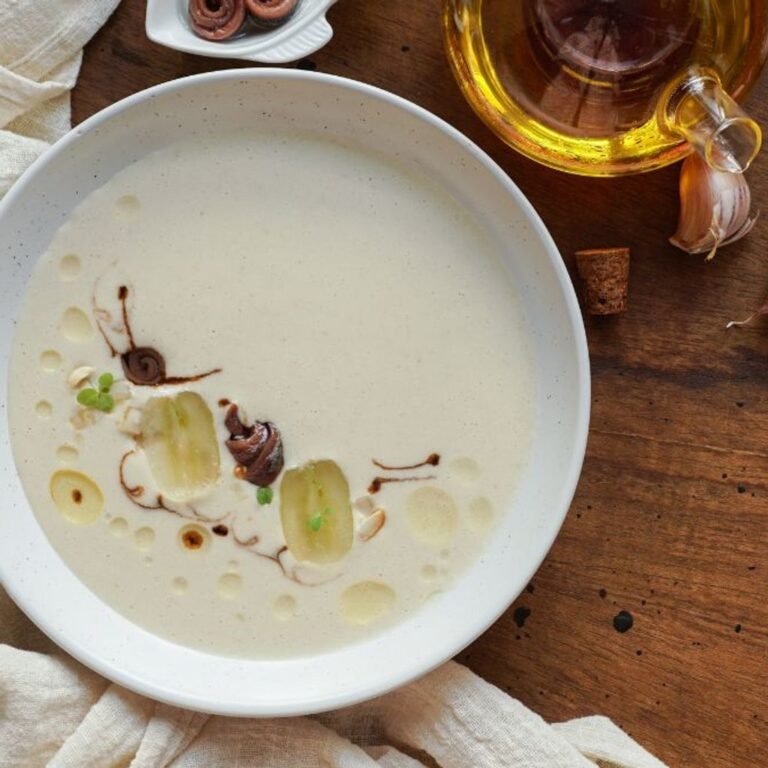
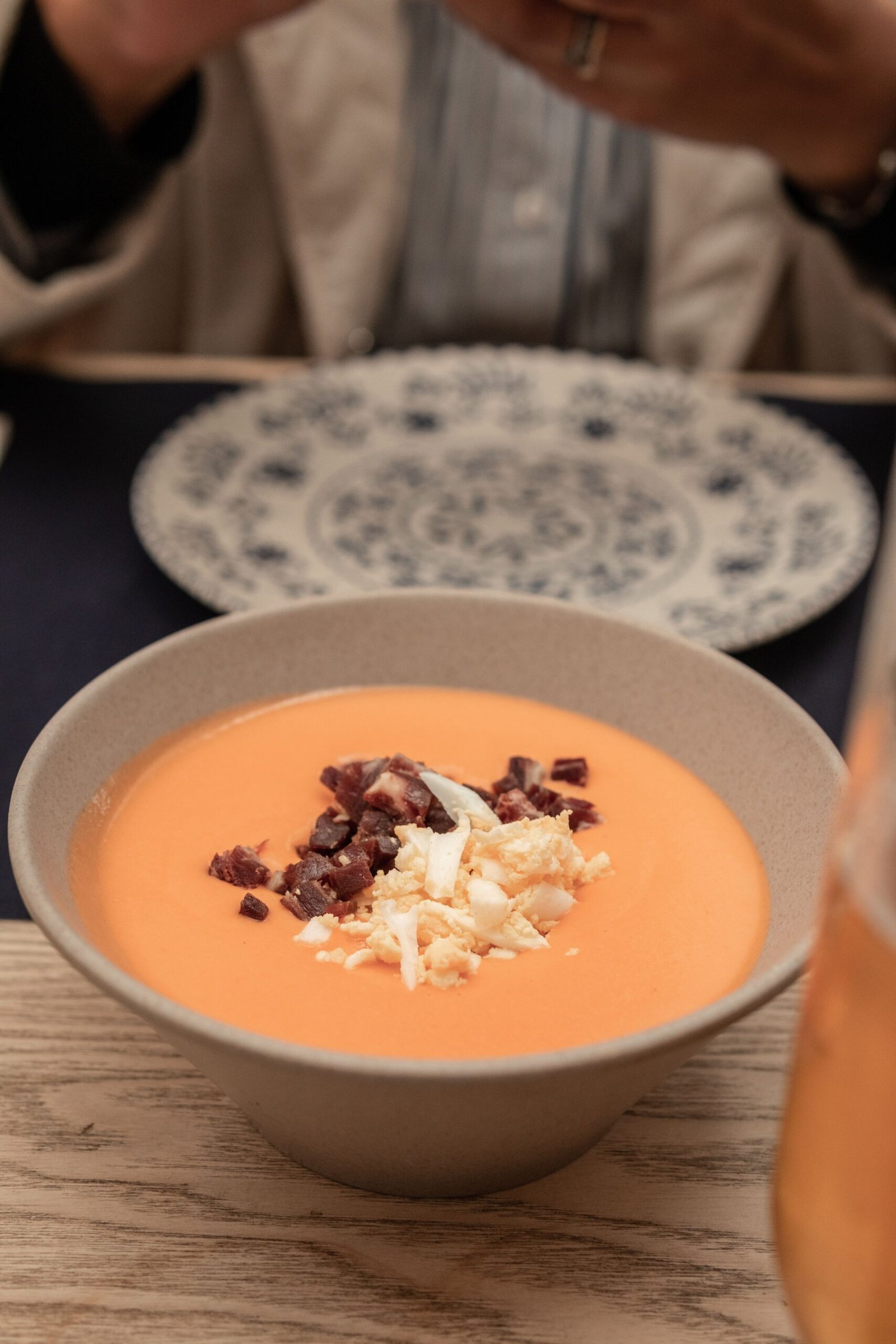
Traditionally, salmorejo is finished with chopped hard-boiled egg, Spanish ham and sometimes an extra drizzle of olive oil.
That makes it wonderfully satisfying.
Why Good Tomatoes Matter
When a recipe contains so few ingredients, their quality becomes especially important.
For salmorejo, I always look for properly ripe tomatoes.
They should smell like tomatoes, feel heavy for their size and have plenty of flavor.
Spanish tomates de pera, the familiar pear-shaped tomatoes, are an excellent choice because they have a lovely balance of sweetness, acidity and flesh.
Roma tomatoes work well too.
If the tomatoes are bland, the finished salmorejo will be bland. There’s really nowhere for poor ingredients to hide.
The Bread Is What Makes It Creamy
One of the most interesting things about salmorejo is that it doesn’t contain any dairy products.
That luxurious, creamy consistency comes from bread.
In Córdoba, a traditional choice is pan de telera, a local bread with a soft, fairly dense crumb.
At home, you can use good-quality white bread from the previous day.
I remove the hard crusts, tear the bread into pieces and allow it to absorb the tomato juices before blending.
The bread helps thicken the mixture, while the olive oil gives it a beautiful silky finish.
The result should be thick enough to hold a spoonful of chopped egg and ham on the surface.
Why I Add the Olive Oil Slowly
The other secret to good salmorejo is the way the olive oil is incorporated.
Rather than pouring everything into the blender at once, I like to add the olive oil gradually while the blender is running.
This helps create that smooth, creamy texture that makes salmorejo so distinctive.
Choose an extra virgin olive oil you enjoy tasting.
I particularly like a Spanish olive oil with a gentle, fruity character, because you want to taste the tomatoes as well as the oil.
A very bitter or intensely peppery oil can overwhelm the delicate balance.
The Traditional Toppings
For me, salmorejo doesn’t feel quite complete without its classic garnish.
A little finely chopped hard-boiled egg and some good Spanish ham.
Jamón serrano works beautifully, although you’ll also see versions finished with jamón ibérico.
The egg adds richness, while the salty ham provides a lovely contrast to the sweet, creamy tomato base.
I like to finish each bowl with a small drizzle of extra virgin olive oil.
And that’s all it needs.
What to Serve with Salmorejo
Salmorejo is delicious as a starter before grilled fish, chicken or other Mediterranean dishes.
But I also think it makes a lovely light lunch, especially when served with good bread and a simple salad.
On a hot day, I often prefer this kind of meal to anything heavy.
You can prepare the salmorejo in advance and keep it in the refrigerator until you’re ready to serve.
Just add the egg and ham at the last minute.
And although it’s traditionally served cold, I don’t like it so icy that you can barely taste the tomatoes.
Beautifully chilled is perfect.
It’s another lovely reminder that some of Spain’s most memorable dishes are made from the simplest ingredients.
Ripe tomatoes, bread, olive oil and a little patience.
Sometimes that’s all you need.
Salmorejo Cordobés – Traditional Spanish Cold Tomato Soup
Ingredients
- **For the Salmorejo**
- 1 kg 2.2 lb ripe pear-shaped tomatoes or Roma tomatoes, roughly chopped
- 200 g 7 oz day-old white bread, crusts removed
- 1 medium garlic clove about 5 g, peeled
- 100 ml about ⅓ cup plus 1 tbsp plus 1 tsp Spanish extra virgin olive oil
- 1 tsp about 6 g fine sea salt, plus more to taste
- 1 tbsp 15 ml sherry vinegar, optional, to taste
- **For the Topping**
- 2 large eggs hard-boiled, peeled and finely chopped
- 50 g 1.75 oz jamón serrano, finely chopped or cut into small strips
- 1 tbsp extra virgin olive oil for drizzling, optional
Method
- Wash the tomatoes thoroughly and remove the tough stem ends. Cut them into large pieces and place them in a high-powered blender or a tall container suitable for an immersion blender.
- Blend the tomatoes until completely smooth. For an especially silky texture, pass the tomato purée through a fine-mesh sieve to remove the skins and seeds, then return it to the blender.
- Remove the hard crusts from the bread and tear the soft crumb into smaller pieces. Add the bread to the tomato purée and leave it for approximately 5–10 minutes, allowing it to absorb the tomato juices.
- Add the peeled garlic clove and the salt. Blend for 2–3 minutes, stopping occasionally to scrape down the sides, until the bread has completely disappeared into the mixture.
- With the blender running at a moderate speed, slowly drizzle in the extra virgin olive oil. Continue blending until the salmorejo becomes thick, smooth and creamy, with a slightly lighter orange-red color.
- Taste the salmorejo and adjust the salt if necessary. If your tomatoes need a little more acidity, add a small amount of sherry vinegar, beginning with 1 teaspoon and increasing up to 1 tablespoon only if needed. For the traditional Cordobés version, leave out the vinegar.
- Transfer the salmorejo to a covered container and refrigerate for at least 1 hour, or until thoroughly chilled.
- Meanwhile, prepare the hard-boiled eggs and chop them finely. Cut the jamón serrano into small pieces or thin strips. Keep the toppings refrigerated until serving.
- Stir the chilled salmorejo and taste it once more. If it has become excessively thick, blend in a small spoonful of cold water, although traditional salmorejo should remain considerably thicker than gazpacho.
- Divide between four small bowls or deep plates. Arrange the chopped egg and jamón serrano over the top and finish with a little extra virgin olive oil, if desired.
- Serve chilled, with good crusty bread alongside if you wish.
Nutrition
Notes
Private Notes
What Is Salmorejo Cordobés?
Salmorejo Cordobés is a thick, chilled tomato soup from Córdoba, in the Spanish region of Andalusia.
It’s made by blending ripe tomatoes, white bread, garlic, extra virgin olive oil and salt into a creamy, smooth mixture.
Despite its rich texture, traditional salmorejo contains no cream or milk.
The bread thickens the mixture, while the olive oil creates its beautifully silky consistency.
It’s traditionally served with finely chopped hard-boiled eggs and Spanish ham.
What Is the Difference Between Salmorejo and Gazpacho?
Although both dishes are served cold, they have noticeably different textures and ingredients.
Gazpacho is generally lighter, thinner and made with a wider variety of fresh vegetables, commonly including cucumber and peppers.
Salmorejo uses more bread and olive oil, giving it a thicker, creamier texture.
Gazpacho is sometimes served in a glass, while salmorejo is usually eaten with a spoon.
The traditional toppings also differ, with chopped egg and Spanish ham being particularly associated with salmorejo.
Does Traditional Salmorejo Contain Vinegar?
The standardized recipe published by the Cofradía Gastronómica del Salmorejo Cordobés contains no vinegar.
Its acidity comes naturally from ripe tomatoes.
However, some home cooks add a little vinegar according to personal preference.
If you decide to use it, add only a small amount at first. The goal is to enhance the tomato flavor rather than make the salmorejo noticeably sour.
Why Is My Salmorejo Not Creamy?
The texture depends on three things: the amount of bread, the olive oil and how thoroughly everything is blended.
Make sure the bread has softened in the tomato purée before blending.
Then blend until completely smooth and incorporate the olive oil gradually.
If you use too little bread or add too much water, the result will be closer to gazpacho.
A powerful blender also helps achieve the characteristic velvety texture.
Do You Need to Peel Tomatoes for Salmorejo?
Not necessarily.
If you have a powerful blender, you can blend the tomatoes with their skins and strain the purée afterward.
This removes coarse skins and seeds without requiring you to peel each tomato individually.
For a particularly refined texture, I prefer straining the tomatoes before adding the bread and olive oil.
Can You Make Salmorejo Without Bread?
You can make a chilled tomato purée without bread, but it won’t have the same traditional texture.
Bread is an essential ingredient in classic salmorejo.
It gives the soup body and helps create the thick, creamy consistency that distinguishes it from gazpacho.
If you need a gluten-free version, use a suitable gluten-free white bread, although the final texture may vary.
What Is the Best Olive Oil for Salmorejo?
Spanish extra virgin olive oil is an excellent choice.
Because the oil is never heated, its flavor is particularly noticeable.
A fruity oil with moderate bitterness and pepperiness is ideal.
I prefer using an olive oil that complements the natural sweetness of the tomatoes rather than dominating it.
What Should You Serve with Salmorejo?
Salmorejo is delicious as a first course or part of a Spanish tapas meal.
For a traditional presentation, top it with hard-boiled egg, Spanish ham and a little olive oil.
It also works beautifully before grilled fish, chicken or other Mediterranean dishes.
And during hot weather, a generous bowl with good bread can make a wonderfully satisfying light lunch.