There are certain things you see in almost every Spanish supermarket, and garlic and parsley oil is one of them.
I can easily pick up a bottle at Mercadona or Masymas, both of which are familiar stops on our grocery-shopping trips here in Spain. And I understand why it’s so popular. A little garlic and parsley oil can transform a piece of grilled fish, some roasted potatoes or vegetables into something delicious.
But I have a confession.
I don’t particularly enjoy the texture of some of the ready-made versions.
The parsley can be quite coarse, and sometimes there are little pieces of leaves or stems that feel surprisingly firm in your mouth. I really dislike that sensation, especially when something catches in the back of my throat.
I’m exactly the same with fish bones. I can be enjoying the most wonderful piece of fish, but the moment I discover a tiny bone, that’s it for me. I simply can’t enjoy the rest.
So when I make aceite de perejil y ajo at home, I want it beautifully smooth. No coarse parsley, no little pieces of garlic, just a fragrant green oil that adds wonderful flavor to whatever I’m cooking.
And fortunately, it couldn’t be easier to make.
What Is Aceite de Perejil y Ajo?
In Spanish, aceite de perejil y ajo simply means garlic and parsley oil.
It’s a familiar preparation in Spanish cooking, especially for grilled fish, seafood, chicken, potatoes and vegetables.
You’ll often come across the combination described as ajo y perejil, meaning garlic and parsley. Some versions are made by finely chopping the ingredients and stirring them into olive oil, while others are blended into a smoother mixture.
I much prefer the blended version.
The parsley gives the oil its beautiful green color, the garlic adds a lovely savory bite, and good Spanish extra virgin olive oil brings everything together.
A little salt is all you need.
Why I Prefer Making My Own
Apart from the texture, one of the things I love about making garlic and parsley oil at home is being able to control exactly what goes into it.
Some days I want a stronger garlic flavor. Other times, especially when I’m serving delicate white fish, I prefer something milder.
I also like choosing my own olive oil.
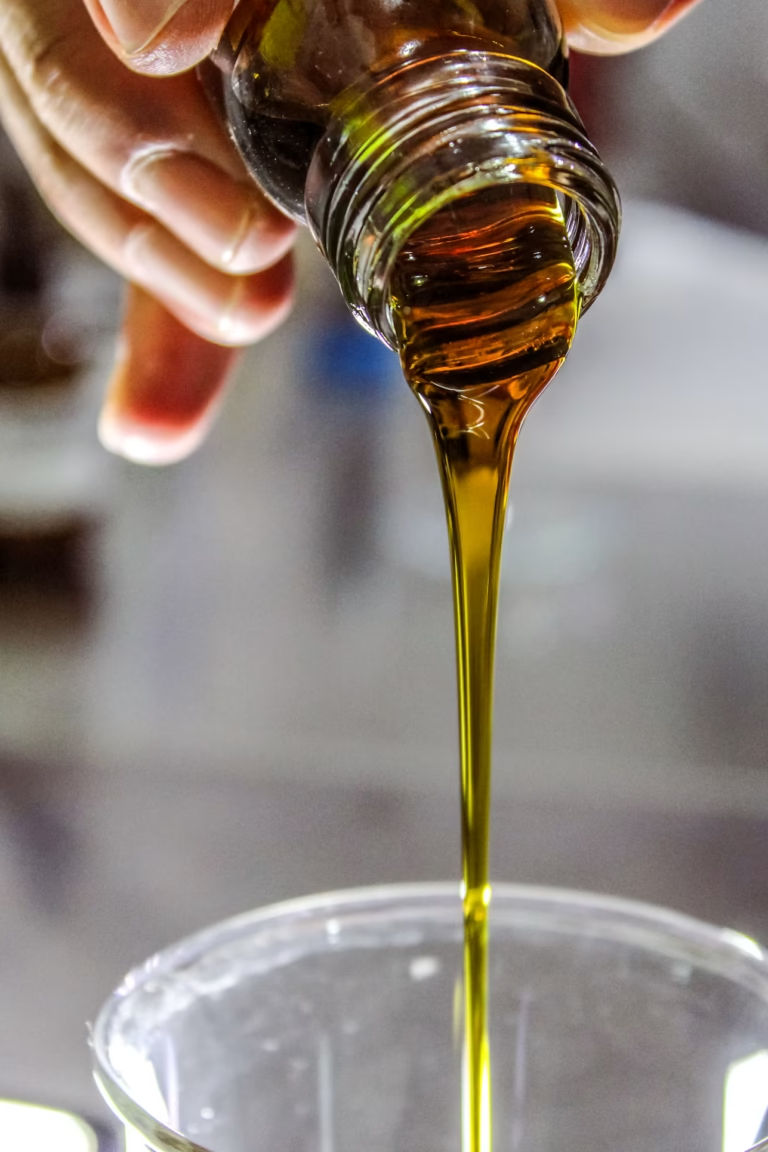
A good Spanish extra virgin olive oil with a gentle, fruity flavor works beautifully here. You want the oil to complement the parsley and garlic rather than overpower them.
And because the recipe has only four ingredients, their quality really makes a difference.
How to Make Garlic and Parsley Oil Beautifully Smooth
For me, the secret is removing the thick parsley stems before blending.
The tender leaves are much easier to turn into a fine mixture, while the larger stems can remain fibrous even after using a hand blender.
I wash the parsley, dry it thoroughly and blend it with the garlic, olive oil and salt until everything is finely combined.
If I want the oil completely smooth, I pass it through a very fine sieve or a suitable food-safe filter.
This removes the remaining parsley particles and garlic fibers, leaving a silky, fragrant finishing oil.
The strained version is particularly lovely over grilled fish because you get all that wonderful flavor without the coarse pieces of herbs.
If you prefer a thicker, more rustic mixture, you can simply leave it unstrained.
Both versions are delicious.
Why Does Olive Oil Solidify in the Refrigerator?
There’s something worth knowing when you store homemade garlic and parsley oil in the refrigerator.
You might notice that the oil becomes cloudy, thicker or even partially solid.
Don’t worry. This is completely normal.
Olive oil contains different fatty acids and naturally occurring compounds that can begin to crystallize at refrigerator temperatures. As a result, the oil may lose its clear appearance and develop a thicker consistency.
This can happen with excellent extra virgin olive oil, and it doesn’t mean anything is wrong with it.
However, it isn’t a reliable test of quality. Not every high-quality olive oil solidifies in the same way, and the temperature of your refrigerator also makes a difference.
When you’re ready to use the oil, simply take out the portion you need. As it warms slightly, it will gradually become liquid again.
Because this recipe contains fresh garlic and parsley, always keep the remaining oil refrigerated and use it within four days. For longer storage, freeze it in small portions.
How I Use Garlic and Parsley Oil
This is one of those little preparations that I find myself reaching for again and again.
It’s wonderful spooned over grilled shrimp, white fish, chicken or roasted vegetables.
I also love it with potatoes, especially when they’ve been roasted until golden and slightly crisp.
And when we’re cooking outside, a little garlic and parsley oil is a lovely finishing touch for something straight from the barbecue.
Sometimes I’ll put a small bowl on the table with some good crusty bread, so everyone can help themselves.
It’s such a simple thing, but it brings so much flavor to a meal.
A piece of grilled fish, a few potatoes, a fresh salad and a spoonful of homemade garlic and parsley oil.
That’s the kind of food I love most.
And honestly, when dinner tastes this good, why make life any more complicated?
Spanish Garlic and Parsley Oil – Aceite de Perejil y Ajo
Ingredients
- 200 ml ¾ cup plus 1 tbsp plus 1 tsp Spanish extra virgin olive oil
- 30 g about 1 packed cup fresh flat-leaf parsley leaves, thick stems removed
- 4 medium garlic cloves peeled and roughly chopped
- ½ tsp fine sea salt or to taste
Method
- Rinse the parsley thoroughly under cold running water. Remove the thick, tough stems and any damaged leaves. Dry the parsley very thoroughly using a salad spinner or clean kitchen towel.
- Peel the garlic cloves and cut them into smaller pieces. This helps them blend evenly into the oil.
- Place the parsley leaves, garlic and salt in a tall, narrow blending container. Add approximately half the olive oil.
- Using an immersion blender, blend until the parsley and garlic are finely broken down. Move the blender gently through the mixture, scraping down the sides if necessary.
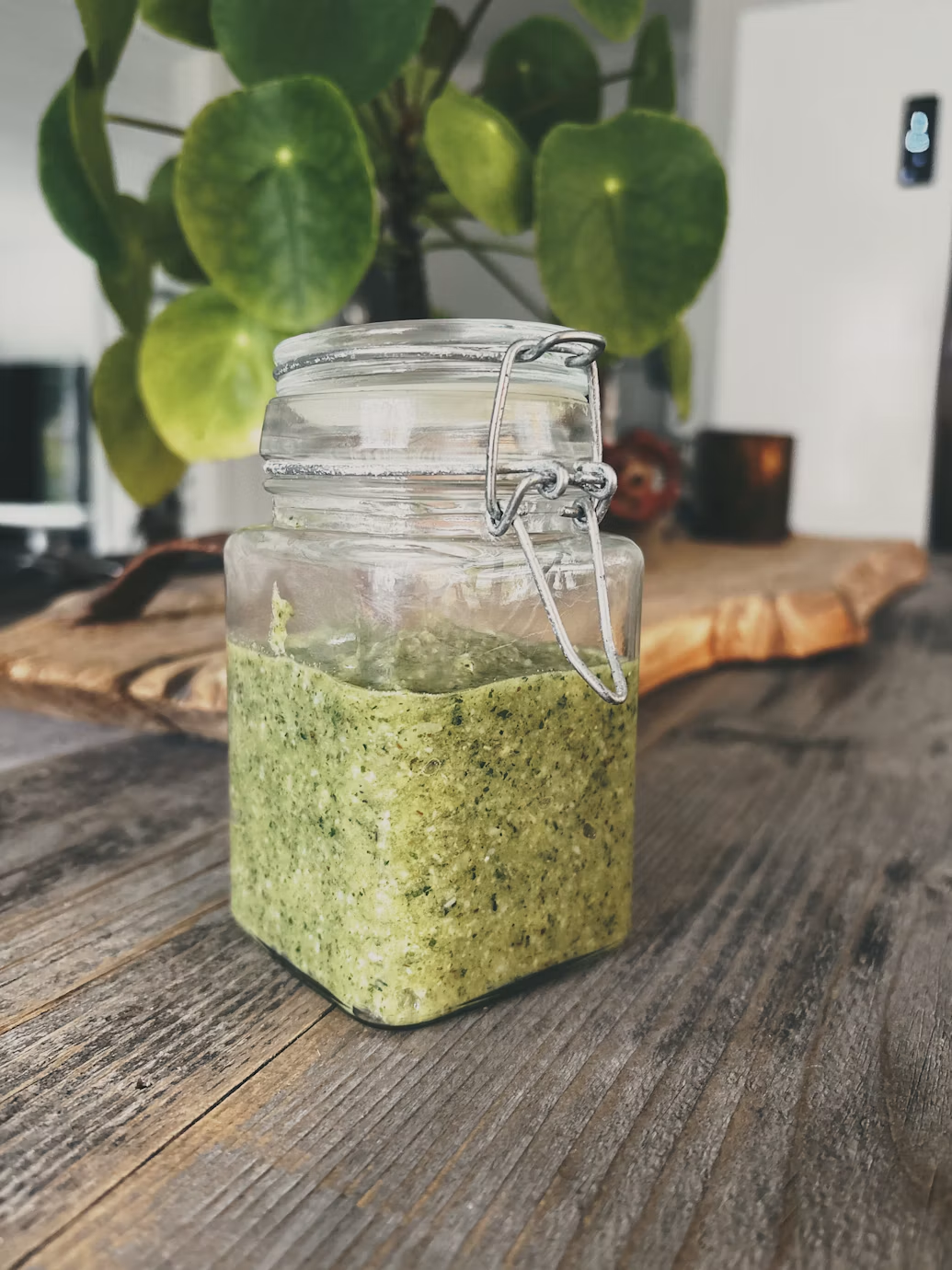
- Add the remaining olive oil and continue blending for another 30–60 seconds, until you have a smooth, evenly green mixture with no visible pieces of garlic.
- For a rustic garlic and parsley dressing, the oil is ready to use at this stage.
- For a smoother finishing oil, pour the mixture through a very fine-mesh sieve set over a clean bowl. Allow the oil to pass through, pressing gently if necessary. For an even finer result, filter through food-safe cheesecloth or a suitable fine filter.
- Taste and adjust the salt if needed. The oil should have a fresh parsley flavor and a pleasant garlic bite.
- Use immediately, or transfer to a clean airtight container and refrigerate promptly at 4°C (40°F) or below. Use within 4 days, or freeze in small portions for longer storage.