There is one thing I nearly always have tucked away in my freezer, and that’s homemade Spanish sofrito.
I make a generous batch, divide it into individual portions, and freeze it so it’s ready whenever I need it.
Especially when I’m making paella or another Spanish rice dish.
There’s something incredibly satisfying about knowing that the onions, garlic and tomatoes have already been cooked down into a beautiful, concentrated sauce. All that lovely flavor is waiting for me, and the longest part of the preparation is already done.
When I know I’m going to cook, I take out the portion I need and let it thaw safely. Sometimes I don’t even bother defrosting it completely; I simply add the frozen sofrito to the pan and heat it through before continuing with the recipe.
It’s one of those small habits that makes everyday cooking so much easier.
And the best part? Making sofrito requires very few ingredients.
Just onions, garlic, ripe tomatoes, olive oil and time.
What Is Spanish Sofrito?
Sofrito is one of the foundations of Spanish home cooking.
It’s a mixture of vegetables cooked gently in olive oil until their moisture evaporates and their flavors become concentrated.
There isn’t one single recipe used throughout Spain.
Some sofritos contain only onion and tomato. Others include garlic, peppers or additional ingredients, depending on the region and the dish being prepared.
What they have in common is the cooking technique.
The ingredients are given enough time to soften, lose their excess water and develop a deep, rounded flavor.
A well-made sofrito shouldn’t taste like raw tomatoes mixed with onions.
It should taste mellow, savory and slightly sweet, with a richness that comes from cooking rather than from adding lots of extra ingredients.
Why I Prefer Making a Large Batch
I have never understood why you would spend all that time making sofrito for just one meal when you can prepare enough for several.
Once the onions are chopped and the tomatoes are ready, making a larger batch doesn’t require much extra work.
I use a wide, heavy-bottomed pan and let the mixture cook gently until it becomes thick and concentrated.
Then I divide it into portions suitable for the dishes I usually prepare.
I particularly like freezing it in small containers so I can take out exactly what I need.
A portion for a rice dish. Another for a stew. Perhaps a smaller one for a quick tomato-based sauce.
It means I don’t have to start from scratch every time.
And I always appreciate that when I’m cooking dinner.
Choosing the Best Onions and Tomatoes
In Spain, you’ll find wonderful onions and tomatoes at markets and greengrocers.
One onion variety worth knowing is the sweet Ceba de Figueres, sometimes sold as Cebolla de Figueres. It has a gentle flavor that works beautifully in slow-cooked preparations.
But ordinary yellow onions are perfectly good for sofrito.
The important thing is to cook them properly.
For tomatoes, I particularly like ripe tomate de pera, the pear-shaped tomatoes commonly used for sauces.
They’re fleshy and flavorful, making them a good choice for a concentrated sofrito.
Roma tomatoes are another excellent option.
And outside tomato season, good-quality canned tomatoes are often better than fresh tomatoes that have very little flavor.
The Secret Is Cooking It Slowly
The most important ingredient in sofrito isn’t actually an ingredient at all.
It’s time.
First, the onions need to soften and lose much of their moisture.
Then the garlic is added, followed by the tomatoes.
As everything cooks together, the mixture gradually changes.
At first, it looks watery and rather ordinary.
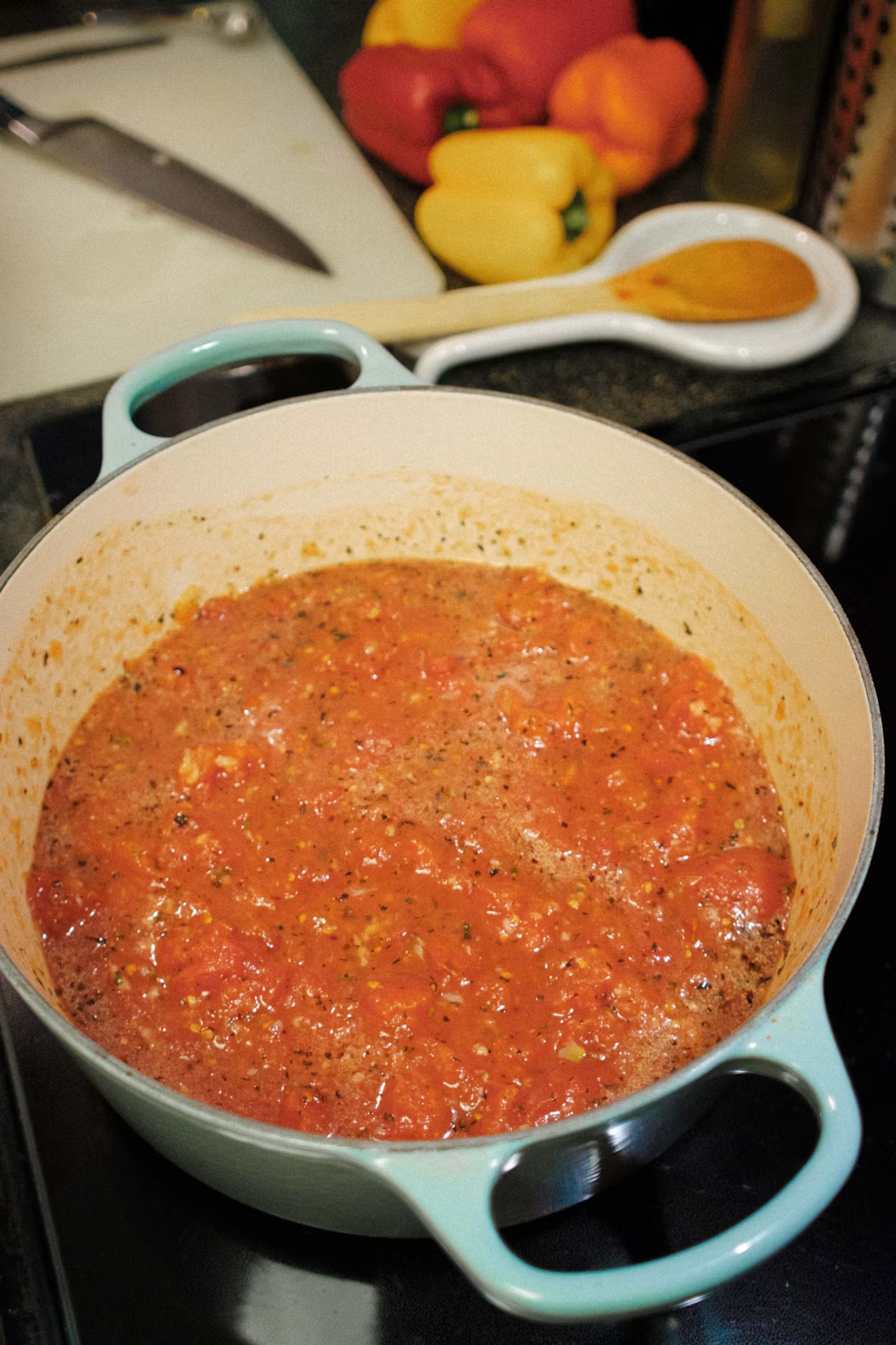
Then the moisture begins to evaporate, the color deepens and the aroma becomes richer.
Eventually, you have a thick sauce with a concentrated tomato flavor and a gentle sweetness from the onions.
That’s the moment you’re waiting for.
I prefer a relatively smooth sofrito, so I finely process the onions and tomatoes before cooking them.
If you prefer a more rustic texture, you can simply chop everything very finely instead.
Both approaches work, although the cooking time will depend on how much moisture the ingredients contain.
Is Sofrito the Same for Every Paella?
No, and this is worth understanding.
Spain has many different rice dishes, and the sofrito used for one isn’t necessarily suitable for another.
A traditional Valencian paella has its own preparation, usually involving meat, vegetables and grated tomato cooked directly in the paella pan.
My onion, garlic and tomato sofrito is a versatile make-ahead base that works beautifully in many other Spanish rice dishes, seafood preparations and stews.
If you’re following a specific traditional paella recipe, always check which ingredients that recipe calls for before substituting a prepared sofrito.
How I Freeze My Sofrito
Once the sofrito is ready, I divide it into shallow containers so it cools quickly.
Then I refrigerate it before portioning and freezing, or freeze it promptly once it has cooled sufficiently.
I usually measure the portions rather than guessing.
That way, I know exactly how much I’m adding when I prepare a familiar recipe.
For a new recipe, I always follow its instructions rather than assuming that every rice dish needs the same amount.
Labeling the portions with the quantity and date makes things even easier.
And when dinner time comes around, it’s wonderful to open the freezer and find the base of your sauce already waiting.
One Simple Preparation, So Many Possibilities
The wonderful thing about homemade sofrito is its versatility.
You can use it as the starting point for Spanish rice dishes, add it to a stew, or combine it with beans or vegetables.
It can also give extra depth to a tomato sauce without needing to cook the onions and garlic from the beginning.
And because it’s made from such familiar ingredients, it fits naturally into so many Mediterranean dishes.
I think every kitchen benefits from having a few homemade basics ready to use.
Good stock, perhaps some homemade tomato sauce, and definitely a few portions of sofrito.
They may not look particularly exciting sitting in the freezer.
But they can make an ordinary weekday dinner taste as though you’ve been cooking for hours.
And sometimes, that is exactly what good home cooking is all about.
Homemade Spanish Sofrito
Ingredients
- 500 g 1.1 lb / about 3–4 medium onions, preferably Cebolla de Figueres or sweet yellow onions, finely chopped or processed
- 6 –8 garlic cloves about 25–35 g / 1 oz, peeled
- 1 kg 2.2 lb ripe pear-shaped tomatoes or Roma tomatoes, peeled and chopped, or 2 × 14 oz (400 g) cans whole peeled tomatoes plus additional tomato as needed to reach 1 kg
- 200 ml ¾ cup plus 1 tbsp plus 1 tsp Spanish extra virgin olive oil, divided
- 1 tsp granulated sugar optional depending on tomato acidity
- 1 tsp fine sea salt plus more to taste
Method
- Peel the onions and chop them into smaller pieces. Working in batches if necessary, pulse them in a food processor until very finely chopped and almost paste-like. Avoid adding water. If you don’t have a food processor, grate the onions or chop them as finely as possible.
- Pour approximately 150 ml (⅔ cup) of the olive oil into a large, wide, heavy-bottomed pan. Add the processed onions and cook over medium-low heat, stirring frequently, for approximately 25–35 minutes. The onions should gradually lose much of their moisture, soften completely and develop a gentle golden color. Adjust the heat as needed to prevent browning too quickly.
- Meanwhile, place the peeled garlic cloves in a small food processor or mortar with the remaining olive oil. Process or crush until you have a fairly smooth garlic mixture.
- Add the garlic and olive oil mixture to the onions. Cook gently for 2–3 minutes, stirring constantly, until fragrant. Do not allow the garlic to brown.
- Add the salt and sugar, if using, and stir well.
- Process the peeled tomatoes until you have a fairly smooth purée. Pour the tomatoes into the pan with the onions and garlic and stir thoroughly to combine.
- Bring the mixture to a gentle simmer, then reduce the heat to low. Cook uncovered for approximately 60–75 minutes, stirring regularly and scraping the bottom of the pan so the mixture cooks evenly without sticking.
- As the sofrito reduces, it will gradually become thicker, darker and more concentrated. Stir more frequently during the final 15–20 minutes, when the risk of sticking is greatest. Continue cooking until most of the excess moisture has evaporated and the mixture forms a thick sauce.
- Taste and adjust the salt if necessary. The sofrito should taste rich and mellow, with no pronounced raw onion or raw tomato flavor.
- Divide the finished sofrito into shallow, food-safe containers to cool quickly. Refrigerate promptly, within 2 hours of cooking. Once chilled, divide into recipe-sized portions if necessary and freeze in airtight freezer-safe containers or bags, labeled with the weight and date.
- To use, thaw overnight in the refrigerator, or heat a frozen portion directly in the pan until fully heated through before continuing with your chosen recipe. Stir as needed and allow any excess moisture to evaporate.