The garrofón is a large, flat white bean from the Valencia region of Spain, and it is part of the traditional recipe for paella valenciana. I know that, and I still leave it out, because I do not like it. This guide explains what the garrofón bean is, what it tastes like, how to cook it if you want to, and what to do if you would rather skip it.
What is the garrofón bean?
The garrofón is a type of lima bean, grown around Valencia for generations. The beans are big, pale and slightly kidney-shaped, and they turn soft and floury when cooked. In Valencian the word is garrofó, so you may see both spellings on menus and in shops.
You can find garrofón fresh in season, dried, or ready-cooked in jars. Outside Spain, dried is the easiest version to find.
Garrofón in paella valenciana
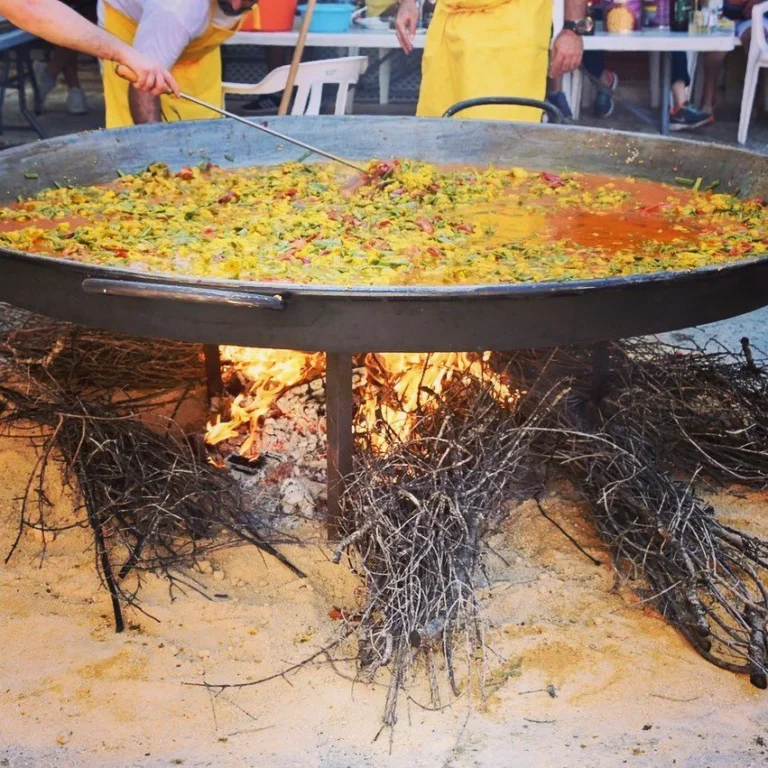
Traditional paella valenciana is made with rice, chicken, rabbit, flat green beans called ferraura or bajoqueta, garrofón, tomato, olive oil, saffron and water. Some cooks also add duck, artichokes or snails. The exact list differs from cook to cook, but the garrofón is on most of them.
In the pan, the beans soften in the broth and pick up the flavour of the meat and the saffron. They also add a bit of body to the dish.
What does garrofón taste like?
Mild, buttery and slightly sweet, with a soft, floury bite. They do not have a strong flavour of their own and take on the taste of whatever they cook in. If you like that creamy texture, you will probably like them in paella. If you do not, they are easy to notice.
How to cook garrofón beans
Dried beans need soaking in plenty of cold water overnight, about 8 to 12 hours. Drain them before cooking.
For paella, the beans go into the pan with the water or broth, before the rice, because they need time to soften. Cooking times for dried beans vary with age and size, so taste one before adding the rice. It should be tender all the way through.
If you want more control, simmer the soaked beans separately in unsalted water until soft and add them to the paella later.
Fresh garrofón cooks faster and needs no soaking. Beans from a jar are already cooked, so add them near the end, just to warm through.
Paella without garrofón
You can make a good paella without garrofón. It is a traditional ingredient, so a purist will say the dish is not quite the classic version, but it is still a proper rice dish with the same base of chicken, rabbit, green beans, tomato and saffron.
If you leave the beans out, give the flat green beans a little more room in the pan. Artichokes are another option when they are in season. Some cooks also leave the garrofón out for the simple reason that they do not like it, which is my reason too.
What can I use instead of garrofón?
If you want the same look and texture, large dried lima beans or butter beans are the closest match. They are similar in size and much easier to find in many countries.
Canned butter beans work in a pinch. Rinse them well and add them late, because they are already soft and will fall apart if they cook too long. Avoid kidney beans or chickpeas, which change the colour and flavour of the dish too much.
Where to buy garrofón beans
Try Spanish delicatessens, supermarkets with a good Spanish section, and online shops that sell Spanish ingredients. Check the label, because the product may be sold as garrofón, garrofó or simply as large lima beans. In Valencia, local markets are the best place to look.
Frequently asked questions
Is garrofón the same as a lima bean?
Essentially yes. The garrofón is a lima bean variety grown in Valencia. Other large lima or butter beans are the closest substitutes.
Is paella still authentic without garrofón?
Garrofón is part of the traditional recipe, so the classic version includes it. A paella without it is still a good dish, and many home cooks make it that way.
Do I need to soak garrofón beans?
Dried beans, yes. Fresh and jarred beans do not need soaking.
Where can I buy garrofón beans?
In Spanish food shops, some larger supermarkets and online stores that sell Spanish ingredients. In Valencia, look in local markets.