There are few things I enjoy more about eating tapas in Spain than watching a little earthenware dish arrive at the table, still sizzling from the kitchen.
And when that dish happens to be gambas al ajillo, I’m especially happy.
You can smell the garlic before the waiter even puts it down. The olive oil is bubbling gently around the shrimp, thin slices of garlic are turning golden, and there’s just enough dried chili to give everything a little warmth.
Then comes the most important decision.
Do you eat the shrimp first, or do you immediately tear off a piece of bread and dip it into that wonderful oil?
I think you can probably guess what happens at our table.
Gambas al ajillo, or Spanish garlic shrimp, is one of the best examples of how a handful of good ingredients can become something extraordinary.
There’s no complicated sauce, no long cooking time and certainly no need for a cupboard full of spices.
Just shrimp, garlic, olive oil, a little chili and a few finishing touches.
A Classic Spanish Tapa
Although gambas al ajillo are especially associated with the tapas culture of southern Spain, you’ll find versions of this dish throughout the country, including in Madrid.
The name tells you almost everything you need to know.
Gambas means shrimp or prawns, while al ajillo describes a preparation flavored generously with garlic.
Traditionally, the shrimp are cooked in olive oil with sliced garlic and dried chili peppers, then brought straight to the table.
In many tapas bars, they’re served in a small earthenware dish called a cazuela.
The dish retains heat beautifully, which explains why the oil sometimes continues bubbling even after the food has left the kitchen.
It’s all part of the experience.
Just remember that the dish itself can be extremely hot.
Why the Olive Oil Matters So Much
When making gambas al ajillo, the olive oil isn’t simply there to prevent the shrimp from sticking.
It’s an essential part of the dish.
As the garlic and chili cook, they infuse the oil with their flavor. The shrimp contribute their own delicate sweetness, creating a fragrant sauce that is delicious with bread.
I like using a good Spanish extra virgin olive oil with a relatively gentle, fruity flavor.
You want something that complements the shrimp rather than overpowering them.
And don’t be tempted to reduce the amount of oil too much.
For this particular dish, the oil is part of what makes it special.
The Secret to Perfect Garlic Shrimp
The most important thing is controlling the heat.
Garlic can go from beautifully golden to unpleasantly bitter in a matter of seconds.
I always start with the olive oil over medium-low heat, allowing the garlic to release its flavor gradually.
As soon as the edges begin turning pale gold, it’s time for the shrimp.
They cook very quickly, usually in just a few minutes, depending on their size.
The goal is tender, juicy shrimp rather than anything firm or rubbery.
I also prefer buying raw shrimp that have already been peeled and deveined. You can leave the little tails attached if you like the traditional presentation, although removing them makes the dish easier to eat.
Guindillas: The Little Spanish Chili Peppers
Another essential ingredient is the guindilla, a small chili pepper commonly used in Spanish cooking.
Dried guindillas add gentle heat to the oil without overwhelming the delicate shrimp.
You can leave them whole for a milder result or break them into pieces if you prefer a little more spice.
The heat varies depending on the variety, so it’s always worth starting with less.
You can also use a small pinch of dried red chili flakes if Spanish guindillas are difficult to find.
Should You Add Sherry?
Some versions of gambas al ajillo include a small splash of dry sherry or white wine.
I particularly like the idea of using a dry Spanish sherry, such as fino, because it adds a little complexity without turning the dish into a wine sauce.
But it’s entirely optional.
The simplest versions rely on nothing more than olive oil, garlic, chili, shrimp and salt.
If you do add sherry, keep the quantity small and add it carefully. Hot oil and liquid can splatter, so the pan should be taken off the heat briefly first.
A little fresh lemon juice at the end gives the dish a lovely brightness, although that too is a finishing variation rather than an absolute requirement.
What to Serve with Gambas al Ajillo
The obvious answer is bread.
Good, crusty bread.
Preferably plenty of it.
The garlic-infused olive oil is far too delicious to leave behi
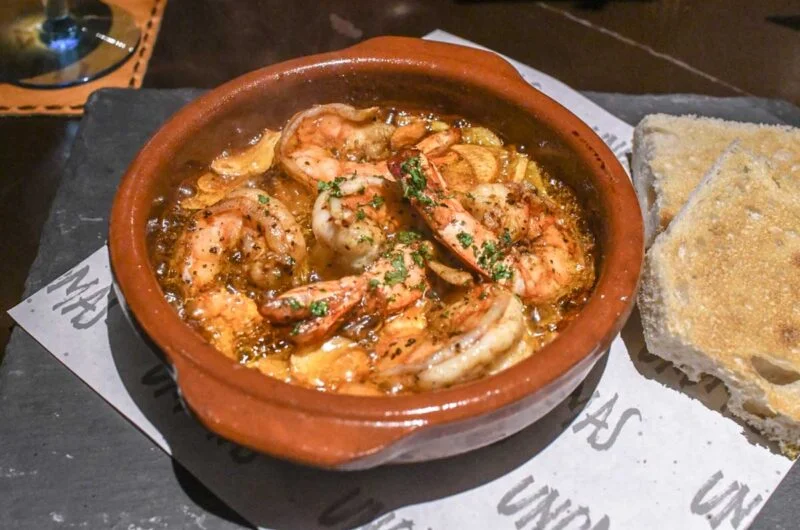
Gambas al Ajillo – Spanish Garlic Shrimp
Ingredients
- 400 g 14 oz large raw shrimp, peeled and deveined, tails left on if desired
- 4 large garlic cloves thinly sliced
- 1 –2 dried Spanish guindilla chili peppers left whole or broken into pieces
- 100 ml scant ½ cup / 6 tbsp + 2 tsp Spanish extra virgin olive oil
- 1 tbsp 15 ml dry fino sherry or dry white wine, optional
- 1 tbsp 15 ml freshly squeezed lemon juice, or to taste
- 2 tbsp finely chopped fresh flat-leaf parsley
- ¼ tsp fine sea salt plus more to taste
- Crusty bread for serving
Method
- If using frozen shrimp, thaw them completely in the refrigerator before cooking. Drain thoroughly and pat dry with kitchen paper. Season lightly with the salt.
- Pour the olive oil into a medium skillet or a stovetop-safe earthenware cazuela. Add the sliced garlic and dried guindillas.
- Place the pan over medium-low heat and warm the oil gently for approximately 2–3 minutes, stirring occasionally. The garlic should become fragrant and begin turning pale gold around the edges. Do not let it turn dark brown.
- Increase the heat slightly to medium and carefully add the shrimp in a single layer. Cook for approximately 1–2 minutes on the first side, then turn and cook for another 1–2 minutes, depending on their size. The shrimp should be firm, pearly and opaque throughout.
- If using sherry or white wine, briefly remove the pan from the heat and allow the vigorous bubbling to subside. Carefully add the sherry in a small amount, keeping your face and hands away from the pan. Return to gentle heat and allow it to simmer briefly, about 20–30 seconds.
- Remove the pan from the heat. Add the lemon juice and chopped parsley, then gently swirl or stir to combine. Taste the oil and adjust the salt if necessary.
- Transfer the shrimp and fragrant garlic oil to a warm, heatproof serving dish, or serve directly in the cooking vessel on a suitable heatproof trivet.
- Serve immediately with plenty of crusty bread to soak up the garlic-infused olive oil.